What Should Healthy Dog Poop Look Like?
What Should Healthy Dog Poop Look Like? Let’s be honest most of us spend a surprising amount of time staring at our dog’s poop. Whether you’re bagging it on a morning walk or doing a quick check in the backyard, you’ve probably found yourself wondering: Is this normal? Should it be that color?
Long before your pup starts acting sick, their bowel movements can quietly whisper (or loudly shout) that something’s going on inside.
I’ve spent years as a veterinarian, and I can tell you this once you know what to look for, you’ll never look at a pile of poop the same way again. In fact you’ll start to appreciate it. Gross? Maybe. Useful? Absolutely.
What Should Healthy Dog Poop Look Like?
The Four Signs of a Perfectly Healthy Poop
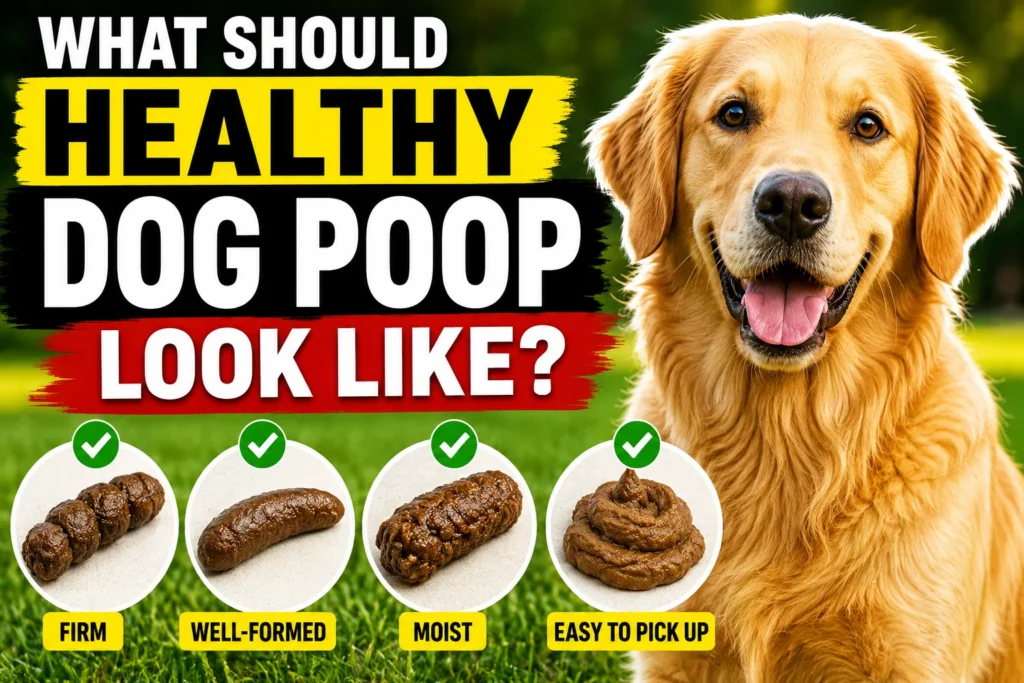
Before we dive into colors, let’s talk about the gold standard. A healthy dog poop isn’t just about color it’s about the whole package. When things are working right, your dog’s stool should check all these boxes:
- Shape: It should look like a nicely formed log think caterpillar or Tootsie Roll shape.
- Firmness: Firm. If it leaves a little indent when you press it with a bag, that’s about perfect.
- Coating: There shouldn’t be any slimy film or greasy shine. Just a normal, dull-looking surface.
- Contents: You shouldn’t spot undigested food grass worms or anything else that looks out of place.
If your dog’s poop hits all four of these, their digestive system is likely humming along nicely.
Also Check: Signs of Ear Mite Infestation in Pet Ferrets
The Dog Poop Color Chart: What Each Shade Tells You
Now for the part every owner really wants to know what do those different colors actually mean? Here’s your vet approved guide.
1. Chocolate Brown – The Holy Grail
There is a kind of satisfaction in looking down and seeing that perfect shade of brown, not too pale and not too dark just right. The warm and rich color of brown is not random it comes from bilirubin, which is a pigment that the liver produces when it is recycling red blood cells.
When the color of brown is somewhere between milk chocolate and deep cocoa that means the liver and the gallbladder and the pancreas are working well together like a team no one is trying to be the boss they are just working smoothly and quietly.
In a world where our bodies do not often give us a sign that everything is okay this is one of those small signs that things are going well. There are no problems, no worries, the quiet feeling that the digestive system is working in the background doing what it is supposed to do. And to be honest the fact that the liver and the gallbladder and the pancreas are working together that is worth paying attention to because the digestive system is, like an engine that is always running and when it is working well that is a good thing.
2. Green – Things Are Moving Too Fast
Green poop can be startling, no doubt about it. But more often than not, it’s just a sign that food is moving through your dog’s system a little too fast so fast, in fact that the bile doesn’t have enough time to go through its usual color changing process from green to brown.
If it happens once and everything else seems normal take a breath. It’s probably nothing to lose sleep over. But here’s the thing, if that green tinge hangs around for more than a day or two or if your pup starts vomiting or acting off, don’t wait it out. That’s your cue to pick up the phone and call your vet. Trust your gut and theirs.
3. Yellow or Orange A Red Flag for Fat Digestion
This one makes me sit up straight. Yellowish or orange stool often points to fat not being properly digested. That’s usually a liver issue or a problem with the pancreas. One common culprit is a condition called EPI (Exocrine Pancreatic Insufficiency), where the body simply can’t process fats. This isn’t something that fixes itself you’ll need bloodwork and a vet’s help.
4. Red Streaks Bleeding in the Lower Gut
That is fresh blood which usually means the bleeding is happening in the large intestine rectum or anus. Common causes include stress colitis, parasites like hookworms or even small polyps. If your dog is acting perfectly normal, you can monitor closely for 24 hours. But if you see actual puddles of blood, that’s an emergency room visit.
5. Black and Tarry A True Emergency
Honestly? This one makes my stomach drop every time. If you ever lift the poop bag and see something that looks like black coffee grounds or sticky tar, that’s not a weird fluke that’s digested blood. If it looks like this, don’t second guess. Just grab your dog, grab your keys, and go.
6. White or Chalky Diet or Danger
Here’s the tricky one. If your dog eats a raw diet with lots of bones, chalky white poop is actually normal it’s just excess calcium passing through. But if your dog isn’t eating bones, white stool signals a severe lack of bile flow, which points to liver failure.
7. Gray and Greasy Pancreas Trouble
If your dog’s poop suddenly looks like pale gray clay or even reminds you of a lump of Play-Doh it’s not just weird it’s a red flag. That ashy colorless appearance usually means the pancreas is slacking off on its job of releasing digestive enzymes. And here’s the gut wrenching part even though your pup is gobbling down their food like normal their body is not actually soaking up the nutrients. They are essentially hungry and malnourished with a full belly. This isn’t a “wait and see situation it’s a clear signal to call your vet right away. The sooner you act the sooner you can get those enzymes back on track and your dog feeling like themselves again.
8. Purple or Maroon – A Life-Threatening Emergency
This one is rare but terrifying. The stuff coming out looks like raspberry jam mixed with goo. This is often a sign of Hemorrhagic Gastroenteritis, which can get really bad fast. You cannot just. See what happens. You have to drop everything and go to the doctor now because Hemorrhagic Gastroenteritis can be very serious. Hemorrhagic Gastroenteritis is something that needs to be taken care of away.
The Vet’s Scale How to “Score” Your Dog’s Poop
We vets often use a version of the Bristol Stool Scale to check what is going on with our patients. Here is how it works:
- Type 1: dry small balls. Your dog is not drinking water. You need to give your dog water. It is also an idea to add some moisture to your dogs food. This will help your dog. Make sure your dog has water to drink.
- Type 2: Firm, looks like segments or caterpillars. This is perfect. We want to see this.
- Type 3: Looks like a log, with cracks. This is normal poop.
- Type 4: Soft, mushy. Still holds its shape. Diarrhea is a problem. It happens to dogs when they get really stressed out. Sometimes it happens when you switch their food fast.
What About the Smell?
Let’s face it dog poop does not smell like roses. There is a difference between the bad smell and something being seriously wrong.
A sour smell or one that is too sweet can mean your dogs body is not absorbing food properly or there are many bad bacteria.
If the poop smells metallic it could mean there is bleeding especially if the poop is black and tarry.
A bad fishy smell might mean your dog has Giardia or a problem with their anal glands.
Trust your nose if the smell is off, in a way that you’re not used to.
Three Things You Can Ignore and Three You Can’t
You can probably ignore these:
- A bit of grass in an otherwise normal stool.
- A tiny mucus coating that appears once and disappears.
- Color changes from artificially dyed treats (blueberries or beets can do this).
Never, ever ignore these:
- Straining to poop and producing nothing this could be a blockage.
- Black, tarry stool always an emergency.
- Bloody diarrhea combined with vomiting this is a red alert.
How to Get Your Dog’s Poop Back on Track
If your dogs poop looks a little weird but your dog is still running around and acting like they normally do you do not need to go to the vet now.
You can try a simple things at home to help your dogs digestion get back, to normal.
Try these things at home first to help your dog feel better.
Give their gut a breather.
Do not eat food for 12 hours. It is okay to drink water keep drinking it.. If you skip a meal or two the digestive system of the food can take a break calm down and get rid of any small problems without feeling stressed. The digestive system needs a break from the food skipping meals helps the digestive system calm down and feel better. The food can be frustrating, for the system so holding off on the food is a good idea.
Ease back in with a boring meal.
When it’s time to eat again, think plain and simple: about 75% boiled white rice mixed with 25% lean, boneless, skinless chicken breast. No salt, no oil, no seasonings. It’s not exciting, but that’s exactly the point it’s gentle, binding, and gives their stomach a soft landing.
Restore the good bugs.
You can also use a probiotic powder that is just for dogs. Just make sure to look at the label and stay away from things like xylitol, which’s a bad kind of sweetener. Greek yogurt is a way to get the healthy bacteria back, in your dogs gut so it can work properly again.
And if things are looking dry and pebbly?
Add a splash of water to the dogs kibble. The warm water does a lot of things for the dog. It helps with hydration. The warm water also softens up the kibble. This makes the dogs meals more enjoyable to eat. The dog will really like this especially if the dog is not drinking water.
These small tweaks often do the trick for mild, non emergency tummy troubles. . If things don’t get better in 24 to 48 hours don’t wait.
Call your vet away.
If your dog seems tired is in pain or starts throwing up don’t delay.
Get in touch, with your vet immediately.
When to Collect a Sample and How to Do It Right
If your pet’s appointment leads you to the vet’s office, don’t forget to bring along a recent stool sample. And when I say recent, I mean collected within the last 12 hours keep it chilled in the fridge, but never frozen. A simple Ziploc.
Frequently Asked Questions
Why does my dog eat his poop?
It’s weird I know. It’s called coprophagia and it’s usually behavioral learned from mother dogs cleaning up after puppies. Sometimes it’s boredom, and rarely it’s a sign of malabsorption where the food isn’t fully digested, so it still smells appetizing.
Is a little mucus in dog poop normal?
Yes, in small amounts. The jelly like coating helps to make the colon work smoothly. If you notice pieces of mucus or if the coating is pink or red that is probably colitis and the animal needs to see a veterinarian.
So you want to know how often a healthy dog should poop.
A healthy dog poops once or twice every day. Puppies go more often sometimes four or five times. Less than once a day could mean constipation. More than three soft stools in a day is diarrhea and should be monitored.
Why does my dogs poop start out hard. End up soft?
This happens a lot. The hard part of the poop has been in the colon for a time so more water has been absorbed into it. My dogs poop does that sometimes. Its just how their body works.
Rice make dog poop white?
No rice usually makes your dogs stool firmer and a bit lighter brown. If your dogs poop is white and chalky that is probably because there is much bone or calcium, in what your dog eats. If your dog does not eat bones and the poop is still white you should call your vet away.
Why did my dog’s poop turn grey after sitting outside?
That’s sun bleaching and dehydration. Always judge the color of fresh stool within 30 minutes of passing. Old stool naturally loses its color.
What does Giardia poop look like?
Giardia has a distinct look: soft, pale, greasy, and unusually foul smelling like rancid chicken fat. It often has a greenish tint and mucus. The smell is actually the biggest clue.
My dog strained and cried while pooping what should I do?
That’s called dyschezia. On the hand if the stool is soft but your dog is still having trouble it could be a problem, with a blocked anal gland or maybe even a tumor.
Can stress change my dog’s poop color?
Absolutely. Stress triggers cortisol, which speeds up digestion. That often results in green or yellow poop because the bile doesn’t have time to break down. Moving houses, boarding, or loud noises can do this.
How long is a stool sample good for at the vet?
For parasite testing refrigerate it and bring it in within 24 hours. For viral or bacterial PCR tests, it needs to be less than 12 hours old. Always grab the freshest one you can ideally that morning’s sample.