
Signs of Ear Mite Infestation in Pet Ferrets
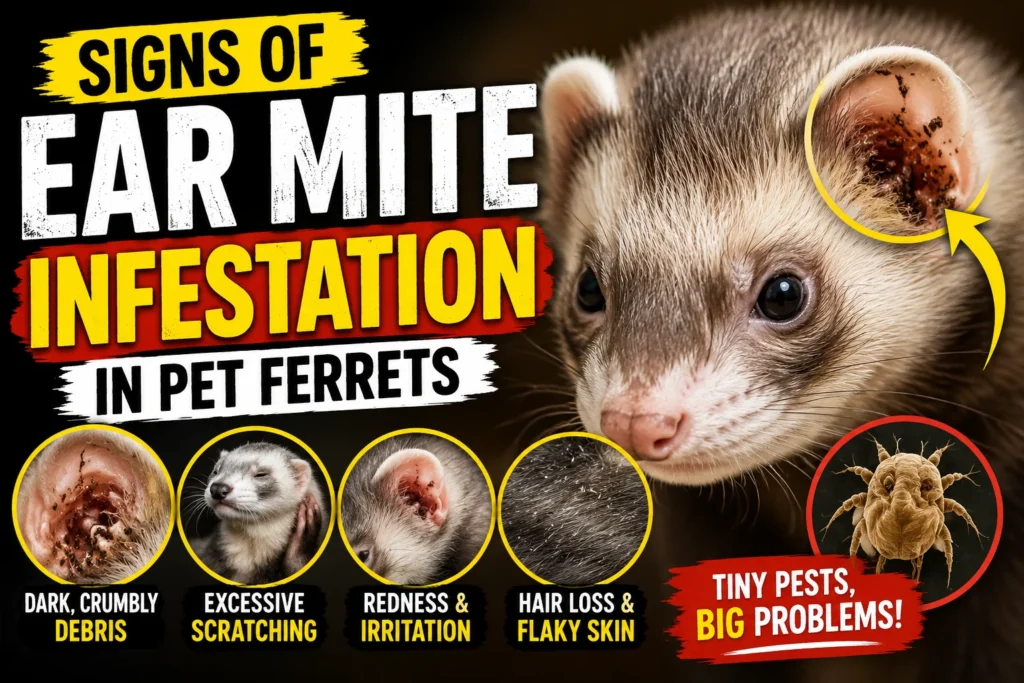
Signs of Ear Mite Infestation in Pet Ferrets, As both a ferret owner and someone who is worked alongside veterinarians for years, I have seen these tiny pests turn a playful, bouncing ferret into a grumpy, head shaking mess in what feels like days. The good news, is that Once you know what to look for, you can catch them early and save your furry friend a ton of discomfort.
So we let’s talk about the signs of ear mite infestation in pet ferrets, why those dirty ears might not be what you think, and exactly how to handle it without making things worse.
What Are Ear Mites, Really?
Let’s be honest Otodectes cynotis isn’t exactly a name you’ll remember after your morning coffee. But your ferret? They’ll know something’s up long before you learn to pronounce it.
These tiny, crab like critters are ear mites, and they’re a lot more than just a nuisance. Picture something the size of a pinhead, scuttling across the surface of your ferret’s ear canal. They don’t burrow, thank goodness but they do bite.
And that’s where the trouble starts.
Ferrets have long, curved ear canals. That shape is like a five star hotel for mites: warm, dark, and hard to clean out. Once mites move in, they multiply fast every three weeks, to be exact.
10 Signs of Ear Mite Infestation in Pet Ferrets
You don’t need a microscope to spot most of these. Just watch your ferret closely.
1. Dark, Crumbly Ear Discharge (Think Coffee Grounds)
Here’s a telltale sign that’s hard to miss, take a peek inside your ferret’s ear, and if you spot reddish brown or black crumbly gunk, you’re not looking at dirt. That’s a classic mix of mite poop, dried blood, and ear wax. And here’s the weird part it looks dry, almost like instant coffee grounds left out too long. If the debris feels wetter, pastier, and almost greasy? Think yeast infection. That’s a whole different animal (literally). Mite related gunk, on the other hand, is dry and flaky. Run your finger over it gently, of course and you’ll feel the difference right away.
Let your vet take a quick look under a microscope. Because while coffee ground ears are a strong clue, the right diagnosis means the right treatment.
2. Scratching Like There’s No Tomorrow
Ferrets will go at their ears with their hind feet hard. You’ll see that classic “foot pawing” move where they hold one leg up and just scratch. If they’re also rubbing their head against the carpet or cage bars? Big red flag.
3. Head Shaking and Tilting
A little head shake now and then is normal. But constant, violent shaking? That’s a ferret trying to evict an itchy passenger. Once mites reach the middle ear, you might also see a head tilt usually toward the side that’s worse. That’s your cue to call the vet immediately.
4. Raw or Scabby Skin Around the Ears
Ferrets have thin skin and sharp nails. When they scratch aggressively, they break the skin. Check behind the ears and along the side of the face for scabs, bald spots, or a puffy, swollen ear flap (that’s an aural hematoma basically a blood blister from all the shaking).
5. Waking Up at Night (Lots of Pacing)
If you’ve got a ferret, you probably know they spend roughly 18 hours a day passed out like little furry logs. But here’s the thing mites? They love the night shift. So there you are, half-asleep, when you hear it your ferret suddenly rustling around after midnight. Not just a quick stretch and resettle, but actual pacing. Back and forth across the cage like a tiny striped ghost with somewhere urgent to be. Maybe they’re digging like mad at their bedding, fluff flying everywhere. And it’s tempting, isn’t it? To just shrug and call it late night zoomies. That’s not energy. That’s irritation.Trust those midnight wiggles they’re a sign to take a closer look.
6. A Bad Smell Coming From Their Head
This one’s hard to miss. If you let a mite problem slide, bacteria will jump at the chance to take over. One telltale sign? A musty, almost sickly sweet smell coming from around your ferret’s ears or face. That’s not the mites themselves it’s a secondary infection, and it changes the game. You’ll need antibiotics at that point, not just mite treatment.
7. Crusty Face and Neck
If you’ve ever watched a ferret scratch, you know how diligent they are about grooming right afterward. You know that heart wrenching moment when your ferret just can’t stop scratching at its ears, then immediately grooms its paws like nothing’s wrong? Problem is, those pesky ear mites don’t just stay put. In one innocent lick and scratch routine, your little buddy can wipe mites right onto its own face, chin, and neck.
Before you know it, tiny red bumps or rough, crusty patches pop up around their eyes and mouth. That’s a dead giveaway the mites have officially set up camp outside the ears.
And here’s where it gets tricky, most owners swear it’s a food allergy. New kibble? Must be that. But nope. The symptoms look almost identical, so it’s shockingly easy to chase the wrong problem while the real culprit mites keeps spreading. Plenty of ferret owners do. But more often than not mites are the hidden culprit, right under your nose the whole time.
8. Sudden Mood Changes
A usually sweet ferret can suddenly turn into a little grump hissing, nipping, or dodging away when you reach for their head. That’s your first clue something’s wrong. Start with the ears. That’s often where the trouble hides, from infections to mites, and catching it early can turn that hiss back into a happy dook.
9. Balance Problems or Circling
This is the scary one. If mites reach the inner ear (the balance center), your ferret may stumble, fall off low platforms, or walk in tight circles. Many owners panic and think it’s insulinoma and while that’s possible, mites are an easier fix. Rule them out first.
10. Seeing Tiny White Specks
In extreme infestations, you can scoop out a little of the debris and place it on a dark sheet of paper. Those are the mites themselves. If you see this, your ferret has had mites for weeks, if not months.
Also Check: Best Automatic Pet Feeders with Smartphone Apps
Wait Is It Always Mites?
Here’s where I see ferret owners make a costly mistake. They see dark ear wax and assume mites. Then they grab over the counter cat ear drops, and disaster.
Because a lot of over the counter mite treatments are made with pyrethrins an ingredient that’s seriously toxic to ferrets and can actually trigger seizures.
Plus, that dark debris could also be:
- A yeast infection (Malassezia)
- A piece of bedding stuck in the ear
- An ear polyp or tumor (rare but possible in older ferrets)
It’s got a little light on the end, and there’s nothing scary about it just a quiet peek to see what’s going on in there.
Next, they’ll grab a tiny cotton swab like the kind you’d use to clean a keyhole and collect just a small bit of that dark, crumbly gunk. We’re talking a teeny sample. Your ferret will barely notice.
Then comes the magic part. That swab gets smeared onto a slide and popped under a microscope.
And here’s the best news: within about five minutes, you’ll have a clear answer. Mites? Bacteria? Yeast? Or something else entirely?
No guesswork. No waiting days for lab results. Just a fast, straightforward answer so you can get your fuzzy friend the right treatment. No guessing. No wasted money on the wrong meds. Just a fast, straightforward diagnosis that gets your ferret on the right treatment from the start.
How Vets Actually Treat Ear Mites in Ferrets
Once mites are confirmed, treatment is straightforward but takes time. The life cycle is about 3–4 weeks, so you can’t just do one dose and call it done.
The gold standard? Revolution (selamectin). Your vet will put one drop in each ear and a spot between the shoulder blades.
Do not use Frontline, Hartz, or anything labeled for dogs. Seriously.
Your vet may also:
- Clean the ears after the mites are dead (never before you’ll push live mites deeper).
- Prescribe antibiotics if there’s a secondary infection.
- Your vet will tell you to wash every piece of bedding, hammock, and soft toy in hot water. And don’t skip the freezer step pop those fabric items in for a full 24 hours to take out any stragglers that managed to survive the wash.
- Don’t forget to treat every other pet in the house cats, dogs, rabbits, the whole crew.
Can You Prevent Ear Mites?
Yes and it’s easier than treating an active infestation.
- Monthly Revolution during warmer months (mites are more active in summer/fall).
- Weekly ear checks using a dry cotton ball.
Final Thoughts
Ear mites are absolutely miserable for ferrets but here’s the good news they’re incredibly easy to treat, as long as you catch them early. The warning signs are hard to miss dark, coffee ground like debris in the ears, nonstop scratching, constant head shaking, and even scabby, irritated skin around the face. Of course, those same telltale signs scratching, head shaking, dark discharge can also point to other ear issues, like a bacterial infection or even a simple buildup of wax. That’s why you should never just grab an over the counter treatment and hope for the best. A quick trip to the vet is the only way to know for sure what’s going on inside. Your ferret is looking to you to catch problems early.
Frequently Asked Questions (Solved FAQs)
From Your Ferret Can You Catch Ear Mites?
If you’ve been scratching right along with your ferret lately, you might be worried. Good news first ear mites are pretty picky about where they live. It doesn’t thrive on humans. You might feel a temporary itch if they crawl on you, but they won’t infest your ears.
My ferret never goes outside. How did this happen?
Yes, unfortunately. Ear mites are tiny, and they can tag along on your shoes, cuffs, blankets, or furniture especially if you’ve been near an infested animal.
What should a healthy ferret’s ears actually look like?
Inside, you’re looking for pale pink skin, barely any wax and if you do see a little, it should be clear or pale yellow. No funky smell, no redness, and definitely no scabs or crusting.
Can I use olive oil to treat ear mites in my ferret, or is that risky?
Temporarily, yes it can drown adult mites and soothe itching. But it doesn’t kill eggs, and if your ferret shakes hard, they can aspirate the oil. Not a cure. Save it for cooking.
How long does treatment take?
At least 28 days. Most prescription treatments are given every 14 days for two rounds.
My ferret hates having his ears touched. Any tricks?
First, wrap your ferret in a towel like a little burrito so he can’t squirm. Make sure the ear cleaner is at room temperature never hot. Skip the dropper and just use a cotton ball. And don’t forget the bribe: a tiny drop of salmon oil afterward works like magic.
Are there natural mite preventatives?
None that actually work. Routine cleaning helps reduce debris.
Why is my ferret still shaking his head even after I treated him for ear mites?
Don’t panic this is totally normal for a little while. Dead mites and the gunk they leave behind can take five to seven days to fully clear out. That leftover debris can still be itchy or irritating, so your ferret might keep shaking his head during that time.
How much does vet treatment cost?
Usually $50–$90 for the exam and ear cytology. Revolution adds another $15–$25. Much cheaper than treating a ruptured eardrum or chronic infection down the line.