
Can Dog Hydrotherapy Swim Sessions Help with Spinal Recovery 2026?
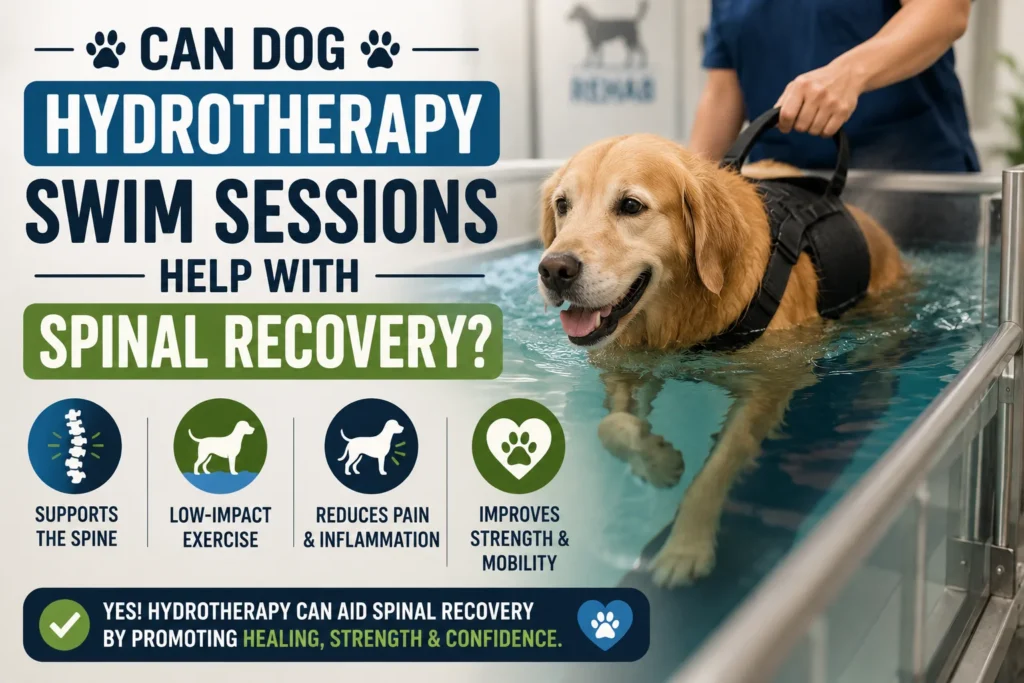
Can Dog Hydrotherapy Swim Sessions Help with Spinal Recovery The question I am asked more than any other by owners, following a spinal injury in their pet and after surgery or medication is ‘Will my dog ever walk normally again?’. Following initial treatment (which is essential), their road to recovery has only just begun. This is where canine hydrotherapy in the forms of swimming and underwater treadmill therapy can help, but exactly what is it that water can offer compared to land based rehabilitation?
The short answer is yes, it can. Hydrotherapy is a well researched modality that provides a beneficial rehabilitation environment and a second, crucial, stage in recovery from a spinal injury in dogs. It is not a miracle cure, it is essentially using the resistance and buoyancy of water to help promote recovery of a wounded spinal cord in a safe and low impact way that can not otherwise be achieved.
What is Canine Hydrotherapy?
Canine Hydrotherapy Canine hydrotherapy involves using water to have a dog exercise and get back into shape. This is far more than simply “taking your dog for a swim!” The two approaches to hydrotherapy in a professional facility are:
1.The Underwater Treadmill (UWTM): This is what many consider the Cadillac of rehabilitation!
The water level inside the chamber containing a treadbelt can be controlled allowing the veterinarian or therapist to make a greater and lesser degree of weight bearing on a dog’s limbs. 2. Swimming Pool: While great to condition and provide weight bearing exercise, swimming pools are usually less beneficial for more specific issues because a swimming dog often makes excessive use of his or her front end.
The Science Behind the Splash How Water Aids Spinal Recovery
The wonders of hydrotherapy work via water properties. If a spine is not operating optimum: It’s remarkable what this entails.
1. Buoyancy Taking the Weight Off
The most rewarding advantage reducing the dogs weight on their joints and spine. It is possible to support 63% of a dogs body weight in the water. This takes some pressure off affected discs, vertebrae, or nerves. It “unweights” the dog so that the dog can move and exercise when it would be too painful, or impossible to, do so out of water.
2. Hydrostatic Pressure Reducing Pain and Swelling
Water exerts gentle, even pressure on the body. This helps to reduce swelling (oedema) in the limbs, which is common after spinal surgery or injury. It also has a soothing effect, similar to a gentle compression bandage, that can help decrease pain perception.
3. Resistance Building Strength Without Impact
Water creates a 360 degrees of resistance. Each and every step your dog takes will cause work against that water, which allows their muscles, who are wasting away, to come back strong safely. It is low impact; it gives tone to their muscles, and cardiovascular capacity, without causing the concussive jarring that walking on hard surfaces can present.
4. Warm Water The Muscle Relaxant
Since water therapy pools and treadmills are heated to a therapeutically mild temperature (about 80 to 88 degrees F). Warm water increases circulation, loosens up that spasm tight doggie muscles and adds that flexibility dog’s need to make’em’ good moves.
How Hydrotherapy Aids Specific Spinal Conditions
It is a significant component of the rehabilitation plan for the following conditions of the spine:
The most common spinal condition in dogs, intervertebral disc disease (IVDD). Hydrotherapy allows the animal to rebuild hind limb and core strength without stressing the recovering disc and is useful postoperatively following hemilaminectomy, or as part of a conservative management plan.
Spinal fractures, and post-operative to spinal injuries of the spine. The safe controlled environment in the UWTM is used to re-educate gait and build muscle bulk.
Fibrocartilaginous embolism (FCE), or “spinal stroke,” resulting in spontaneous loss of mobility. Hydrotherapy plays an integral role in neurological rehabilitation as the mind and spinal cord are retrained with rhythmical movement to enable function within the limbs to resume.
Research Support
A 2013 research article, published in Veterinary Medicine and Science, examines the kinematics (motion) of the canine thoracolumbar spine when walking on an underwater tread mill. Their results have demonstrated that underwater tread milling combined with inclining seems to be a safe, plausible rehabilitative tool for dogs and could assist in improving range of motion for canine rehab patients.
Finally, practitioners say that their anecdotal evidence is beginning to be supported by facts and that prescribed, controlled exercise such as UWTM is vital in the re establishment of normal patterns for a dog retraining its motor patterns in order to ambulate after a spine injury.
What to Expect During a Hydrotherapy Session
Typical sessions: Typical sessions are precisely prepared and administered by an experienced professional.
Veterinary Referral & Assessment: After a vet has referred your dog, the dog is seen by an accredited physiotherapist or hydrotherapist. The therapist will carry out an initial assessment of the animal’s capabilities and any sources of pain, to establish the treatment required.
The First Session: The dog is gently introduced to the equipment to encourage them and build confidence. Often through use of tasty treats and favourite toys the dog associates the equipment with pleasure, prior to it being filled or the dog entering the pool,
The Workout: Water level, pace and exercise duration are controlled by the therapist and as your dog’s muscles grow stronger and so gain the support needed, water may slowly be lowered from buoyancy levels to more ‘weight bearing’ positions on the treadmill, and the therapist is able to observe the mechanics of the dog’s gait as they move through the tank from all angles to ensure the feet are moving in the correct way.
Duration: Sessions are usually quite short, potentially only 2 to 5 minutes of actual exercise as this prevents the over-worked muscles from being too sore after treatment.
Swim vs. Underwater Treadmill Which is Better?
Though both have benefits, I find the Underwater Treadmill to be the better option for spinal recovery.
Why? Dogs will swim (float) more with their forelegs, not strengthening their hindlimb muscles effectively nor simulating a normal walk-like pattern required for spinal rehabilitation and walking.
Underwater treadmill rehabilitation, on the other hand, allows for and teaches proper walking pattern: re-educates nerves and muscles to act together in the proper sequence and building the specific muscles used for support in a weak spine and hindquarters.
Conclusion
The recovery of a spinal injury for your dog is a race, not a sprint and if it demands time, patience and money; canine hydrotherapy is the safest, least risky and most powerful means to facilitate the recovery and strengthen their bodies by using the properties of water.
If your dog has a spinal injury, or has symptoms of a sore back; discuss a hydrotherapy program with your veterinarian and discuss whether it is appropriate for your dog. Hydrotherapy is arguably the number one way to help your dog get back on its feet.
For More Info : Natural Dog Massage Techniques for Stiff Back and Neck Muscles 2026
Frequently Asked Questions (FAQs)
Can hydrotherapy help a dog that is paralyzed?
Yes. Even if a dog has severe neurological deficits, hydrotherapy in a UWTM can be used to stimulate the limbs and promote neuroplasticity (the brain’s ability to rewire itself). The therapist can physically assist the dog’s limbs through the walking motion, stimulating nerve pathways and building muscle tone.
Is hydrotherapy safe for dogs after spinal surgery?
Yes, once the surgical wound is healed and your vet gives the go-ahead. It is often an essential part of the recovery plan, allowing for early, controlled movement that prevents muscle atrophy without overloading healing tissues.
How long does a typical hydrotherapy recovery program take?
The duration varies widely. Post-operative recovery can take 8-12 weeks, while chronic conditions like arthritis might require weekly sessions for life. For spinal injuries, a typical program might involve 2-3 sessions a week for several weeks, with gradual increases in duration and intensity.
What’s the difference between a swimming pool and an underwater treadmill?
The underwater treadmill is generally more effective for rehabilitation because it promotes a natural walking motion, which is crucial for re-educating the gait pattern and building strength in the hindlimbs. Swimming primarily exercises the front limbs and core.
Will my dog be in pain during hydrotherapy?
The goal is to reduce pain, not cause it. The warm water and reduced weight-bearing make movement easier and more comfortable. The therapist will monitor your dog closely for signs of stress or discomfort and adjust the session accordingly. Some muscle soreness may occur after a session, similar to a human visiting a physiotherapist.
Can an elderly dog or one with severe arthritis benefit from hydrotherapy?
Absolutely. These are two of the most common candidates for hydrotherapy. The “unweighting” effect of water provides immense relief from arthritic joint pain, allowing them to exercise safely, build muscle to support their joints, and improve their quality of life.
What are the signs my dog might have a spinal problem that needs rehab?
Signs include difficulty standing or walking, knuckling of the paws, a hunched back, reluctance to run or jump, crying out in pain, or dragging one or both back legs. Always consult a vet immediately if you see these signs.
How much weight does water take off a dog’s joints?
In the underwater treadmill, buoyancy can support up to 63% of a dog’s body weight, depending on the water depth. This significant reduction in load allows for movement that would be impossible on dry land.
Can I do hydrotherapy with my dog at home in my swimming pool?
You should only attempt hydrotherapy at home under the strict guidance of your vet. For a dog with a spinal injury, uncontrolled swimming can be dangerous. Professionals use warm water and very controlled conditions. Home swimming might be suitable for general fitness but not for medical rehabilitation.
Does my dog need a referral from a vet for hydrotherapy?
Most reputable hydrotherapy centres require a veterinary referral. This ensures your dog is fit enough for exercise and that the therapist has a full medical history to plan the safest and most effective treatment.