Why Is My Senior Dog Not Eating?
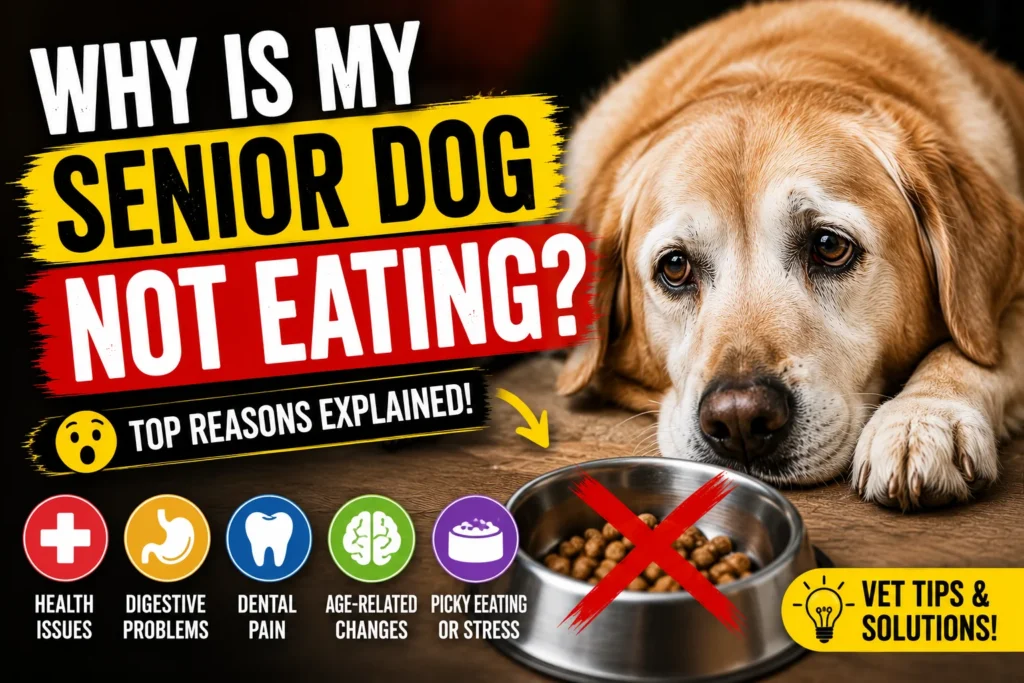
Why Is My Senior Dog Not Eating? For a devoted pet parent, there are few things as heartbreaking as watching your senior dog turn his nose at his food bowl. For the dog who once came bounding with tail wagging to the call to meals, the disinterest can be quite disturbing. For the most part, it can and should be for very good reason. When this happens to a senior dog, it’s a big flag that should not be ignored.
This extensive article, prepared from a veterinarian’s viewpoint, discusses many possible reasons why your senior dog might be eating less, what you can do at home to help your furry friend, and most critically, when you need to consult your veterinarian for assistance. Come along as we unravel the enigma of the decreased appetite in your senior dog.
Why Is My Senior Dog Not Eating?
Is It Normal for Senior Dogs to Eat Less?
The short answer is: Yes it can be. Some natural changes in older dogs will result in their losing some of their interest in food. Slower metabolism and lower activity levels older dogs naturally tend to be less active and this means that they need less energy to do the same activities as they may have in the past. Older dogs are also generally born to be a less active breed in many cases as well slowing down the aging process the higher metabolism that dogs will carry in their younger life the slower it gets for the aged and can in many cases affect some types of feed. Smell and taste changes a dog’s sense of smell can begin to lessen as the aged dog can be effected by what is called ‘age related olfaction deficit’.
Normal vs Concerning Appetite Loss
Most cases of gradual decreased food intake over weeks or months caused by your pet becoming more inactive isn’t usually a problem. However if your pet abruptly goes off their food or their appetite decreases over days then that can be concerning. Take a closer look at what your pet’s eating habits were like, was their decrease in food appetite sudden or gradual?
The Most Common Reasons a Senior Dog Won’t Eat
Almost invariably there’s something “up” with an elderly dog not eating. Here’s a rundown of the top offenders.
1. Dental Pain and Oral Issues
This is actually one of the most common causes and the one most often missed. Dogs age three and over generally have some form of dental disease, with senior dogs often having teeth or gums that are very painful.
The Issue: Painful eating from an abscessed or cracked tooth, severe periodontal disease, or a tumor of the mouth.
If this is the issue, you might observe your dog approach his bowl, sniff food and even start to eat it, only to abandon it halfway through because it’s just too painful to chew.
Additional signs that your dog’s pain is from a mouth issue include excessive drooling, dropping food from his mouth as he eats, chewing preferentially from one side of the mouth, the development of “doggy halitosis,” and Pawing at the face or head.
2. Underlying Medical Conditions
- Loss of Appetite: A decrease in your dog’s appetite can be the first indication that there is something more serious going on with his internal system. Symptoms such as nausea, pain or overall discomfort may contribute to his lack of desire to eat. Kidney disease: this condition, which often affects older dogs, typically results in loss of appetite along with increased thirst and urination.
- Liver disease: a liver problem will make a dog sick, and thus he’ll lose his interest in eating.
- Cancer: Certain types of cancer will alter your dog’s metabolism and affect how he feels, leading to less appetite. Gastrointestinal diseases: conditions such as an inflammatory bowel disease (IBD) , pancreatitis or upset stomach can lead to a dog’s refusal to eat.
- Canine Cognitive Dysfunction (CCD): Canine Cognitive Dysfunction is a term used to describe signs of age-related cognitive decline in dogs; it can also be likened to a dog’s Alzheimer’s. Reduced appetite is a sign of CCD in dogs along with disorientation and anxiety, in addition to other clinical indicators.
3. Pain and Discomfort
The reason for your dog to lose his appetite and stop eating cannot be necessarily localized to the mouth area, pain is a general appetizer Killer! Pain of any kind throughout your dog’s body can cause loss of appetite.
Arthritis: if your dog is suffering of joints’ pains, the mere act of putting its head on the ground and trying to eat from a low/deep bowl may become a painful experience. General Injury/Trauma: as said previously, any physical pain ranging from pulled muscles to internal damage/injury can make your dog feel so unwell and depressed that it won’t even feel like eating.
4. Stress, Anxiety, and Depression
Changes to surroundings or routine are tough for any animal, and dogs are animals that thrive on habit. Similar to the way stress and anxiety make us lose our appetite, they have the same effect on dogs.
Also Check: Why Does My Dog Lick My Hands Constantly When I am Stressed?
Causes of stress in dogs: Recently moved house
- New pets or members of the family have moved in
- Fireworks/loud noises (eg from construction work)
- Disruption of the dog’s normal routine
- Loss of a family pet or human family member
Depression: Dogs also get to an age where they might get the dog version of depression, which often occurs due to loss of vision/hearing, chronic pain or isolation. Depression in dogs often manifests itself as low energy and poor appetite.
5. Medication Side Effects
Is my dog suffering from medication side effects? It may be possible if: Your dog recently started new medication. Certain drugs can have the side effect of mild nausea or can change a dog’s perception of tastes. If you think your dog is experiencing medication side effects, call your vet and let them know you want to consider making a change to his or her prescription.
6. Issues with the Food Itself
Sometimes the issue is the contents of the bowl. Pickiness or Boredom. Perhaps your dog has been given too many treats or bits of food from the table and is now holding out for a ‘better’ option, or he has just grown bored with the taste.
Bad or Stale Food: The food may have passed its sell by date, or could have lost its freshness and is no longer appetising for your dog. Too quick to change diet. If you switch your dog to a new food too quickly this may lead to digestive upset but it is more likely the food will simply not appeal to them. Any change of diet should be implemented gradually over a period of 7 to 10 days.
When to Call the Vet
This is, by far, the most important portion of this guide. Even though a few gentle at-home remedies can be helpful in some circumstances, others are medical emergencies that need prompt treatment by your veterinarian. Contact your vet immediately if your older dog refuses to eat for longer than 24 hours The appetite loss comes with symptoms such as vomiting, diarrhea, or extreme lethargy. They seem unable to eat or drink.
Dehydration may manifest in tacky gums or sunken eyes. They show obvious pain through whimpering, shivering, or abdominal distention. They have pale or jaundiced gums. The are an older dog who is managing another health condition like diabetes or kidney disease.
They are old, and as such, conditions that have been well managed can suddenly worsen, and he might not have the whole 24 hours to turn things around.
When your elderly dog is in, your vet will give him an all over physical examination and may suggest that diagnostic screening be performed. That almost always involves a urinalysis and blood panel to evaluate the functioning of his organs and test for infection or anemia. Your veterinarian may use a radiography or ultrasound study in addition if necessary to visualize his internal organs. These procedures should determine the source of his issue and result in a treatment regimen.
How to Tempt Your Senior Dog to Eat (At-Home Strategies)
If they’ve had a clean bill of health from the vet and no major concerns have been identified, or you’re supplementing these techniques with vet recommendations. Here are some ways that you can encourage them to try to eat.
1. Make Mealtime More Appealing
- Warm it Up: Slightly warm up their food (especially wet food). This will enhance the smell and make it irresistible. Make sure to check to make sure the food is warm, and not hot, or it could burn your pup’s mouth.
- Add a flavor enhancer to the top: Mix some low-sodium chicken broth, bone broth or even some wet food to their meals.
- Switch up the textures: If your dog is only used to dry kibble, try switching them over to a soft, very delicious wet food (good if your dog has a dental issue, or a missing tooth!)
2. Optimize the Feeding Environment
Make it Peaceful: Your dog will be much less stressed if he eats from his bowl in a peaceful place where there isn’t a lot going on. Separate Them Feed your dog away from other pets so that he is not harassed for his meal.
Raise the Bowls: Many arthritic dogs find that having their water and food elevated makes it a lot more comfortable for them to eat.
3. Adjust Your Feeding Routine
Offer food by hand You can feed your dog by hand which is a really nice way to bond with him and this is at times all you may need to encourage them to start eating their food. Give the food to them by hand, not out of a bowl if this is the only alternative for food to get in him. Smaller, more frequent meals Instead of one to two main meals per day you could divide his meals up into four or even five smaller meals spread throughout the day. Stay positive You will need to offer your dog some gentle words of praise and reassurance to get your dog interested in eating again and avoid hanging around his eating bowl over him.
Conclusion
Lost Appetite: Senior Dog’s Health Concerns & Other Options Losing appetite in older dog can be complicated from being part of the age process to serious illness, its very hard to tell for a new dog parent. The main job for a vigilant, vigilant, dog-parent, it is to play attention to all things concerning her furry buddy. Always trust your heart as a dog-owner.
- If you suspect something is wrong, and you notice anything different or any symptoms that may appear worried about them to your dog’s doctor, then don’t delay.
- They are always your greatest friend to get your dog comfortable to their twilight years.
Frequently Asked Questions (FAQs)
How long can a senior dog go without food before it becomes a serious issue?
A normal healthy adult dog may survive up to three days without eating but for a senior dog this window is a great deal smaller. If your senior has not eaten for more than a 24 hour period, it would be in your best interest to contact your veterinarian without delay.
If my dog will drink but refuses to eat, should I still worry about this?
Even though your canine’s intake of fluids means they are somewhat less dehydrated than they otherwise would be, drinking water still doesn’t mean they’re okay. Numerous conditions ranging from dental issues to the possibility of kidney problems might just result in them to drink instead of eating. Lack of hunger in itself is a very significant symptom.
Why is my older dog’s hunger restricted to only treats?
This is known as pseudonorexia and occurs when your older dog simply does not want to consume their normally healthy diet foods. This typically happens as a result of some form of pain, or dental discomfort which makes eating the kibble uncomfortable for them.
Is it possible for stress to cause an older dog to no longer consume its food?
Absolutely, the dog is capable of reacting to environment stress, which means a relocation to a new dwelling, a newcomer in the household, fireworks, or a variation of your schedule will contribute in reducing your older dog’s appetite. The phenomenon of stress based anorexoa will effect canine as equally as medical conditions will cause hunger problems.
What steps will a vet take to address my older dog’s hunger issues?
Once the vet gets a thorough history, and then performs a complete physical exam on your older dog they will probably request diagnostic tests such as blood and urine tests to check the status of organ functioning and the kidney function, among other factors. It would not be uncommon to do an X ray and/or ultrasound examination of internal organs which would allow detection of any masses ,blockage of the stomach or any other abnormalities.