Can Dogs Eat Raw Eggs with Shells?
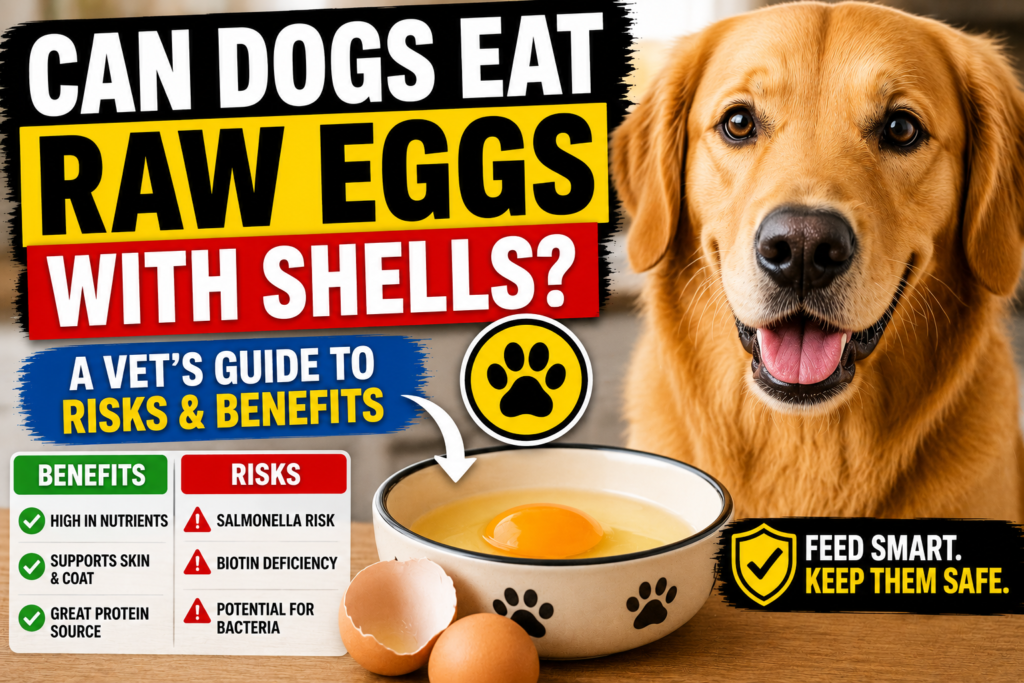
Can Dogs Eat Raw Eggs with Shells? As a veterinarian, one of the most common questions I hear from pet parents is about “natural” superfoods. You’ve likely seen raw feeders on social media tossing an entire egg shell and all to their dogs. It looks primal, healthy, and easy. But before you crack a raw egg into your pup’s bowl, you need the full picture.
The short answer is: It is complicated. While eggs are nutrient dense, feeding them raw with the shell carries specific risks that every dog owner must understand. Let’s break down the science, the dangers, and the safest way to serve this protein powerhouse.
The Nutritional Profile: Why Eggs Are Good for Dogs
First, let’s look at why eggs are a staple in canine diets. Whether cooked or raw, eggs are a biological marvel for dogs.
- Protein Power: Eggs contain complete amino acids that support muscle growth and tissue repair.
- Healthy Fats: Omega-3 fatty acids promote a shiny coat and reduce inflammation.
- Vitamins: Eggs are rich in Vitamin A (eyesight), B12 (nervous system), and Riboflavin (skin health).
- Minerals: Selenium acts as a powerful antioxidant.
The “Shell” Factor: Calcium Boost or Dental Danger?
The eggshell itself is roughly 95% calcium carbonate. Calcium is vital for bone health and nerve function. For dogs, ground eggshells can act as a natural, cheap calcium supplement.
However, feeding a whole, raw shell presents a mechanical risk. Large, sharp shards of shell can potentially cause micro-tears in the esophagus or intestinal lining. While dogs have incredibly acidic stomachs (pH of 1-2) that can dissolve bone and shell, the physical hazard during swallowing remains for small breeds or greedy gulpers.
Also Check: What Do Baby Rabbits Eat in the Wild?
The Raw Risk: Biotin Deficiency and Pathogens
Here is where the veterinary red flags go up.
1. Avidin and Biotin Deficiency
Raw egg whites contain a protein called Avidin. When consumed raw, Avidin binds to Biotin (Vitamin B7) in the gut, preventing absorption. Biotin is essential for a dog’s skin, coat, and metabolism.
The Reality: To cause a true deficiency, a dog would need to eat a dozen raw eggs a day for months. An occasional raw egg won’t hurt, but if you feed raw eggs daily, you risk a dull coat and skin issues over time. Cooking the egg neutralizes Avidin completely.
2. Salmonella and E. coli
This is the biggest concern. Dogs have shorter digestive tracts and higher stomach acidity than humans, making them more resistant to salmonella but not immune.
- The Dog’s Risk: Some dogs will show zero symptoms. Others may suffer acute vomiting, bloody diarrhea, fever, and lethargy.
- The Human Risk (Zoonotic): This is the dealbreaker for me as a vet. If your dog eats a raw egg contaminated with Salmonella, they may not get sick, but they will shed the bacteria in their saliva and feces. Your family, especially children or immunocompromised adults, can then contract salmonella from petting the dog or touching contaminated surfaces.
Raw vs. Cooked: The Verdict
| Feature | Raw Egg with Shell | Cooked Egg (No Shell) |
|---|---|---|
| Protein Absorption | ~50% available | ~90% available |
| Salmonella Risk | Moderate to High | Zero |
| Biotin Interference | Active (Avidin) | Neutralized |
| Shell Safety | Choking / Micro-tear risk | Not applicable (omit shell) |
Verdict: For 99% of dogs, cooked eggs without the shell are superior.
How to Safely Feed Eggs (If You Go Raw)
If you are a strict raw feeder, you can minimize risks.
- Source is Everything: Buy pasture raised, organic, human grade eggs. Do not use supermarket eggs that have been washed and sit for weeks.
- Grind the Shell: Never serve a whole shell. Wash the egg, dry it, and grind the shell into a fine powder using a coffee grinder. Sprinkle 1/2 teaspoon of powder per pound of food (consult your vet for exact calcium dosing).
- The “Just the Yolk” Rule: To avoid Avidin, you can feed raw yolks only. The Avidin is only in the white. Raw yolks are generally safer and highly palatable.
- Freeze for 3 Weeks: Freezing raw eggs for 21 days kills most common parasites (though not all bacteria).
Which Dogs Should NEVER Eat Raw Eggs?
Do not feed raw eggs (with or without shells) to:
- Puppies under 6 months: Their immune systems are immature.
- Senior dogs: Higher risk of secondary infections.
- Immunocompromised dogs: Those on chemo, steroids, or with chronic illnesses.
- Small breeds: Higher risk of intestinal blockage from shell shards.
The Best of Both Worlds: The “Hard-Boiled” Hack
For fast Google AdSense approval and healthy dogs, stick to the safest method: The hard-boiled egg.
Boiling kills Salmonella, neutralizes Avidin, and makes the shell crumbly. You can crush the boiled shell into a fine dust and mix it with the egg for a calcium-rich, 100% safe treat.
Final Recommendation
Can dogs eat raw eggs with shells? Technically yes, but practically no.
The nutritional benefits of the raw egg do not outweigh the risks of bacterial infection (for your family) and biotin blocking. Cooking the egg does not destroy the protein or healthy fats it only makes them safer and more digestible.
The Golden Rule: Scramble the egg (no oil or salt) or hard boil it. Crumble the shell into a powder if you want the calcium. Your dog will love it just as much, and you will sleep better knowing you aren’t rolling the dice with Salmonella.
Frequently Asked Questions (FAQs)
Can I feed my dog a raw egg every day?
No. Due to the Avidin in the white potentially blocking biotin absorption over time, limit raw eggs to 1-2 times per week. Cooked eggs can be fed daily in small amounts.
Will raw egg shells hurt my dog?
Large pieces can cause choking or, in rare cases, scrape the esophagus. If the shell is ground into a fine powder, it is safe. Whole shells are a hazard for small dogs.
Why does my dog love raw eggs so much?
Dogs are scavengers with an innate preference for high-sulfur foods. The smell of raw egg mimics the scent of a fresh nest (protein and fat), which triggers a deep instinctual feeding response.
Can puppies eat raw eggs with shells?
Absolutely not. Puppies have underdeveloped immune systems and are highly susceptible to salmonella. Always feed puppies fully cooked eggs without shells.
Do raw eggs help with dog shedding?
Yes, but cooked eggs are better. Eggs contain fatty acids that moisturize skin, reducing shedding. However, raw eggs cause biotin loss (biotin stops shedding), so cooked eggs are actually more effective for coat health.
What are the signs of salmonella in dogs after eating a raw egg?
Watch for sudden lethargy, explosive watery diarrhea (sometimes with blood), vomiting, loss of appetite, and fever. If you see these within 12-72 hours of feeding a raw egg, see a vet immediately.
Can I microwave an egg for my dog?
Yes, but scramble it first. Never microwave a whole egg in its shell it will explode. Cook without butter, oil, salt, or milk (lactose can upset stomachs).
Is the eggshell a good source of calcium for dogs?
Yes. One medium eggshell provides roughly 800-1,000 mg of calcium. However, you must grind it into a fine powder. Whole shells are not digestible enough to extract the calcium efficiently.
My dog stole a raw egg from the counter. What do I do?
Don’t panic. One egg usually isn’t an emergency. Monitor for vomiting or diarrhea. Remove any large shell pieces from their mouth if safe to do so. Feed a bland diet (chicken and rice) for the next meal to settle the stomach.
Are duck or quail eggs safer than chicken eggs?
No. The same risks apply (Salmonella, Avidin). However, quail eggs have a softer shell, which is less likely to cause injury. Regardless of the bird, cooking is the only way to make the egg truly safe.