
How to Treat a Minor Hot Spot on a Golden Retriever Without a Vet?
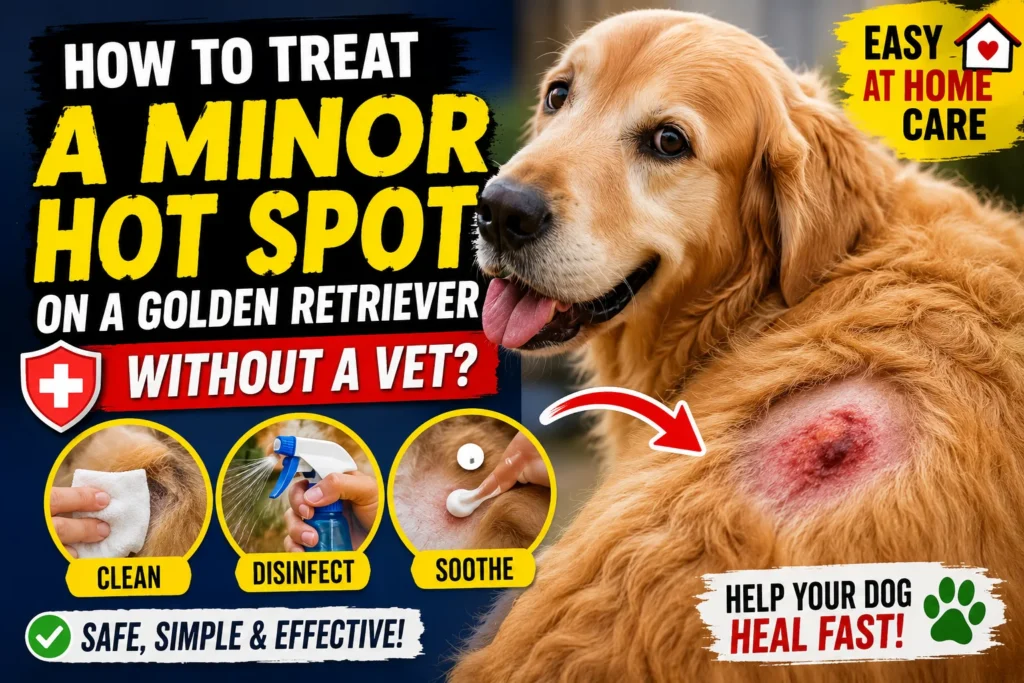
How to Treat a Minor Hot Spot on a Golden Retriever Without a Vet?. The cheerful attitude, luxurious golden hair, and adventurous attitude of our Goldens come at a price, unfortunately. The thick golden hair on these dogs can unfortunately be a source of the problem when it comes to hot spots. If you notice a small spot of moist skin that’s red in color on your Golden that he’s been incessantly nibbling and licking at, there’s a good chance that it’s a small hot spot.
Luckily, many small hot spots can be easily treated at home before it worsens into anything significant.
From a veterinary standpoint, I advise owners that “it is important to treat any suspected hot spot immediately because what might start out as a small area of redness and inflammation can easily develop into a painful and infected wound within just 24-48 hours”.
What Is a Hot Spot?
A hot spot, medically called acute moist dermatitis, is a localized skin inflammation that develops quickly. The affected area becomes:
- Red
- Moist or oozing
- Painful
- Itchy
- Warm to the touch
Because Golden Retrievers have thick fur, moisture and bacteria become trapped against the skin, allowing the irritation to spread rapidly.
Why Golden Retrievers Get Hot Spots So Often
A predisposition to this can exist:
Thick Double Coat
Traps heat and moisture from swimming, baths and walks on rainy days.
Allergies
Environmental and food allergies can cause dogs to scratch themselves almost relentlessly.
Fleas
A single flea bite in a sensitive dog can cause significant itching.
Ear Infections
A dog will scratch in and around an infected, sore ear and that close by skin can also suffer trauma.
Moisture
Fur that is damp provides a suitable place for bacteria to flourish.
Poor Grooming
Hair that becomes matted traps heat and moisture against the skin.
Signs of a Minor Hot Spot
Recognizing hot spots early can allow you to treat this problem yourself.
Look for:
- Small circular red patch
- Constant licking
- Chewing one area
- Hair loss
- Damp or sticky fur
- Mild swelling
- Slight odor
- Sensitive skin
Minor hot spots are usually smaller than two inches across and your dog should otherwise appear healthy.
Supplies You’ll Need
Before starting treatment, gather:
- Electric pet clippers
- Blunt-tip scissors (only if absolutely necessary)
- Sterile saline solution
- Diluted chlorhexidine solution
- Clean gauze pads
- Soft towel
- Elizabethan collar (cone)
- Pet-safe antiseptic spray
Avoid using alcohol or hydrogen peroxide because they damage healthy skin and slow healing.
How to Treat a Minor Hot Spot on a Golden Retriever Without a Vet?
Step 1: Trim the Hair Around the Hot Spot
The extra fur surrounding this area holds moisture and bacteria in place. Shave this hair away using care around the tender area. Take the shaving to the point of an area of healthy skin about 1-inch beyond the edges of the affected area. Let him know that he’s a good boy.
Stop trimming the dog and calm him down. This step is only for a well-behaved animal that gets an anxiety response to being trimmed; don’t attempt if your dog becomes a snarling machine and begins snapping.
Step 2: Clean the Area
Cleanse area of hot spot carefully with sterile saline
Then wash with dilute chlorhexidine
Dry gently with clean gauze
Do not scrub
Step 3: Keep It Dry
Your wound’s greatest enemy: Moisture.
Permit your wound to breathe air freely.
Do not bind the wound, unless specifically advised by your veterinarian.
Step 4: Prevent Licking
This is likely the toughest step. While dogs tend to lick these hotspots which aggravates and increases bacteria, if possible Elizabethan collar inflatable recovery collar protective recovery shirt.
Step 5: Apply a Pet-Safe Topical Product
Put a pet safe topically on it A hot spot spray and or antiseptic spray from your veterinarian will help reduce bacteria and provide some comfort.
Only apply creams to your pet if you get them from your vet; do not use any human creams with zinc oxide, lidocaine, or any steroid creams without veterinary guidance.
Step 6: Monitor Every Day
You should start to see some improvement in a small hot spot within:
24 hours.
Less inflammation.
Less oozing.
Less licking.
Smaller lesions. Total healing may take 5 to 10 days.
Also Check: How Much Does Pet Insurance Cost Per Month?
Home Remedies That Are Safe
Some gentle home remedies may provide additional comfort.
Saline Solution
Excellent for daily cleaning.
Cool Compress
Reduces itching and inflammation.
Oatmeal-Based Dog Products
May soothe irritated skin during bathing.
Proper Grooming
Improves airflow and speeds recovery.
Home Remedies to Avoid
Many internet remedies can actually worsen the infection.
Do NOT use:
- Toothpaste
- Baking soda
- Vinegar
- Essential oils
- Tea tree oil
- Garlic
- Coconut oil on infected wounds
- Human antibiotic ointments unless approved
- Hydrogen peroxide
- Alcohol
Preventing Future Hot Spots
Avoid recurring hot spots for a Golden Retriever until the root cause is found.
Dry Your Dog Thoroughly
Don’t forget to toweling off your dog thoroughly after swimming.
Brush Regularly
Brushing gets out the dead undercoat that would not usually get loose for even breathing to occur.
Control Fleas
Treat your Golden for fleas year
Manage Allergies
Consult your veterinarian about skin problems due to seasonal itching.
Clean the Ears
Ear infections often lead to scratching.
Feed a Balanced Diet
Healthy skin begins with a healthy diet.
When Home Treatment Is Enough
Home care is generally appropriate if:
- The hot spot is very small.
- It appeared recently.
- Your dog is eating normally.
- There is no pus.
- Your dog has no fever.
- The irritation is not spreading.
When You Should See a Veterinarian Immediately
Home treatment is not appropriate if:
- The wound is larger than two inches.
- Thick yellow or green discharge appears.
- The area smells foul.
- Your dog becomes lethargic.
- Fever develops.
- Multiple hot spots appear.
- Swelling becomes severe.
- The wound continues expanding after 24 hours.
- Bleeding occurs.
- Pain becomes severe.
These signs usually indicate a deeper bacterial infection requiring prescription medications.
Common Mistakes Owners Make
Many owners unintentionally worsen hot spots by:
- Letting the dog continue licking
- Waiting several days before treatment
- Leaving wet fur after swimming
- Applying human creams
- Covering the wound tightly
- Skipping flea prevention
- Not trimming surrounding hair
Recovery Timeline
Most uncomplicated hot spots improve quickly.
Day 1–2
- Redness begins decreasing
- Less licking
Day 3–5
- Skin becomes drier
- New skin begins forming
Day 5–10
- Healing continues
- Hair slowly regrows over several weeks
Frequently Asked Questions (FAQs)
Will a hot spot in my Golden Retriever get better by itself?
A hot spot is an inflammation that often continues to expand if it is aggravated through licking and scratching. Only the very smallest of hot spots may spontaneously improve on their own, although it is unlikely.
Can I put Neosporin on my dog’s hot spot?
In general, it’s best not to, unless specifically recommended by your vet, because dogs are likely to lick the ointment off. The application also makes the area susceptible to bacteria that might be harmful if licked.
Should I shave the hair around the hot spot?
Yes, if it’s a very small lesion. Trimming around the edges helps air flow and keep the hot spot dry while making it easier to clean.
How long will it take for an easy hot spot to clear up?
Hot spots which are treated at home should begin to show some improvement within 24-48 hours, and should typically clear up within 5-10 days.
Is coconut oil good for hot spots?
No.Coconut oil may help trap the moisture in the wound and will make your dog more enticed to lick the lesion.
Can I bathe a dog if he has hot spots?
Yes, as long as you’re using a gentle, vet-approved dog shampoo and you can completely dry her hair after the bath.
Are hot spots contagious?
No, hot spots are inflammatory, contagious skin lesions.
Why is my Golden Retriever getting so many hot spots?
If a Golden is prone to recurring hot spots, there is likely something else going on like allergies, flea bite allergies, infections, or sometimes hot spots get stuck when a dog over-grooms himself.
When do hot spots warrant a trip to the veterinarian instead of treating at home?
You should see a vet for a hot spot that is expanding, producing discharge or pus, emitting an offensive smell, looks painful or is causing a great deal of irritation, or not improving within 2 days of home treatment.
Final Thoughts
Hot spots that are caught early in a Golden Retriever can frequently be treated effectively with natural home remedies. The essential elements to treat them include cutting away hair around them, cleansing the hot spot very carefully, ensuring it dries thoroughly and ensuring that the dog cannot lick the spot. Monitoring your dog carefully every day is critical, since the bacteria can spread rapidly below the surface of the skin, causing the hot spot to become significantly worse very quickly.