Why is My Senior Dog Losing Weight Despite Eating Well?
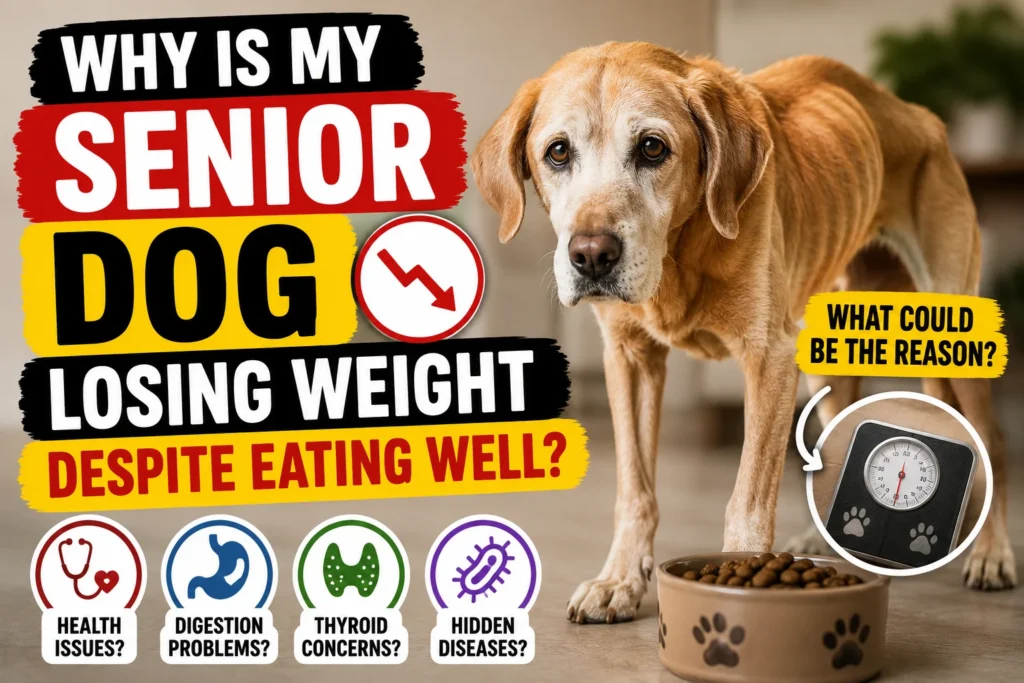
Why is My Senior Dog Losing Weight Despite Eating Well? And then comes that gut-wrenching moment you scratch their body between meals and can distinctly feel their ribs and spine and they appear… well, just thinner. And then it’s: My dog IS eating great, so why in the world am I losing weight?! As your vet, this is one of the most common, frustrating, and ultimately frightening calls I receive in regard to a senior.
The ‘red flag’ is your senior dog losing weight despite appetite While your dog might seem “fine” and is still eating well, a loss of weight in a senior dog is actually one of the biggest “red flags” and they absolutely need to go to the vet. It is usually nothing so simple as old age (like a touch of arthritis), it’s a signal of an underlying medical issue that need to be detected.
Why is My Senior Dog Losing Weight Despite Eating Well? The Mechanism of Weight Loss
The math is really this easy – in order to not gain or lose weight, your dog’s energy (calories) in must balance with energy burned off. A dog who is losing weight while eating the same or more food is doing one of these three things:
- Malabsorption: The body is unable to extract the necessary nutrients from the foods that are moving through the body.
- Mal-digestion: Body simply cannot make food digestible and the body never absorbs even a small amount of nutrition out of food.
- Excessive Energy Demands: An internal disease is causing the body to burn through calories at an abnormally high rate.
Any significant weight loss generally over 10% of their normal body weight is a prompt to seek professional help immediately .
The Primary Culprits: Medical Conditions Causing Weight Loss
Several health issues are notorious for causing this exact set of symptoms. Here are the most common conditions a vet will investigate :
1. Diabetes Mellitus
Dogs have diabetes when either their body either cannot make or use insulin, the body’s way of managing blood sugar (glucose). When insulin is absent, glucose isn’t able to get into the body’s cells and thus is unavailable for energy production. To compensate, the body thinks it is starving and begins to break down muscle and fat for fuel.
This causes severe weight loss as well as insatiable hunger in the dog because his body knows it’s hungry for nutrients.
Intense thirst and frequent urination also are major indicators in a dog with diabetes.
2. Exocrine Pancreatic Insufficiency (EPI)
The enzymes in your food that help with breaking it down are produced by your pancreas. With EPI, your pancreas doesn’t make a sufficient amount of these enzymes. Food passes through the gut largely undigested and unabsorbed, leading to dramatic weight loss and voluminous, pale, and often greasy stools . German Shepherds are particularly predisposed to this condition , but it can affect any breed.
3. Cancer
This is a heartbreakingly common cause of weight loss in senior dogs. Many cancers cause cancer cachexia, a complex syndrome where the tumor releases chemicals that alter the body’s metabolism . This process causes muscle wasting and fat loss even when the dog is eating normally . The weight loss can be rapid and is often the only early sign of an internal mass .
4. Chronic Kidney Disease
Our kidneys act to filter toxins and waste from our bodies, and this filtering role reduces when our kidneys begin to fail. Increased build-up of toxins in the body can negatively impact your metabolism and appetite, resulting in weight loss. A common sign in earlier stages is weight loss accompanied by increased thirst and urination .
5. Dental Disease
This is a surprisingly frequent culprit. While dogs with severe dental pain might avoid food, many will try to eat despite the pain. They may swallow food whole without chewing, which can lead to poor digestion. The pain itself can also cause a subtle reduction in food intake that’s hard to notice . A thorough oral exam is a key part of any veterinary visit .
6. Heart Disease
Heart conditions can reduce blood flow to the digestive system, making nutrient uptake less efficient . Heart failure also puts the body under significant metabolic stress, increasing its energy needs . Dogs with heart disease may show other signs like coughing, breathing difficulties, or tiring easily .
7. Intestinal Parasites
Though more prevalent in puppies, a significant worm infestation in a senior dog who may have a weakened immune system can cause weight loss. Certain types of parasites-roundworms, hookworms, and tapeworms- rob your dog of essential nutrients needed for healthy growth.
Also Check: Can You Use Hydrogen Peroxide to Clean a Cat Wound?
Sarcopenia: When It’s Not the Food
Also, to be clear there is a distinction between “fat” and “muscle” loss. In older dogs, sarcopenia(age-related loss of muscle mass) is a frequently encountered problem. As dogs age, they may become less active, leading to natural muscle wastage. While this is a normal part of aging and can cause visible weight loss (often the dog’s spine and hips become more prominent), a good diet can help slow it down . However, rapid muscle loss is still a red flag for an underlying disease . When faced with sarcopenia in a patient, a vet should also confirm that treatable causes can be eliminated before deciding on a treatment plan.
What to Do: A Step-by-Step Plan for Concerned Owners
If you are worried about your senior pet being overweight, do not:
- Go to the Vet Now: That’s an order; don’t wait for things to correct themselves. Unexplained weight loss in senior dogs is actually one of the biggest danger signs, and the fact you’re aware of it suggests you’re a super-attentive pet parent.
- Bring it all: Because the vet can only assess your dog on what they know, make sure you’re prepared to share information about what happened and what’s currently going on with your buddy: Your food protocol, including exactly what you’re feeding your pet and how much. When did you notice weight loss?
- Any changes in water intake or urination patterns?
- Appetite?
- Naps?
- Breathing?
- Nausea or diarrhea?
- Let the tests begin: To get to the bottom of what’s happening, your veterinarian will need to run some tests, which could include:
- Physical and dental examination: Blood work (including total blood count and chemistry to ensure organs such as the kidneys and liver are healthy and checking for the presence of diabetes, infections etc.)
- Urine analysis to check for signs of infections, diabetes, or kidney issues.
- Stool analysis to test for parasites.
- X-rays or sonograms to check the health of organs, organs, the abdomen, chest, or to screen for cancer
Conclusion
Losing Weight is Worrying but Your Dog’s Vet Holds the Keys Losing your dog’s weight can be frightening, but don’t delay – the very first step is to connect with your vet. Your dog’s weight loss has an extensive list of causes, yet many-such as parasites, dental issues, diabetes, and EPI-are completely manageable. In other cases of serious concern, such as chronic kidney disease and cancer, speedy diagnoses allow your vet to recommend treatments that extend life and comfort. If you’re letting your dog “be fine” with age, or have simply “not gotten around to,” you’re risking a later diagnosis of severe disease with the less successful outcomes.
Frequently Asked Questions (FAQs)
My senior dog is losing weight but has a ravenous appetite. Should I feed them more?
It is a common instinct, but this is the classic scenario indicating a disease that is preventing proper nutrient absorption (like EPI or diabetes), not a simple lack of food. Increasing their food without a diagnosis will only make them gain weight in some cases, but in others (like diabetes) it can worsen the underlying condition. A veterinary examination is essential.
How much weight loss is considered serious for a senior dog?
A good rule of thumb is that a loss of more than 10% of their normal body weight is significant and a major red flag . This means a 50 lb dog losing 5 lbs, or a 10 lb dog losing 1 lb, warrants an urgent vet visit. Regular monthly weigh-ins at home can help you track these trends .
Is it just “old age” if my older dog is getting skinny and bony?
While muscle loss (sarcopenia) is a normal part of aging, significant weight loss especially if the dog is still eating is never something to dismiss as just “old age” . It is almost always a sign of an underlying medical condition that needs to be investigated .
What specific tests will my vet run to find the cause?
Your vet will likely start with a complete physical exam and dental check. They will then typically recommend a series of tests, including a comprehensive blood panel, a urinalysis, and a fecal exam . Depending on these results, they may move on to more advanced diagnostics like X-rays or an ultrasound to get a clearer picture of your dog’s internal organs .
Could my dog’s food be the problem if they are losing weight?
Yes, if it’s the food’s fault, it’s not as likely to happen if nothing has changed. It’s possible that they are getting too little food; they could be getting low quality food, or you could be feeding them a diet that is harder for a senior dog to digest. In rare cases when no disease has been found, they may just change there food to high protein, Highly digestible dog food for seniors.
How can I tell if they are loosing fat and or muscle loss?
This will most certainly need to be made by your vet, your dog will not give it away easily; you would say he feels leaner with a well-defined waist line and an easily palpably torso (which should ideally feel similar to the knuckles of your fist) when comparing it to his spine.
Even though he is eating; can there be problems with his teeth
Yes definitely, he will have a dental infection with a lost tooth (that he will just swallow his food as it gets lodged in the missing teeth). He’s won’t display symptoms like drooling or obvious pain. When your dog has dental issues, this would cause reduced feed consumption and in turn lose weight as it becomes slow.
Would medication for my dog’s arthritis affect his appetite and weight?
Most medications can be the cause of upset stomach that can reduce appetite and lead to weight gain or loss. But, since he is in any of the groups that could be possible it is necessary to check up on the medical reports.
How can I help my senior dog gain weight at home?
The absolute first step is to get a diagnosis from your vet. Once an underlying cause is identified and treated, your vet can give you specific dietary recommendations to help your dog gain weight safely . This may involve adding high-calorie supplements, offering more frequent meals, or switching to a more palatable and digestible food .
Cancer cachexia What is it? Is it treatable?
Cancer cachexia refers to the wasting associated with a tumor. Substances released by tumor cells are disrupting a dog’s metabolic process and this results in loss of muscle mass and weight loss despite the food intake. Diet cannot “cure” this disorder but treatment the tumor early as well as providing a sound nutritional program can often slow the process.