How to Treat Dry Crusty Nose on Pugs and French Bulldogs?
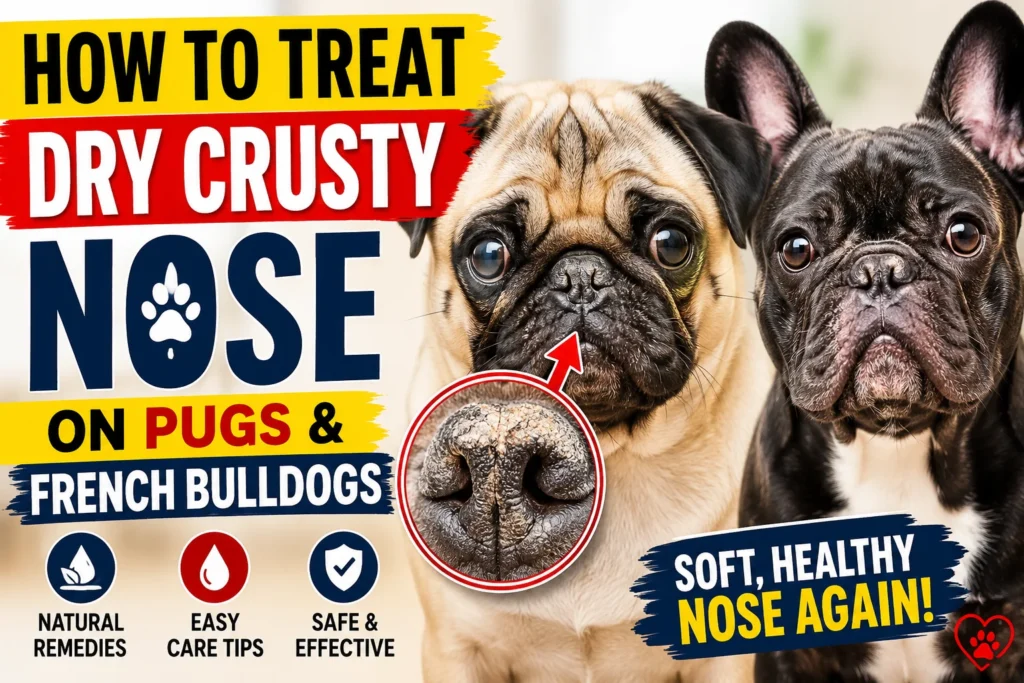
How to Treat Dry Crusty Nose on Pugs and French Bulldogs. Most dogs do not suffer from a dry crusty nose, however when your Pug or Frenchie does have one it’s most often an area of owner concern. Usually, your dog will either develop what appears to be a rough or flaky nose with patches of dry skin that crack or a buildup of hard brown and yellow crusts on their nose. Most cases of a mildly dry nose is nothing to worry about, but consistent crusting does require immediate attention and treatment to avoid complications such as pain and infections.
Luckily however, their brachycephalic head shapes and their characteristic features make them breed-wise, genetically likely candidates to suffering the condition that causes these crusty doggy noses in pug or french bulldog to occur; which is ‘nasal hyperkeratosis’. Nasal hyperkeratosis in dogs is an accumulation of the keratin that can occur over your dog’s nose, causing it to harden and form in thick patches that later crack. More moderate cases of a crusty pug nose or a french bulldog nose may well be resolved and eased through home treatments.
However should cracks in your dog’s nose grow deep or blood occur then you’ll require immediate medical attention from a professional and experienced veterinarian to investigate.
This comprehensive guide will help owners navigate the causes, symptoms, home remedies for a dry nose on a pug or French Bulldog, and when it’s time to consult a professional.
How to Treat Dry Crusty Nose on Pugs and French Bulldogs
The nose on your dog can dry out due to a number of factors, but in brachycephalic breeds this can become a recurring issue. Here’s what causes a dry, crusty nose:
Nasal Hyperkeratosis: Most Common Cause
This is undoubtedly the most common cause for a dry and crusty nose in these breeds, and also in Bulldogs, Boxers, and many senior dogs. Keratin is a hard protein that’s also the building block of skin, hair and nails. Normally,keratin is sloughed off and shed as it’s replaced, but in the case of hyperkeratosis, excessive keratin is produced causing it to build up in thick, rough patches that make the nose dry, hard and even painful for the dog. Signs include:
- Thicker-than-normal nose texture
- Thick crusts forming on the nose
- Flaky dry appearance of the nose
- Deeper cracks in the nose
- A thick horn-like appearance on the nose
Dry Weather
If your dog spends most of their time outdoors in hot, dry climates or inside an air conditioned or heated home (where humidity levels are typically very low), moisture can easily evaporate from their nose, leaving it dry. This is often exacerbated in the winter months, or during extended periods of high heat and sun.
Dehydration
Just like humans, dogs can experience skin dryness and irritation if they aren’t drinking enough water throughout the day. A dog with a dry nose may be more dehydrated than average. Encourage your pet to drink fresh, cool water every few hours.
Sunburns
Dogs with very fair or pink noses are more susceptible to sun damage. If your pug or French bulldog has had prolonged exposure to the sun (without protection such as a UV spray), their nose may have become irritated, dry, or burned, potentially developing crusts over time. This should always be addressed promptly, especially in summer.
Allergies
Both environmental and food allergies can play a role in a dog’s skin condition and a dry nose can be one manifestation of these underlying allergic reactions. Other symptoms associated with allergies include: redness, swelling, irritation, dryness, itching and even the development of crusts around the nasal area.
Autoimmune Diseases
Autoimmune diseases are less common, but these chronic illnesses involve the immune system’s attack on healthy tissue, which could lead to damage and disruption to the tissues of the nose, including chronic dry and crusty issues.
Bacterial and Fungal Infections
Once the nose has been cracked or scratched by other factors such as dehydration, sunburn, or even hyperkeratosis, this can create a pathway for bacteria or fungus to enter and lead to infections that further aggravate and inflame the skin. Signs of a bacterial or fungal infection often include redness, swelling, discharge from the nose, and continued bleeding and pain.
Also Chek: How Much Does Pet Insurance Cost Per Month?
Symptoms of a Dry Crusty Nose on a Pug or French Bulldog
Here’s what to look for if you think your pug or French bulldog may be experiencing the signs of a dry nose:
- Rougher than usual texture of the nose
- Thicker-than-normal crusts on the surface of the nose
- Flaky skin, particularly at the edges of the nose
- Cracking or fissure-like openings in the nose
- Bleeding from cracked areas of the nose
- Discoloration of the nose
- Pain or sensitivity when the nose is touched
- Less interest in sniffing and exploring the environment
- Constant licking of the nose
Is it Normal for a Dog’s Nose to be Dry?
Yes. Just as people’s skin can vary in dryness and moisture depending on the season and climate, so can dogs’ noses. If your pug’s or Frenchie’s nose is only slightly dry after a nap or a sunbathing session, or after a rest on a cold day, it’s likely normal.
You’ll notice that a dog’s nose can be damp or moist most of the day and then dry and crusted after a good long snooze.
However, when your dog’s nose remains dry and becomes persistently crusty, painful, cracked, or starts bleeding, this is typically not a normal symptom.
You should have:
First you want to take a clean, soft washcloth, saturated in warm water, then you want to hold it gently on the dog’s nose for 5 to 10 minutes to loosen the hardened crusts. Never pick at them with your fingers, that will only make it worse. Applying a dog safe nose balm Secondly, after softening them you’ll want to use a good moisturizing nose balm that’s safe for dogs. Look for one containing shea butter, coconut oil, beeswax, vitamin E, calendula, or other natural plant oils, and you’ll want to avoid zinc oxide, essential oils, salicylic acid and any medicated human creams. You’ll want to apply it 2 to 3 times daily until the condition of the nose improves.
Increasing hydration
As with everything else a proper diet and plenty of water is crucial to improving not just the nose, but overall skin health and it is as simple as encouraging your pet to drink, feeding them some wet food, or adding water to the kibble.
Use a humidifier
Using a humidifier in the house during the colder months can help greatly if your dog’s nose appears to be drying and cracking more due to the environment. Prevent Further Trauma Keep your dog away from rough surfaces, such as brick or concrete. These will only further exacerbate the issue and will only cause additional trauma to their nose.
Keeping up with a Good diet
A good, balanced diet for your dog with plenty of nutrients such as omega-3 fatty acids, vitamin E and high quality protein can do a lot to improve overall skin health.
It’s a good idea to talk to your vet before adding supplements into your pet’s diet, but it’s a good idea to be mindful of his or her diet.
Vet Approved Home Remedies
Warm compress Softens and removes crusts prior to moisturizing. Coconut Oil You might give some to your dog to lick, but the benefits of applying ittopically for a long term duration are limited as it will be quickly licked off. The key would be to only apply a thin layer or use one of the products recommended in the following points.
A Petroleum-Free Dog
Nose Balm this is probably the most beneficial option if home remedies. It will provide your dog with longer-lasting protection and is far more effective than using other methods in a more lasting way. Humidified Air Providing your dog with an adequate level of humidity will keep them more comfortable as it reduces environmental drying.
What Not To Do
Don’t pull crusts off, use human lotion or medicated creams (steroid or otherwise, unless prescribed by your veterinarian), apply tea tree oil, alcohol, or hydrogen peroxide, and definitely don’t scrub your dog’s nose aggressively as this can lead to inflammation and infection.
When to Seek veterinary assistance
If you notice that your dog’s nose is bleeding, deep, cracked, filled with pus, swollen, has an odor, looks very painful, appears discolored or to be losing pigmentation, you develop fever, a refusal to eat, or you begin to see nose ulcers then it’s a sign that you should seek medical assistance from your veterinarian immediately, as there could be a larger underlying problem.
Can Dog nasal hyperkeratosis be Cured?
Unfortunately, the prognosis is not a cure but through a consistent regime of moisturizing and gentle cleaning the nose should become a great deal more comfortable and smooth. Most Pugs and French Bulldogs can go on to live long and comfortable lives with regular care and maintenance of their nose.
Prevention Tips:
- Keep a moisturizing regime going for your dog’s nose
- Once a week usually is enough.
- Ensure your dog drinks plenty of water every day.
- Feed your dog a balanced diet.
- Minimize sun exposure, if possible.
- Consider using indoor humidifiers during winter.
- Visit your vet on a routine basis to ensure no underlying condition is occurring.
- Look for new signs of cracking or dry spots on the nose.
Common owner Mistakes
People tend to make that only aggravates the problem include picking off crusts, delaying treatment until it starts to bleed, using the wrong kinds of balm, ignoring the problem and allowing dehydration.
“It’s always better to intervene early,” as the early treatment for the condition is so much more efficient than attempting to treat it once it has already become infected and severely inflamed.
Veterinary treatment options
If the above-mentioned remedies aren’t helping and your veterinarian believes that the problem needs more aggressive treatment they may recommend any of the following;
- Prescription moisturizing agents antibiotics for infection
- Anti-inflammatory medications
- A biopsy of the affected skin if autoimmune disorders are suspected
- Blood tests for any underlying illnesses
FAQs
Why is my pug’s nose so dry and crusty?
It is most often due to a build up of dead skin known as canine nasal hyperkeratosis, but it can be associated with weather changes (dry air), poor nutrition, allergies and nasal infections.
Can i put coconut oil on my french bulldog’s nose?
A little of pure coconut oil on the nose will be a temporary aid, but there are some great dog nose balms available from the vet that should offer more lasting results.
Is a dry nose always a sign that my dog is sick?
Not necessarily! When dogs wake up after sleeping they usually have a dry nose; however, persistent crustiness, redness, cracked or painful nasal tissue will warrant a visit to the vet.
Can i remove the crusts off my dog’s nose myself?
Please do not ever pull or peel the dried crusts off your dog’s nose.
This will leave him in pain and increase his chance of developing infection. To help loosen dried material gently hold a warm compress against the nose before applying balm.
Are human lotions okay to use on my dog’s nose?
Never use human hand lotions or creams on your dog’s nose.
How often should i use dog nose balm?
In most cases, two to three applications per day until improved, then use nose balm once or twice a week to maintain nose hydration.
Does a dry nose mean that my dog is dehydrated?
It can be part of it, yes. Inadequate intake of water will contribute to drying skin, including the nose, but other things can cause it too.
Will my dog’s allergies make his nose crusty?
Yes, environmental or food allergies could certainly contribute to irritative dryness and even a reddened or irritated nose.
When should I see a vet about my dog’s nose?
Seek veterinary help if the nose starts to bleed, swell, become painful, discharge, deep cracks begin to develop, or if your home treatment plan does not result in a positive improvement within one to two weeks.
Can dog nose hyperkeratosis be prevented?
While it may not always be fully preventable, keeping the nose hydrated and clean with regular application of dog-safe balm will definitely help reduce your chances of the condition recurring. Good nutrition and regular visits to your vet will also keep your dog healthy and his nose in the best possible condition.
Final Verdict
A Pug or Frenchie dry, crusty nose is typically due to a condition called nasal hyperkeratosis which is characterized by the accumulation of excess keratin. Usually this can be managed at home by using a few simple techniques like:warm compresses dog-friendly moisturising balm a diet high in quality food high intake of water