How to Keep a Senior Dog Comfortable in Winter?
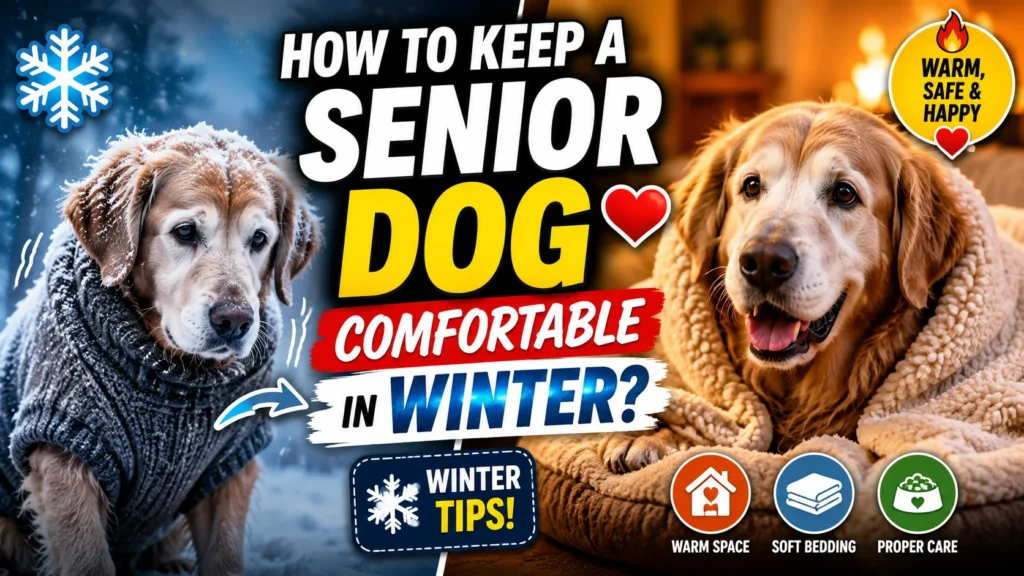
Keep a Senior Dog Comfortable in Winter, Winter is magical with its cozy blankets and snowy landscapes, but for senior dogs (typically those over 7 years old, or 5 for giant breeds), the cold season is a significant health risk. As a veterinarian, I see a sharp increase in arthritic pain, hypothermia risks, and respiratory issues once the temperature drops.
The combination of declining mobility, weakened immune systems, and thinner fur means your old friend cannot regulate body temperature like a puppy. This guide provides vet-approved strategies to ensure your geriatric dog stays warm, safe, and cheerful until spring.
Recognize the “Invisible” Signs of Cold Stress
Before you turn up the thermostat, know what hypothermia looks like in an old dog. Unlike young dogs who shiver violently, seniors often shut down.
Watch for these red flags:
- Subtle shivering (or a complete lack of shivering if they are exhausted).
- Curled up posture (tight ball) even indoors.
- Stiffness or reluctance to stand up from bed.
- Cold ears and paws if the tips are cold, their core is cold.
Also Check: Why Does My Cat Refuse to Eat Wet Food?
Upgrade the Sleeping Area (The Orthopedic Warmth Zone)
Concrete floors or thin mats suck heat from arthritic bones. A senior dog needs elevation and insulation.
- The Setup: Use a raised orthopedic bed (memory foam reduces joint pressure). Place a self-heating pet mat (reflective Mylar) inside the cover. These mats reflect the dog’s own body heat back without electricity.
- The Blanket Trick: Use fleece or wool (not cotton, which holds moisture). Vet Tip: Wash blankets weekly old dogs often have incontinence; a wet bed is a frozen dog.
The “Layered Wardrobe” for Arthritic Bodies
Not all senior dogs tolerate coats, but those with thin coats (greyhounds), hairless breeds, or Cushing’s disease (hair loss) absolutely need them.
- Best option: A waterproof, insulated jacket that covers the neck to the base of the tail, without restricting urination.
- Contraindication: Do not leave a coat on a dog indoors if your house is heated. Overheating causes lethargy and worsens heart conditions.
Adjust Walks: Shorter, Brighter, Safer
Old dogs lose proprioception (awareness of where their paws are). Ice and snow are like a skating rink for them.
- The 5-Minute Rule: In freezing temps, reduce walk time to 5–10 minutes, three times a day instead of one long walk.
- Booties? Yes, if they tolerate them. Look for non-slip rubber soles. If not, apply Musher’s Secret (wax) to paw pads to prevent salt burns and ice ball formation between toes.
- Avoid: De-icing salts (cause chemical burns) and frozen lakes (paws stick to ice).
Manage Arthritis Pain Aggressively
Cold weather thickens synovial fluid (the lubricant in joints). This is why your dog limps more in December.
- Consult your vet for: NSAIDs (like Carprofen), Gabapentin (nerve pain), or Adequan injections.
- Do NOT give human ibuprofen or Tylenol it causes fatal kidney/liver failure in dogs.
- Natural aids: Green-lipped mussel powder and CBD oil (ensure it is pet-grade, THC-free).
Create a “Bathroom Emergency Plan”
Old dogs hate slipping. If your yard is icy, your dog may refuse to go outside, leading to urinary tract infections or obstipation (blocked colon from holding stool).
- The “Pee-Patch” Solution: Buy a roll of sod or a porch potty (artificial grass tray) and place it on your covered porch or garage. Train them to use this when the ground is frozen.
- Shovel a Path: Clear a 10-foot runway to their favorite spot and sprinkle pet-safe sand (not salt) for traction.
Manage Indoor Humidity and Drafts
Winter air is dry, which cracks their nose (hyperkeratosis) and exacerbates collapsing trachea (a common senior cough).
- Humidity goal: 40-50% using a cool-mist humidifier near their bed.
- Block drafts: Use draft stoppers on doors. Senior dogs feel a draft from a door crack as severely as a human feels a cold shower.
Keep a Senior Dog Comfortable in Winter (Nutrition Adjustments for Cold Metabolism)
Senior dogs burn more calories to stay warm, but they also exercise less. This is a delicate balance.
- Add warm water to their kibble (make a “gravy”). It increases hydration (critical for kidney health) and makes food more aromatic for those with lost smell.
- Omega-3 fatty acids (fish oil) reduce the inflammatory response to cold.
- Warning: If your senior is less active, reduce their food by 10% to prevent obesity, which worsens arthritis.
Nighttime Potty Alarms
The hardest hours for a senior dog are 2 AM to 5 AM when the house temperature drops lowest.
- Solution: A heated dog bed (low-voltage, chew-proof cord). If using a human heating pad, set it to LOW and place it under a thick blanket (never direct contact to prevent burns).
- Set a timer: Wake up at midnight to let them out. Holding urine for 10 hours in cold weather stresses the heart.
Grooming Is Winter Protection
Shaving a double-coated breed (Husky, Golden Retriever) ruins their natural insulation. Conversely, matted fur traps moisture against the skin, causing frostbite.
- Do this: Brush them daily to remove dead undercoat.
- Don’t do this: Skip baths entirely but when you do bathe, use lukewarm water (not hot), and dry 100% with a blow dryer on low heat immediately.
Know When to Stay Inside
If the wind chill is below 20°F (-7°C) , it is objectively too dangerous for a senior dog to be outside longer than 2 minutes. Use indoor enrichment instead:
- Snuffle mats for treats.
- Nose work (hiding kibble in boxes).
- Gentle “sit to stand” exercises for joint mobility.
Final Vet’s Note
Carbon monoxide from furnaces is heavier than air and sinks to floor level exactly where your dog sleeps. Ensure you have a working CO detector. Signs of poisoning in dogs: Cherry red gums, weakness, and vomiting.
Your senior dog has given you a decade of loyalty. Protecting them in winter isn’t pampering; it’s preventive medicine. When in doubt, remember the rule: If you need a jacket, your senior dog needs two.
Frequently Asked Questions (FAQs)
Is it safe to use a human heating pad for my senior dog?
Only on the lowest setting and placed under a thick towel or blanket. Never let the dog lie directly on a human heating pad, as they cannot sense thermal burns due to decreased nerve sensation in old age.
Why is my old dog shivering inside a warm house?
This could be pain from arthritis (adrenaline rush causes tremors), low blood sugar, or cognitive dysfunction (Canine Dementia). If the room is 70°F and they shiver, see your vet for a blood panel.
Can senior dogs get frostbite on their paws?
Yes, and quickly. Frostbite starts at 32°F (0°C) if paws are wet. Signs: Pale, hard paw pads that turn black after thawing. Do not rub frostbitten paws run lukewarm (not hot) water over them and go to an emergency vet.
How do I keep my arthritic dog from slipping on hardwood floors in winter?
Apply non-slip paw grips (sticker pads for nails/toes) or use yoga mats to create “carpet pathways” from their bed to the door. Dry their paws immediately after coming inside wet paws plus smooth floors equals a torn ACL.
What temperature is too cold for a senior dog indoors?
If your thermostat drops below 60°F (15°C) at night, it is too cold. Senior dogs lose heat rapidly below this threshold. Set the night temperature to 65-68°F.
My senior dog refuses to go outside to pee in the snow. What do I do?
Do not force them. Shovel a small area down to the grass. If that fails, use a “pee pad” in a bathtub or garage temporarily. Forcing an anxious old dog onto ice risks a heart attack from stress.
Are heated water bowls dangerous for outdoor dogs in winter?
They are excellent, but if your dog is truly “senior,” they should not be living outdoors at all. For fenced yard access, use a heated bowl and check the cord daily for chewing damage.
Does a senior dog need more food in winter?
Not automatically. If they are still mobile and shivering outdoors, increase by 15%. If they are bed-bound and cold, increase high-quality protein (boiled chicken) but not carbs, as inactivity causes weight gain.
Can I put a sweater on my long-haired senior dog?
No. Double coats (Huskies, Malamutes) actually overheat under sweaters, leading to heat rash. Use a sweater only on short-haired seniors (Boxers, Whippets) or those with medical hair loss.
How do I know if my senior dog’s cold is actually pneumonia?
A winter “cold” in dogs doesn’t exist; it’s usually Bordetella (kennel cough) or pneumonia. Signs of pneumonia: Wet, productive cough, blueish gums, and nasal discharge. If they cough after being outside in the cold, see a vet immediately.