
Why Is My Dog Drinking So Much Water?
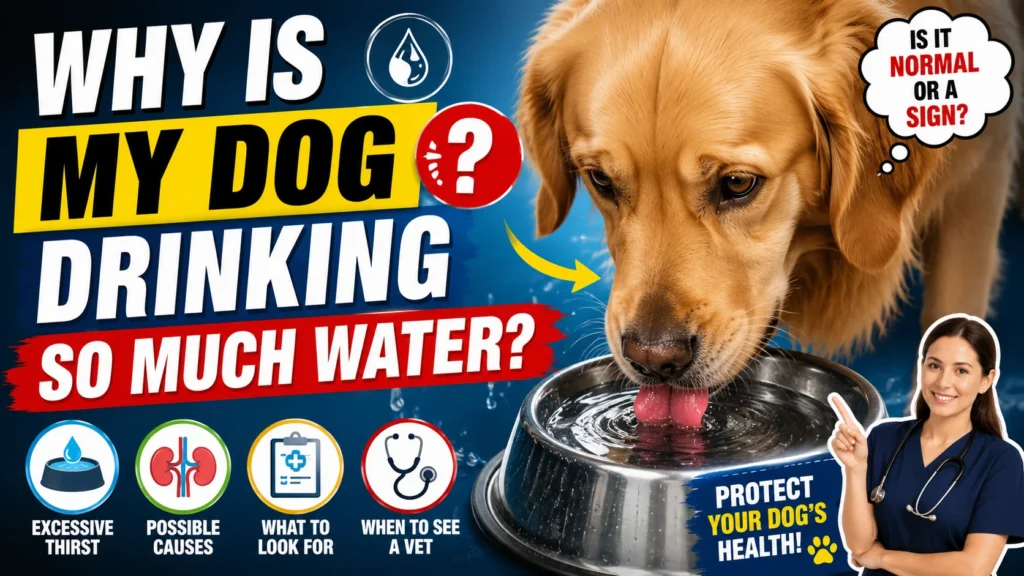
Why Is My Dog Drinking So Much Water? If you are used to your dog drinking just a small amount of water per day, only to find yourself Refilling his or her water bowl again and again, then no wonder you’re worried! What can cause a dog to drink a lot of water?
There can be many underlying health problems or behavioral factors at play, such as increased appetite, or behavioral problems, but there are some conditions that typically can cause such increased thirst medically called polydipsia – is considered a red flag that may indicate there is a more serious medical problem. This will guide you through the potential causes of a dog that is always thirsty, what you can do to try to remedy the situation yourself, and when it’s time to head to your local veterinarian.
Why Is My Dog Drinking So Much Water?
What is “Normal” Water Intake for a Dog?
Now before you rush into a panic, you need to understand what actually amounts to a “normal” amount of drinking for a dog. Typically speaking, healthy dogs consume between 20 and 70 milliliters of water per kilogram of their body weight daily. For us humans, this would be equivalent to just over an eighth to almost a third of a cup of water for every five pounds of body weight.
This is of course simply a guideline and how much a dog consumes is a bit of a balancing act, depending on factors such as: –
- The type of diet: Dogs who are on a kibble based diet consume more water compared to a wet food or raw food diet that already has moisture content.
- Amount of exercise: A dog who has spent time burning energy in the park will naturally be thirstier.
- Environmental conditions: If it’s hot out and they are breathing heavily in and out, they lose water, so will drink more to make up for the losses.
When viewed in a more clinical sense, anything greater than 90 to 100 milliliters per kilogram of body weight a day will be defined as polydipsia by most veterinarians. If your pet’s daily water intake significantly exceeds this, then there might be something that’s going on.
Common Medical Reasons for Excessive Thirst
If your dog’s water consumption is greater than normal and not attributable to a particularly hot day or recent, intense play session, a medical condition may be to blame. The most common underlying causes of thirst and frequent urination (PU/PD, which stands for pollakiuria/polydipsia, or increased frequency and quantity of urination) relate to water imbalances. These diseases require veterinary attention.
Top 5 Reasons Why Dogs Drink More Water Than Normal
1. Kidney Disease
Kidneys are vital for removing waste products and controlling fluid balance in the body. When damage occurs to kidneys as a result of long term illness, infection or toxicity, the kidney’s inability to concentrate urine occurs. Large quantities of dilute urine will be produced by your dog, which means they are losing large quantities of water, and are becoming dehydrated; the thirst follows this dehydration. Signs also include lack of interest, poor appetite.
2. Diabetes Mellitus
Sometimes known as “sugar diabetes”, this disease occurs when the pancreas doesn’t make enough of a hormone called insulin, resulting in sugar building up in the blood stream that gets filtered into the urine. This water, attracted by the sugar, is then voided in the urine. So the dog urinates frequently and, to replace these fluids, drinks frequently. Loss of weight, increased appetite and occasionally cataract development are other possible signs of disease.
3. Cushing’s Disease (Hyperadrenocorticism)
The cause of Cushing’s disease is excessive cortisol production by the adrenal glands . Too much cortisol will upset the other hormones in your body and causes increased thirst and frequent urinating. Other classical symptoms of Cushing’s are a hungry, fat, hair losing and thin skin .
4. Diabetes Insipidus
This is an uncommon disease and must not be confused with diabetes mellitus. ADH is either not secreted, or the body does not produce any to be responsive to. ADH prevents the body retaining water so excess urine is secreted and large amounts of water are drunk. Name sounds the same, but disease totally different from diabetes mellitus.
5. Liver Disease
There are hundreds of jobs the liver performs, and when it malfunctions it causes issues with several different pathways that could make a person urinate more frequently and have more thirstyness.
6. Pyometra (Uterine Infection)
The uterus in an unspayed female dog can get infected and it’s a life threatening condition. Increased thirst and urination can be a sign that a dog is infected in her uterus and this can be combined with symptoms such as fever, vomiting and vaginal discharge.
7. Medications
Some prescription medicines result in excessive thirst. Corticosteroids (prednisone and similar drugs) and diuretics (often given for heart failure), along with some medications used to treat epilepsy, are most to blame.
Also Check: Foods To Help Dogs Recover Faster
Less Common or Behavioral Causes
1. Psychogenic Polydipsia (Primary Polydipsia)
This is a behavioral problem where the dog is drinking excess water out of boredom, anxiety, seeking attention etc. Therefore, his kidneys get rid of this excess water by putting out large amounts of dilute urine. It’s only after you have ruled out every other possibility, that you may get diagnosed with this syndrome. This syndrome is generally seen in young, active, large breed dogs.
2. Normal Causes & Diet
A change in a dog’s diet As stated previously, a dog’s diet is important. You could be causing your dog to drink too much simply by putting them on a dry food diet, a high-protein diet, or a high-salt diet. Consuming a high salt meal will affect electrolyte balance and increase their urination as well as their thirst.
When to Contact Your Vet Immediately?
If you notice your dog drinking far more water than usual and it doesn’t seem to stop, make an appointment with your vet straight away. Under no circumstances should you restrict water access when your dog has this symptom, or if there’s a problem bigger than just increased lifestyle need. If you see excessive thirst with any of the following symptoms contact your vet right away:
- Increased frequency of urination (such as frequent accidents or waking you to go outside at night)
- Lethargy and weakness
- Decreased appetite
- Vomiting and diarrhea
- Weight loss (even if the dog appears to have a good appetite)
- Distended or “pot-bellied” appearance
- Changes in temperament or behavior (restlessness, apparent discomfort)
vomiting water after drinking such a huge quantity
How Will My Vet Investigate This?
Your vet will try to manage this problem in an orderly manner and work out the cause of it. Diagnostic procedures usually include:
1. History and Physical Exam
This is an absolutely critical step. The vet will question you extensively about your dog’s eating habits, activities, medicines, and how much water your dog is drinking in reality (you can actually go and do this for 24 hours and then tell them). The will then do a physical assessment and have a good poke and prod around at your dog, checking for a pot-belly, skin colour or gums colour and if your dog is generally looking fit.
2. Routine Screening Tests
- Diagnosis: The first step in diagnosing most cases is a battery of baseline laboratory tests:
- Urinalysis: A primary test. It is the best test for a lack of urine concentration, called the specific gravity. If your urine is always dilute, it confirms the kidneys can’t concentrate urine. It is also used to look for sugar, protein, and evidence of infection.
- Biochemistry: (blood test) used to monitor organ function and screen for indicators of kidney disease, liver disease and diabetes mellitus including monitoring of blood sugar levels.
- Full Blood Count (FBC): used to test for signs of infection, inflammation and anemia.
3. Advanced Diagnostic Tests
Additional Diagnostic tests if your initial findings were inconclusive:
- Imaging: the vet can examine the organs within your pet’s body such as their kidneys, adrenal glands, liver and bladder for tumors, or other abnormalities using X-ray or ultrasound.
- Hormonal Tests: there are tests to evaluate the cause of Addison’s disease (hypo adreno corticism) or Cushing’s disease.
- Water Deprivation Test / Desmopressin Trial: these more specific tests can identify diabetes insipidus. These are usually performed by a specialist.
Frequently Asked Questions (FAQs)
So when is water considered “too much” for a dog?
Your dog is overdrinking if they are drinking in excess of 90 to 100 ml of water for every kg of body weight (2.2 pounds) that your dog is. So for a 10 kg dog, that would mean more than about 1 liter (4 cups) per day, so you just need to keep an eye on this. You just look in the bowl throughout the day and see if that’s taking place frequently.
Is it okay for my dog to drink more in the summertime?
Yes it is very definitely okay! As your dog pants, this process all about radiating heat away and keeping the body from becoming overly warm, all of this is using water. If it is very hot, you dog needs to be taking more in to keep them from having heat strokes. Now when the weather warms up a bit more, if it still does not come down it may be something else you need to look for.
My dog is taking in copious amounts of water however appears perfectly normal should I be concerned?
If your dog is otherwise acting totally normal and there’s nothing different about his appetite or behavior, maybe he’s just drinking more because of his food, exercise, or the temperature. However, in many cases, an increase in water consumption and/or urination is an early warning sign for many diseases including Cushing’s disease, kidney disease, and diabetes.
Could the food I’m feeding my dog be causing them to drink more?
Dry kibble has very little water in it compared to wet/canned diets, which have up to 70-80% water. If your dog eats exclusively dry kibble, you should expect him to be thirsty most of the time. Diet high in sodium or protein content can also cause thirst.
Can my dog’s medication be making them thirstier?
This is a relatively common side effect for many different medications. The most notorious drugs that cause a rise in thirst and thirst and urination include steroids (prednisone and the like) and certain types of diuretic (furosemide, etc.) medications. Make sure you let your veterinarian know any medications that you are currently giving your dog.
What is the difference between Diabetes Mellitus and Diabetes Insipidus in dogs?
They do not involve the same condition despite both having the word ‘diabetes’ in their name. Diabetes Mellitus is also known as sugar diabetes in the human world and is a disease of blood sugar regulation.
What will my vet do to diagnose my dog’s excessive thirst?
Typically your veterinarian will take a thorough history, perform a full physical exam, and order diagnostic bloodwork. Usually a general health profile with a CBC, chemistry, and urinalysis is performed first. Additional tests may be needed depending on the results of these tests.
How is Psychogenic Polydipsia diagnosed?
The diagnosis is reached by ruling out all other medical causes of increased thirst and urination. In other words, if your dog’s diabetes, Cushing’s disease, or kidney disease are ruled out, psychogenic polydipsia (behavioral drinking) is the most likely cause. This is a very rare condition.
My dog is drinking a lot of water and then vomiting.
What should I do?
If your dog is consuming too much water and then throwing up, you must get him to an animal emergency hospital immediately. He may be at risk of water intoxication or it could be indicative of an even more serious issue such as kidney failure or a pyometra (a uterine infection in females).