How to Treat Dry Crusty Nose?
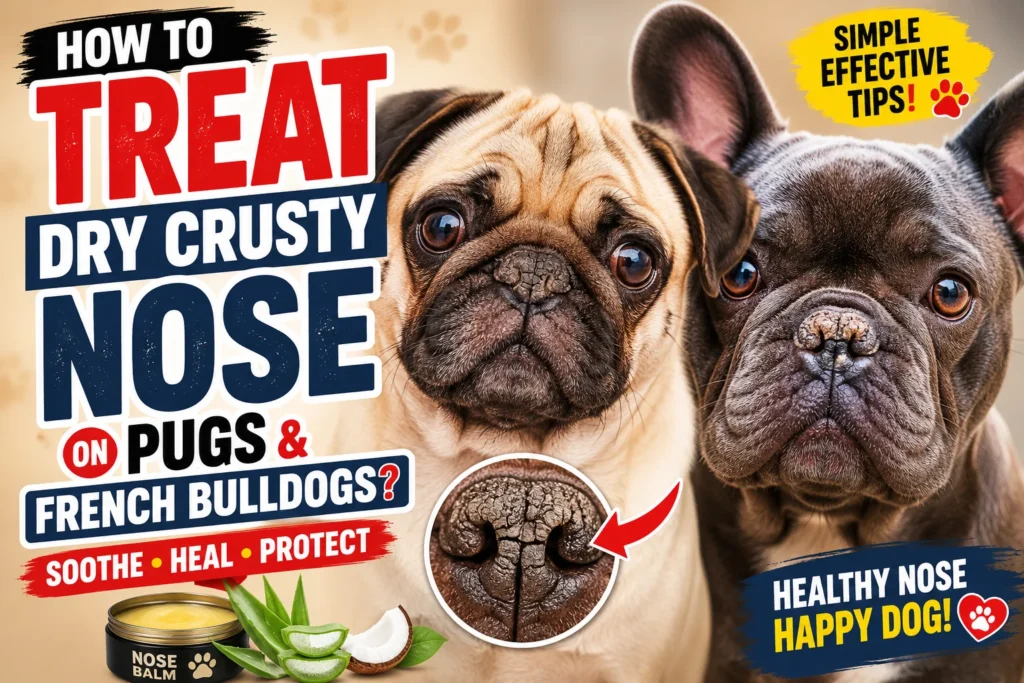
How to Treat Dry Crusty Nose on Pugs and French Bulldogs?. Dry, crusty noses are a frequent worry for the owners of Pugs and French Bulldogs. Due to their peculiar facial anatomy, these brachycephalic or “flat-faced” breeds suffer from dry noses more often than most other dog breeds. Most of the time, a somewhat dry nose is no big deal, but if crusts become thick, or your dog’s nose has cracks, bleed or looks painful, they may need to be seen by your veterinarian.
If you have been concerned about your Frenchie’s or Pug’s rough, flaky, and crusty nose, try not to worry. You can probably help them at home. At other times, you’ll need your veterinarian’s help.
In this guide written for you by our veterinarians, you will find out:
Why Pugs and French Bulldogs have dry noses?
Home remedies to try
Natural and home remedies that work
Over-the-counter products that our veterinarians recommend
Causes for a dog’s crusty nose
Tips to prevent a dry, crusty nose
When you should seek emergency veterinary care for your dog’s nose
Why Do Pugs and French Bulldogs Get Dry Crusty Noses?
If Pugs and French Bulldogs have a problem licking all of the surface area of the nose, it’s a result of their short snout length. As the act of licking helps moisten the nose, difficulty doing so can make the surface dry out over time. Potential causes of dry nose:
- Breed characteristics
- Air quality within the home
- Dry indoor air
- Winter air heating
- Moderate dehydraion
- Your pet’s age
- Too much sun exposure
- Pet Allergies
- Canine auto immune skin condition
- Canine nasal
- Hyperkeratosis.
What Is Nasal Hyperkeratosis?
Nasal hyperkeratosis, also called canine hyperkeratosis of the nose or simply ‘nose’, is another frequently occurring condition characterized by the overgrowth of the keratin layer in a dog’s nose. Causes vary, but may include:
- Hard crusts
- Course texture
- Dry-looking
- Yellow
- Brown
- Grey coating
- Small cracks
- Flaking
The issue isn’t normally fatal, but if not treated it may turn out painful for your pet.
Signs Your Dog’s Dry Nose Needs Attention
A mildly dry nose usually isn’t serious.
However, monitor for:
- Deep cracks
- Bleeding
- Pain when touched
- Swelling
- Pus or discharge
- Bad odor
- Persistent crusts
- Loss of nose pigmentation
- Ulcers
- Difficulty breathing
These symptoms require veterinary evaluation.
How to Treat Dry Crusty Nose on Pugs and French Bulldogs?
Step 1: Gently Clean the Nose
Loosen any dried-up bits first.
You’ll need:
- Warm water
- Cotton ball
- Washcloth
Soak your washcloth in warm water and press it to your dog’s nose for about 3-5 minutes then gently wipe away the dislodge matter. Never attempt to pull at a scab that has stuck and crusted on.
Step 2: Apply a Dog-Safe Nose Balm
Once you’ve cleaned the nose, apply a nose balm made especially for canines. These should contain some of the following:
- Shea butter
- Coconut oil
- Cocoa butter
- Beeswax
- Vitamin E
- Calendula
Don’t use balms containing zinc oxide, essential oils or salicylic acid, and definitely nothing artificial scented. Apply the balm at least two to three times each day.
Step 3: Encourage Hydration
Dehydration, even of a mild nature, can cause nose dryness. Increase your dog’s water intake by…
- Keep fresh water always available.
- Mix some water in with his food.
- Feed him a bit of canned food on occasion.
- Offer him a little bit of unsalted, pet-safe bone broth.
Step 4: Increase Indoor Humidity
When you’re heating your home, the air tends to be very dry, which is terrible for cracked noses.
Use a humidifier
Don’t over-heat your home.
Keep your dog away from any of the heating elements.
Step 5: Prevent Sun Damage
If your dog has a light colored nose, the sun could be damaging it. Try to…
Limit exposure during the hottest parts of the day
Use pet sunscreen (only if prescribed by your vet).
Also Check: How to Make a DIY Pet First Aid Kit on a Budget?
Natural Remedies That Are Generally Safe
If you do not suspect that your dog has any sort of allergy to the below items, then some natural moisturizers could work.
Pure coconut oil
Shea butter
Vitamin E oil (ensure it is pet-safe)
A small bit of olive oil
Just be sure to use a small amount; otherwise, the dog will spend all his time trying to lick it off.
Products Veterinarians Often Recommend
Many veterinarians recommend specially formulated nose balms because they’re designed to be safe if licked.
Common ingredients include:
- Natural waxes
- Plant oils
- Vitamin E
- Calendula
- Lanolin-free moisturizers
Choose products made specifically for dogs rather than human skincare products.
What NOT to Put on Your Dog’s Nose
Avoid using:
- Petroleum jelly in large amounts
- Human lotions
- Hydrocortisone cream
- Antibiotic ointments unless prescribed
- Essential oils
- Tea tree oil
- Zinc oxide creams
- Sunscreens made for people
- Alcohol-based products
Many human products contain ingredients that may be harmful if ingested.
Medical Conditions That Can Cause a Dry Crusty Nose
Sometimes dryness signals something more serious.
Possible medical causes include:
Nasal Hyperkeratosis
Very frequent in French Bulldogs & Pugs.
Allergies
Environmental irritants can trigger environmental allergens and a crusty nose.
Autoimmune Diseases
Autoimmune Conditions:
Pemphigus
Discoid lupus erythematosus
Other immune disorders can affect the nose.
Bacterial Infections
When the skin is damaged, a bacterial infection can occur, which may lead to the following: The nose is swollen, it is painful and may have yellow discharge Fungal Diseases Rare but can lead to an inflamed nose and sores.
Fungal Infections
Although uncommon, fungal diseases can affect the nose.
Dehydration
This happens when illness, vomiting, diarrhea or exposure to heat has depleted the body of water.
When Should You Visit a Veterinarian?
Seek veterinary care if your dog has:
- Bleeding nose
- Deep painful cracks
- Thick yellow discharge
- Severe swelling
- Loss of appetite
- Fever
- Difficulty breathing
- Nose deformity
- Persistent crusts lasting more than two weeks
- No improvement after home treatment
Early diagnosis prevents complications.
Can Dry Noses Be Prevented?
Daily Preventative care consist of Applying a nose balm as much as possible Drinking Water as much as you drink Maintaining the right kind of food Using a Humidifier. As Much visit a veterinary . Avoid excessive Sun.
Pay Attention to any skin allergies that your pet develops .
Good nutrition Good Skin starts with good eating habits. Your pet will benefit from Omega 3s, Vitamin E, Zinc, quality Protein, and Biotin. Consult with the veterinarian about dietary supplements.
Nutrition for Healthy Skin
Healthy skin requires proper nutrition. Key nutrient requirements include:
- Omega-3 fatty acids
- Vitamin E
- Zinc
- Quality protein
- Biotin
- Ask with veterinarian about dietary supplements.
Are Pugs More Prone Than French Bulldogs?
The shape of their snouts also make both of these dog breeds have more likelihood of having a dry nose. Hyperkeratosis is more likely to appear more serious as your dog ages, and you may find that French Bulldogs are even more susceptible to allergies or external factors causing dry noses. Long term outcomeFortunately, for most dogs the majority of the problems with a dry nose can be well treated with daily moisturizing, moisturizing, cleaning, orvet visits as needed. While you may have some chronic conditions like hyperkeratosis which will require you to manage them as they develop, the success rate is very high.
Frequently Asked Questions (FAQs)
Why does my Pug’s nose feel dry and crusted over?
Nasal hyperkeratosis, the humidity in the air, age, dehydration, allergies, allergies and your Pug has a short snout (making it difficult to reach their nose to lick to moisten it) most commonly cause the nose to be dry and crusty.
Can I use coconut oil on my French Bulldog’s nose?
A small amount of plain, unscented coconut oil may help with moisture temporarily, but there are many better, dog-specific nose balms to use in the long run.
Is a dog with a dry nose certainly ill?
Your dog having a dry nose isn’t necessarily indicative that your dog is ill, monitor any other issues such as bleeding, swelling and pain and a discharge and change of attitude.
What exactly is nasal hyperkeratosis?
Nasal hyperkeratosis is when excess keratin develops on the nose and it thickens to become hard, dry, and crusty; it occurs often in short-snouted dogs and older dogs.
Can I use Vaseline on my dog’s nose?
It probably won’t hurt to use a small amount of Vaseline on your dog’s nose, but it’s probably best to avoid it since your dog’s nose will most likely try to lick it off; consider buying a nose balm specifically designed for your dog instead.
How often should I apply nose balm?
Apply your chosen nose balm on your dog 2-3 times a day until their nose condition improves and then use the balm as required for upkeep.
What if the dry nose needs a vet?
Bring your pet to your veterinarian if its dry nose gets scabby or develops deeper wounds or ulcers, bleeding is painful when touched, swelling, weeping or discharge or no better after a couple of weeks.
Are allergies the reason for my dog’s nose becoming crusted?
Both environmental and food allergies can contribute to nasal irritation, dryness, and a crusty nose.
Can dehydration make my dog’s nose dry?
Dehydration can contribute to the drying of the skin, including your dog’s nose.
Can a dry, crusty nose be prevented?
In many cases,yes; the trick is to apply nose balm routinely, keep the dog well hydrated and well nourished, and humidify the air during winter months.
Final Thoughts
But usually, dry or crusty nose in your Frenchie or Pug is fairly easily dealt with through home grooming, canine moisturizers and lotions. Still, in the event that your French Bulldog or Pug’s nose is cracked, dry, bleeding, sore or swollen you should take him into a veterinarian right away! Read on to find out more how you’re going to prevent as well as spot these nose problems.