How to Treat a Minor Cat Scratch or Bite Wound?
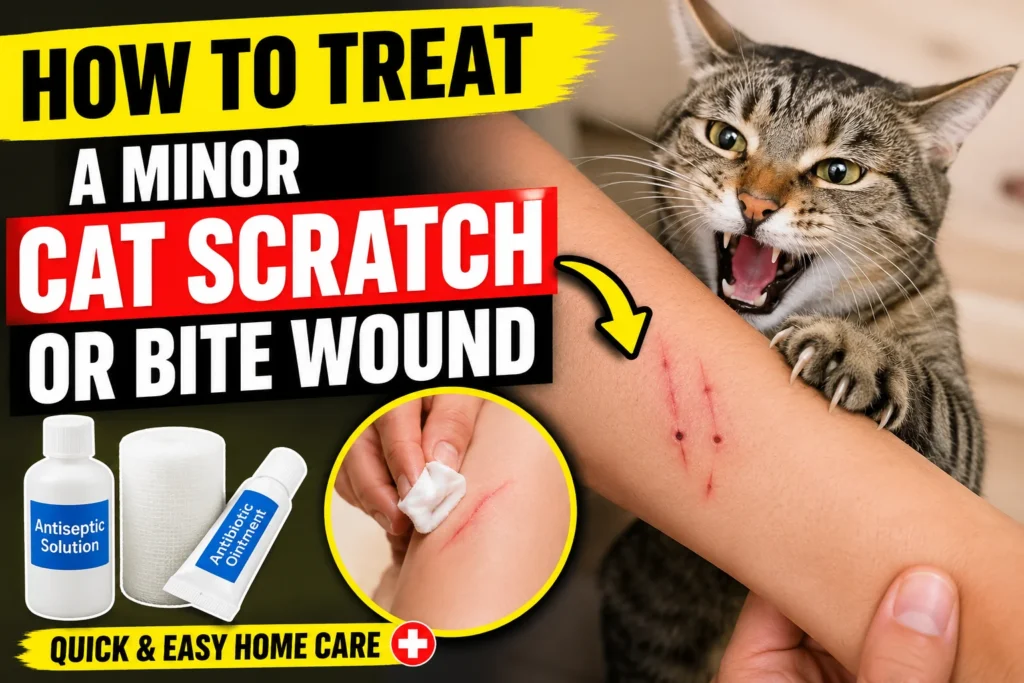
Learn How to Treat a Minor Cat Scratch or Bite Wound at Home?.But no matter how cute and cuddly cats can be, there’s bound to be an ill-fated scratch or bite throughout your lifetime of cat ownership, sometimes it happens when you’re playing, maybe kitty gets too worked up or anxious or stressed.
While most cat scratches and bites don’t turn into anything more severe than a minor skin wound, that’s a risk worth mitigating. Bacterial infections can develop from a cat bite or scratch from oral bacteria from your cat or bacteria from their claws. Treating the wound effectively at the initial stages to reduce infection risk and promote healing may help you determine if veterinary attention is necessary.
Why Cat Scratches and Bites Need Immediate Attention
Even a small bite wound may transmit bacteria far under the skin.
Cat Bite Infections. Bacteria commonly involved in the healing process of your cat’s wounds may include:
- Pasteurella multocida
- Staphylococcus species
- Streptococcus species
- Bacteria involved in cat scratch disease
In most cases, the infection will be cleared by routine care and medication without complication in a healthy individual but it is likely to develop within 24–48 hours if the wound is not treated.
Assess the Injury First
Before starting treatment, determine whether the injury is truly minor.
Minor wounds usually include:
- Small surface scratches
- Very shallow bites
- Minimal bleeding
- Clean wound edges
- No exposed fat, muscle or bone
Do not attempt home treatment if the wound:
- Is deep
- Continues bleeding after 10 minutes of pressure
- Has jagged edges
- Involves the face, eye, hand, or joints
- Results from an unknown or stray cat
- Shows signs of infection
Also Check: How to Make a DIY Pet First Aid Kit on a Budget?
How to Treat a Minor Cat Scratch or Bite Wound at Home?
Step 1: Wash Your Hands
Make sure to always wash your hands carefully with warm water and soap before touching your wound This helps minimize your risk of introducing more bacteria
Step 2: Stop Minor Bleeding
To stop bleeding:
- Use clean gauze or cloth to apply gentle, steady pressure.
- Do this for several minutes.
- Don’t continuously look at the wound. Most small cuts should stop bleeding in a minute or two.
Step 3: Clean the Wound Thoroughly
Rinse it:
Clean tap water for 5 to 10 minutes. Mild wash gently on the clean outer edges of wound. Wash gentle the clean wound to require more time than normal to healing than torn out skin to recover. Use clean tweezers to pull and take hold the waste and material then flick it up.
Step 4: Disinfect the Area
After washing:
Use an antiseptic such as:
- Povidone-iodine
- Chlorhexidine solution
- Mild antiseptic suggested by your healthcare provider
Do not use:
- Hydrogen peroxide, in the short-term and in the long-term use as well
Concentrated alcohol directly into the wound - Household disinfectant products
- These may cause unnecessary harm to normal tissue and slow healing time.
Step 5: Apply Antibiotic Ointment
Use a thin coating of antibiotic ointment found at drugstores and pharmacies, it may help reduce the development of bacteria.
Use a thin coating of a few day.
Do not use too much
Do not apply too much of an over the counter antibiotic ointment to the sore or it may create irritation or some may feel the cream will be more effective if I put more.
Step 6: Cover the Wound
Covering the wound protects it from dirt and bacteria.
Use:
- Sterile gauze
- Adhesive bandage
- Non-stick dressing
Change the dressing:
- Once daily
- Whenever it becomes wet or dirty
Small scratches that are not rubbing against clothing may heal well uncovered after the first day.
Step 7: Monitor Healing Daily
A healthy wound typically shows:
- Reduced redness
- Less tenderness
- Dry scab formation
- No drainage
- Gradual healing over 7–10 days
Take a quick look every day.
Signs of Infection
Seek medical attention immediately if you notice:
- Increasing redness
- Swelling
- Warmth
- Yellow or green pus
- Foul odor
- Fever
- Red streaks extending from the wound
- Increasing pain after 24 hours
Cat bites are especially prone to infection because their sharp teeth create deep puncture wounds.
Cat Scratch Disease
You’re carrying Bartonella henselae, which causes “Cat Scratch Disease”. When symptoms appear several days to several weeks later:
- Swollen lymph nodes
- Fever tiredness
- Headaches poor appetite
Fortunately, most healthy individuals with Cat Scratch Disease recover fully but it is wise to seek medical evaluation if you think you’ve contracted it.
Home Pain Relief
Minor discomfort can often be managed by:
- Keeping the wound clean
- Resting the injured area
- Elevating swollen limbs
- Using approved over-the-counter pain medication if appropriate
Never apply numbing creams unless recommended.
Tetanus Protection
A cat scratch or bite may require a tetanus booster depending on:
- Your vaccination history
- The type of wound
- Time since your last tetanus shot
Adults generally require boosters every 10 years, or sooner for certain injuries.
Rabies Considerations
Vaccination protects against Rabies in our pets but some exceptions could create an issue:
if the cat is a stray, has no known rabies vaccination, the attack was completely unsolicited and unprovoked or if it had contact with any wildlife. In any of these scenarios, contact your physician immediately.
When to See a Doctor Immediately
When to seek immediate help:
- The bite is deep.
- The wound continues to bleed.
- The bite is on a hand, face or close to a joint.
- You have diabetes or a weakened immune system.
- You have a fever. You see red streaks radiating from the bite. Pus oozes from the wound.
- The pain doesn’t decrease after 24 hours.
- The cat is not your own.
- You may have been exposed to rabies.
- Antibiotics and proper wound management could be necessary.
Healing Timeline
Most minor scratches heal within:
| Day | What to Expect |
|---|---|
| Day 1 | Mild redness and soreness |
| Day 2–3 | Scab begins forming |
| Day 4–6 | Less tenderness |
| Day 7–10 | Nearly healed |
| 2 Weeks | Most scratches completely healed |
Bite wounds may take longer.
Mistakes to Avoid
Avoid these common errors:
- Ignoring small puncture wounds
- Using dirty cloths
- Picking at scabs
- Applying excessive hydrogen peroxide
- Leaving dirty bandages on too long
- Delaying treatment after signs of infection
- Assuming every cat bite is harmless
Tips to Prevent Future Cat Scratches and Bites
Reduce future injuries by:
- Learning your cat’s body language.
- Avoiding rough play with hands.
- Providing scratching posts.
- Trimming nails regularly.
- Giving nervous cats space.
- Supervising children around pets.
- Scheduling routine veterinary checkups.
Veterinary Advice
I suggest that even a tiny cat bite be treated as significant. Puncture wounds from cat teeth are narrow and the bacterium tends to remain trapped under the skin, with more serious consequences than bites from many other animal species. The safest course of action includes excellent care during cleaning and close examination and treatment at the earliest sign of trouble.
Frequently Asked Questions (FAQs)
Can I handle a cat scratch at home?
Generally, a simple scratch can be treated at home with soap and water, a good antiseptic cream or antibiotic ointment and clean bandage.
What is the risk for a cat bite versus a cat scratch?
Since cat bites create deeper wounds the germs may travel under the skin easier.
Should I put peroxide on a cat scratch?
You have may have previously put peroxide on your scrapes but this type of solution is for small wounds only and the peroxide actually burns the skin.
How fast will a cat scratch heal?
Uncomplicated scratches to a cat should clear up with seven to ten days after you got scratch with infection.
After being cat, when should i see a doctor?
You should see a doctor if there is any redness, swelling or pus associated with the wound, the bite develops with any fever or shows signs of infection or the bite was caused by an unknown cat.
Should my cat’s bite be treated with an antibiotic?
Usually your doctor will recommend you an antibiotic cream or will put you on oral antibiotics, this can depend of the lesion severity but is recommended more in case that your cat bit your hands or in case you are immunodepressed.
Does my cat carry Cat scratch Disease?
Yes, as cats can spread Cat scratch Disease to humans through scratches, and they can spread the Disease even when they are sick from it.
Generally even people with immunocompromised systems recover with the right treatment.
Should I cover my scratch with a bandage or not?
When the cat scratch is minor it’s a good idea to keep it bandaged and covered up, until the discharge is no longer flowing, and the wound begins to heal.
Do I need a tetanus booster shot after my cat scratched me?
Your physician may choose to recommend a tetanus booster shot depending on the severity of the scratch, and when your last shot was given.
What precautions do I need to take in order to avoid my cat scratching or biting me?
Avoid playing overly roughly or treating your cat carelessly. Regularly trim your cat’s nails. Providing your cat with the chance to play and avoid places or times that will excite, scare, or upset him is also beneficial.
Conclusion
Cleaning a shallow cat scratch or bite at home Properly cleaning and treating minor cat scratches or bites at home means promptly cleaning the wound and keeping it disinfected daily while watching it carefully. As the majority of scratches usually heal on their own. But cat bites can cause infection in the wound, so you cannot underestimate cat bites.