Why Is My Pet Bird Plucking Feathers Under Its Wings?
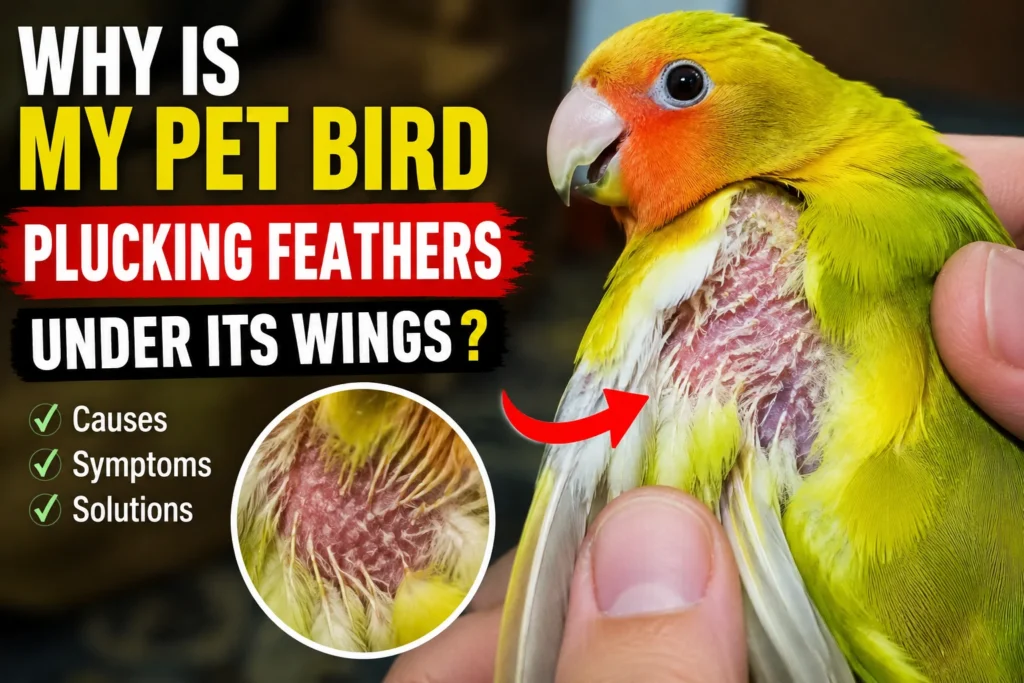
Why Is My Pet Bird Plucking Feathers Under Its Wings?. There is few behaviors that can cause as much stress to bird owners as the sight of a pet bird meticulously plucking out its underwing feathers, one after another. This behavior nearly always signal some underlying issue. Your underwings are one of the most vulnerable areas of your bird; it is also easily accessible and quite hidden and is thus a perfect location for beginning the plucking behavior.
Some problems may require a quick visit to your avian vet; others might require simply making a few changes around your pet’s cage.
We will discuss how to find the reason, identify causes, suggest home care and the right treatments to try and what the veterinarian will tell you in our in-depth guide to feather plucking under your pet bird’s wings.
What Is Feather Plucking?
Feather plucking or feather destructive behavior (FDB), is the action of a bird pulling out, chewing on, or breaking their own feathers. Birds who engage in feather plucking might: yank their own feathers out completely rip feather shafts tear at feather edges mutilate brand new pin feathers create bald patches on themselves leave red raw skin from the behavior Unlike feather molting, when feather loss happens symmetrically across the body, feather plucking leads to damage of skin.
Why Is My Pet Bird Plucking Feathers Under Its Wings?
Many different factors can contribute to this behavior.
1. Stress and Anxiety
What causes birds to stress out Most of what a bird considers a stress factor comes to it in the form of change. Factors that would stress out the bird, therefore cause undue preening would be: Change of location and/or cage New pets and family members Loud noises, sudden and unusual Changes in routine Strange objects and/or new faces entering its domain.
2. Boredom
This could also happen if your bird simply has too much time on its hands without enough mental stimulation and redirected it to feather picking. Signs of this kind of behavior include: Overly loud screaming Bouncing in its cage Such stereotypical behavior, such as feather picking.
3. Loneliness
Most companion birds are very social. Parrots who are left alone for a significant part of the day will start to feather pluck as a means to deal with isolation. Species prone to this include: African grey parrots cockatiels cockatoos macaws amazons conures
4. Skin Irritation
Just because of scratching feathers may have fallen out. Possible causes are : Dry skin Allergy exposure to chemicals Poor humidity accumulation of dust
5. Parasites
Severe itching due to external parasites.
This can be from any of the following parasites:
- Feather mites
- Lice
- Other external ectoparasites
- Although this is rare in an indoor pet bird, it is good to check it out just in case.
6. Nutritional Deficiencies
A poor diet will cause feathers to suffer. Birds on an exclusively seed diet will generally be deficient in the following nutrients:
- Vitamin A
- Vitamin D
- Vitamin E
- Calcium
- Protein
- Essential Fatty Acids
Poor diet causes thin and brittle skin and feathers.
7. Hormonal Changes
Hormonal changes during the breeding season may cause increased self-grooming. A few birds develop compulsive or excessive grooming for a part of the body.
8. Medical Conditions
Numerous diseases can cause feather plucking.
Examples include:
- Liver disease
- Kidney disease
- Thyroid disorders
- Skin infections
- Fungal infections
- Bacterial infections
- Viral diseases
9. Pain
Birds sometimes pull out feathers from areas that are painful.
Causes of pain could include:
- Arthritis
- Organ Disease
- Old injuries
- Muscle pulls
10. Habitual Feather Plucking
If feather plucking continues over several months or years, it will soon be a learned behavior that you won’t have an easy time to break even once the actual cause is addressed.
Also Check: Can Parakeets Eat Fresh Apple Slices Without the Seeds?
Which Birds Commonly Pluck Feathers?
The problem is especially common in:
- African Grey Parrots
- Cockatoos
- Macaws
- Amazon Parrots
- Eclectus Parrots
- Budgies
- Cockatiels
- Lovebirds
- Conures
Symptoms to Watch For
Warning Signs Of Feather Folliculitis May Include :
- Loss of feathers beneath the wings
- Broken feathers
- Redness, and or irritated skin
- Small wounds
- Excessive grooming
- Feather pieces in the cage floor
- Bleeding
- Scratching constantly
- Changes in mood
- Decrease in appetite
Normal Molting vs Feather Plucking
| Normal Molting | Feather Plucking |
|---|---|
| Even feather loss | Uneven bald spots |
| No skin damage | Damaged skin |
| New feathers appear | Broken pin feathers |
| Symmetrical | Irregular patches |
| Bird acts normally | Bird constantly preens |
How Veterinarians Diagnose Feather Plucking
Avian veterinarian may conduct:
- Comprehensive physical examination
- Nutrition history and cage assessment
- Behavior evaluation
- Blood samples
- Skin check-up
- Feather check
- Parasite screening
- X-rays (if necessary)
- Locating the cause is important to determine how to proceed with treatment.
How to Treat Feather Plucking
Treatment depends on the cause.
Improve the Diet
Offer a balanced diet including:
- High-quality formulated pellets
- Fresh leafy vegetables
- Carrots
- Bell peppers
- Squash
- Broccoli
- Limited fruits
- Healthy grains
Avoid feeding an all-seed diet.
Increase Mental Enrichment
Provide:
- Puzzle toys
- Foraging toys
- Rotating toys weekly
- Natural branches
- Safe chewing toys
Mental stimulation reduces boredom.
Increase Social Interaction
Spend quality time with your bird daily.
Activities include:
- Talking
- Training
- Gentle play
- Positive reinforcement
Maintain Proper Humidity
Dry air irritates skin.
Use:
- Bird-safe humidifier
- Occasional misting
- Safe bathing opportunities
Maintain a Healthy Environment
Ensure:
- Clean cage
- Fresh water
- Proper ventilation
- Safe lighting
- Regular sleep schedule
Treat Underlying Disease
Medical treatment may involve:
- Antibiotics
- Antifungal medication
- Pain relief
- Hormonal management
- Nutritional supplementation
Always use medications prescribed by an avian veterinarian.
Home Care Tips
Here’s what you can do to help her:
Make sure she gets between 10 and 12 hours of undisturbed sleep provide him with a consistent routine. Avoid smoke in his vicinity don’t have a scented candle in the room lessen stress for him offer some supervised time for exercise wash out food and water containers daily watch his feathers.
What You Should Never Do
Don’t do the following:
- Hit or spank your bird
- Shout at your bird
- Yell or hit your bird
- Rip out a damaged feather
- Apply a human cream to the damaged feather
- Use an essential oil Don’t assume the problem is natural.
- Don’t administer any medicine or other remedies to your bird without the direct supervision of your avian vet.
When Should You See a Veterinarian?
See a veterinarian right away if your bird is:
- Bleeding Has open sores
- Stops eating
- Stays unusually quiet Is losing weight
- Seems weak
- Has bad skin smells Is still plucking for more than a few days rapidly developing bald spots
Can Feather Plucking Be Prevented?
Yes a lot of case are avoidable. Here is a list of what you can do to avoid feather damaging cases.
- Balanced diet
- Interaction and playing everyday
- Mental simulation
- Clean environment
- Annual health check up from a avian vet
- Daily schedule / Routine
- Enough sleep
- Reducing stress
Well fed and healthy bird will mostly never develop a feather problem
Prognosis
Outcome depends on the cause:
The prognosis for a bird that plucks its feathers depends on what’s causing the problem. For the most part, Birds with nutritional and environmental issues generally resolve well with correction. Birds with a persistent feather picking behavioral problem need management. The sooner the condition is addressed, the better the chance of a successful outcome.
Frequently Asked Questions (FAQs)
Why Is My Bird Plucking Feathers Only Under Its Wings?
The underside of a bird’s wings are readily available to its body, making it a hot bed for any itches, pains or irritations. This form of feather plucking is most commonly related to stress, skin diseases and health issues.
Is Feather Plucking Normal While Molting?
Nope. Healthy birds shed feathers slowly and evenly during their molts. Feather destructive behaviors will damage feathers, leave patches of bare skin or cause irritation on their skin.
Does Boredom Lead to Feather Plucking?
Yup. Birds that are smart and under-stimulated from lack of toys, foraging options or social interaction may take up feather plucking.
Do Feathers Grow Back After Plucking?
They might. If the hair follicle has not been permanently damaged, feathers might grow back after the bird’s next molt once the root cause of the plucking is fixed.
Can Poor Nutrition Cause Feather Plucking?
It can. A diet lacking in essential vitamins, minerals, proteins and good fats can result in a loss of condition for a bird’s feathers and skin.
Do Parasites Cause Feather Plucking?
For the average pet bird, internal parasites are more of a concern but external ones should be eliminated by a vet in instances of feather plucking.
Should I use a collar to stop my bird from plucking?
Some avian vets may recommend protective collars for certain conditions, but this can mask the symptoms without curing the problem, so don’t put a collar on your bird without a vet’s approval.
Can stress alone cause feather plucking?
Yes. Major adjustments in routine, a lack of social interaction, or any type of stress can trigger excessive grooming and feather destruction.
What foods promote good feather health?
Diet should primarily be a balanced blend of high quality pellets, vegetables, small amounts of fruit, and diverse appropriate protein sources.
When should I contact a veterinarian in a emergency situation?
A visit to an avian veterinarian should be arranged right away if your bird is actively bleeding, is wounded, is not eating, is weak, looks lethargic, or appears to be experiencing rapid, widespread loss of feathers.
Final Thoughts
Boredom: Another common reason is boredom if you only leave your bird inside the cage the whole day without stimulation like toys, activities. He can start to feel neglected, and eventually to reduce that feeling he will plucks off his feathers as one way of coping with that loneliness. The bird is likely to pluck off the feathers that is under his wing when he is feeling bored to take off. It can affect its feathers under his wing in a particular area that will also turn a lot of birds to a more unhealthy appearance under his wing feathers and you have to be serious with this so you can be able to treat it.