How to Spot Kidney Disease Signs in Older Cats?
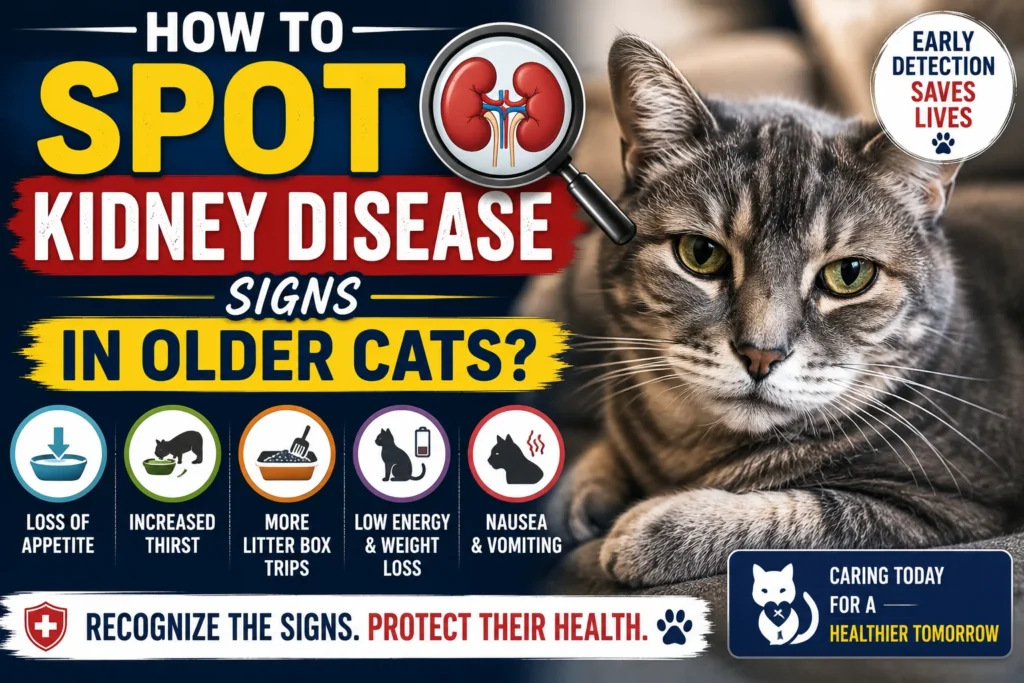
How to Spot Kidney Disease Signs in Older Cats? It’s an incredibly bittersweet part of being a cat parent watching our cherished fur babies grow old. As cats enter their senior years (think age 10+), they begin to have an increased risk of developing many age-related illnesses, the most serious and prevalent of which is Chronic Kidney Disease (CKD). CKD impacts anywhere from 20-40% of cats age 10 and older and a shocking 80% of cats over age 15! But, the bad news CKD is sneaky!
It is very difficult to recognize early on and when signs show in your cat, it can already be a serious loss in kidney function. Being able to recognize the less obvious early symptoms of kidney disease in senior cats will help you catch the illness early on and manage the illness so that your furry companion can live the best life possible for years to come. We’re going to take a look at the common signs that often hide this illness and will highlight some ways to be aware of the symptoms so you are able to look after your kitty!
How to Spot Kidney Disease Signs in Older Cats?
Chronic vs. Acute Kidney Disease
Understand Your Cat’s Kidney Disease Type CKD: (Chronic Kidney Disease)This is by far the more common of the two and by far the one of primary concern to senior owners. CKD is a gradual, on-going process which happens over weeks or even years; kidneys slowly stop functioning, and it is the type of kidney disease we are most concerned about.
AKI (Acute Kidney Injury): This condition comes on more suddenly, a sudden decline in the kidneys over hours to days. It is far less common than CKD and can often be associated with intake of a toxin (such as Lilies, antifreeze or human drugs), severe dehydration or urinary obstruction and it necessitates immediate, urgent veterinary care.
Understanding the Silent Progression
Fortunately, kidneys are surprisingly tough: they’re composed of thousands of little filtering structures known as nephrons . In CKD, these filtering units slowly start to be destroyed. Because healthy nephrons can work double duty, to make up for the failed ones, your cat won’t typically develop symptoms until a large amount (75% or even more) of kidney function is gone. Regular veterinary exams, not symptoms alone, are therefore the best line of defense against the disease.
10 Key Signs of Kidney Disease in Older Cats
The best defense is the best offense. These are common signs of kidney failure you want to look out for in your senior CKD cat. As you’ll see most symptoms look quite normal for aging which is why you want to be vigilant!
1. Increased Thirst and Urination (Polydipsia and Polyuria)
This is probably the first and most easily recognized symptom. Because the kidneys can no longer concentrate the urine, your cat makes increased quantities of very watery urine. To make up for the fluid loss, he will drink more than he ever has before . You will likely be refilling his water bowl much more often, will see large litter box clumping or discover your pet has decided to use the toilet as a watering source.
2. Weight Loss and Muscle Wasting
It’s likely your cat’s appetite won’t be affected at first, but your feline friend may soon start to lose weight. Why does this happen? Well, due to a loss of protein, other essential nutrients and bodily protein entering the urine as well as the overall disruption of body processes. This may cause a gradual decline of muscle mass along the hips and down the back.
3. Decreased Appetite and Lethargy
As the disease advances, the body builds up toxins in the blood (uremia), and these can make the cat feel sick, such as n\nausea, so the cat can lose interest in food, even refuse it altogether, due to his body trying desperately to do everything possible with this impediment, he’ll sleep much more and won’t be so playful.
4. Poor Coat Condition
Good quality Grooming: Your well-loved furry feline, by nature of it’s well being, will have a high level of care with regard to the Grooming. However CKD cats are likely to be feeling very poor of health. Being ill often leads to vomiting and sickness which will affect your CKD kitty’s ability and motivation to carry out normal grooming activities. Their coat will therefore be lack lustrous, unkempt and matty.
5. Bad Breath (Uremic Breath)
In higher levels the accumulation of wastes in the blood stream can give the characteristic foul smell on the breath. Usually it resembles that of ammonia or urine smell.
6. Vomiting and Digestive Upsets
Toxins build up (uremia) can be irritating to your gut, which causes you to feel nauseated and may include episodes of vomiting or diarrhea/constipation . In later stages of CKD , you will find yourself vomiting or losing your appetite more frequently.
7. Mouth Sores (Oral Ulcerations)
Toxic build-up in the blood can also create the mouth, such as on the tongue or gums, causing mouth sores. These can be connected to the previously described unpleasant odor and cause you pain while you are eating.
8. Pale Gums (Anemia)
Your cat’s kidneys create a hormone that promotes the development of red blood cells, erythropoietin. When kidneys fail, they produce less erythropoietin, which leads to a lack of red blood cells known as anemia. You can detect anemia in your cat by the unusually pale, white, or grey color of its gums, as opposed to the normal healthy pink.
9. High Blood Pressure (Hypertension)
How can I prevent my cat with CKD from getting a headache from the symptoms you mentioned above, is there any that will get better on their own when the condition gets better. Also what if they did get some of the other problems. My cat is elderly with CKD but currently doesn’t have a headache symptoms (just CKD symptoms, which are getting worse).
However I read some where on a CKD and the older cat information website, the blood pressure seemed more increased in older cats, do you think I should get her blood pressure checked for these things mentioned in your article and is there anything I can do to try and prevent these symptoms.
10. Changes in Behavior or Vision
The Effects of Toxins in the body of a Cat in the final stage. The effects of high blood pressure as well as toxins accumulation can start to manifest as they reach the nervous system of your feline. This may cause you to see that your cat is disoriented, withdraws from things around it or its vision appears affected in which it runs into things.
Also Check: Best Nail Clippers For Nervous Dogs
The Importance of Veterinary Diagnosis
Watch fo rCKD Signs If you notice any of these signs, make sure to have a veterinarian check them out as soon as possible. While it’s tempting to want to “wait and see,” a CKD cat can enjoy a better quality of life with earlier treatment and diagnosis. What Happens When You Go to the Vet? Vets run tests to identify kidney disease in cats, and ideally, screening should be done once or twice per year on all cats aged seven years and older.
| Test Type | What It Is | What It Tells the Vet |
|---|---|---|
| Blood Tests | Measures levels of waste products in the blood. | Creatinine & BUN: Your “old school” indicators that can go up when kidney disease hits. SDMA: A newer, more sensitive indicator that can help find CKD early even when other tests are still looking good. |
| Urinalysis | A detailed analysis of your cat’s urine. | Urine Specific Gravity (USG) this is a test of the kidneys’ concentration ability. A low value may be an early sign of chronic kidney disease. The test will also look for protein in urine (proteinuria) or any signs of infection in the urine. |
| Blood Pressure | Measures your cat’s blood pressure. | Because CKD cats have such a high likelihood of having elevated blood pressure, a measure of it is a really important component of the diagnostic approach . |
The results above help your vet assign a stage number to your cat’s kidney disease on the International Renal Interest Society (IRIS) scale. This helps your vet develop the best possible management protocol.
Management and Treatment Plan for CKD
It’s an incurable, progressive disease, but kidney disease can be effectively managed. The aim of treatment is to slow down its progression, control symptoms and provide your cat with the best quality of life. There isn’t a single solution as treatment depends on your cat’s IRIS stage, but typical measures include:
Dietary Therapy: For now, we’re all agreed that a Prescription Kidney Diet is the best thing for you. These are diets specially developed for cats with CKD and are lower in protein, phosphorus and sodium than a typical diet, but are higher in water soluble vitamins, fibre and antioxidants. Cats with CKD who eat these diets have even been shown to live 2 to 3 times longer than those fed on standard commercial food. It is, however, essential to transfer your cat to the diet slowly so they learn to eat it. We can prescribe this diet.
Hydration Cats with CKD: often get dehydrated, so ensuring your cat drinks regularly is of great importance. This can involve only feeding wet food, getting a water fountain, or putting water in a few different places around the house. We may advise adding a little water or some unsalted chicken/beef stock to your cat’s food.
In more advanced cases, we will show you how to give subcutaneous (under the skin) fluid at home to keep your cat well-hydrated.
Controlling Complications of CKD: High Blood Pressure is commonly controlled using oral medications such as telmisartan. Anemia may be treated using medications to stimulate the production of red blood cells. Nausea and poor appetite can be effectively treated with medication such as mirtazapine to encourage appetite, and maropitant can control nausea and vomiting, making a dramatic improvement to your cat’s welfare.
When to Seek Emergency Care
These symptoms suggest your cat’s health has acutely declined and needs an immediate visit to your vet or an emergency clinic: Cat is not eating or drinking at all. Cat is no longer producing any urine (anuria). Cat is extremely weak or unresponsive or comatose. Cat has seizures.
Cat vomits and then vomiting continues, possibly with blood.
Frequently Asked Questions (FAQs)
Signs your senior cat may have kidney disease?
Increased drinking and urination (lots of very dilute urine) are the earliest most frequent signs of kidney disease in the senior cat. Monitor you cat’s habits for changes in their normal routine as signs are often subtle.
At what age should you consider a cat at risk for kidney disease?
Every cat over 7 years of age should be considered at risk, and the risk increases with age. There is a significant increase in cats with kidney disease around ages 10 (up to 40% or as many as 40 of 100 cats) and age 15 (up to 80% or 8 of 10 cats).
How do veterinarians diagnose chronic kidney disease?
Your vet will diagnose your CKD cat following an examination, a review of a blood sample (testing for creatinine, BUN, SDMA), and urine analysis (urinalysis). Monitoring of blood pressure is essential.
Can my cat be cured of kidney disease?
No, CKD is a degenerative and progressive disease, which means that CKD cannot be cured and does not reverse or go away, however the disease can be successfully managed in an effort to slow progression of the disease process and help maintain a high quality of life for your cat. An acute (sudden) onset form of kidney disease can be cured.
What is the prognosis for my CKD cat?
The prognosis is highly variable and depends on the stage in which the CKD was diagnosed and treatment initiated. Median survival time of two to three years can be expected for a stage two CKD cat; for a stage four CKD cat it’s less than six months.
Is my CKD cat in pain?
The disease itself is not painful. But CKD symptoms (especially vomiting, nausea, oral ulcerations) are very debilitating and unpleasant to deal with, which is where the medical management focuses-managing these signs and therefore alleviating your CKD cat’s pain.
Why does my senior cat drink so much water?
Polydipsia (increased water intake) is the most frequent clinical sign of CKD and is due to damaged kidneys, which can no longer adequately concentrate urine. Your cat increases water consumption to help the body eliminate waste products efficiently.
What should I be feeding my CKD cat?
CKD cats should be fed a prescription kidney diet. This special food is formulated to decrease phosphorus, sodium, and protein content in an effort to reduce stress on the kidneys. Feeding a kidney diet can significantly increase a cat’s life.
What if my CKD cat will not eat?
Many strategies exist, including warming the food to enhance the odor, trying different food textures (e.g., cream style versus chunks) and flavors, or your vet can prescribe an appetite stimulant or an anti-nausea medication to help your cat feel more receptive to eating.
How often does my senior cat need to be checked for kidney disease?
Healthy cats over age 7 need at least an annual exam to screen for age-related issues. Cats over age 10 or with an underlying medical issue like kidney disease need to be seen at least twice annually for prompt diagnosis of any subtle changes.