Signs of Anxiety in Dogs and How to Calm Them
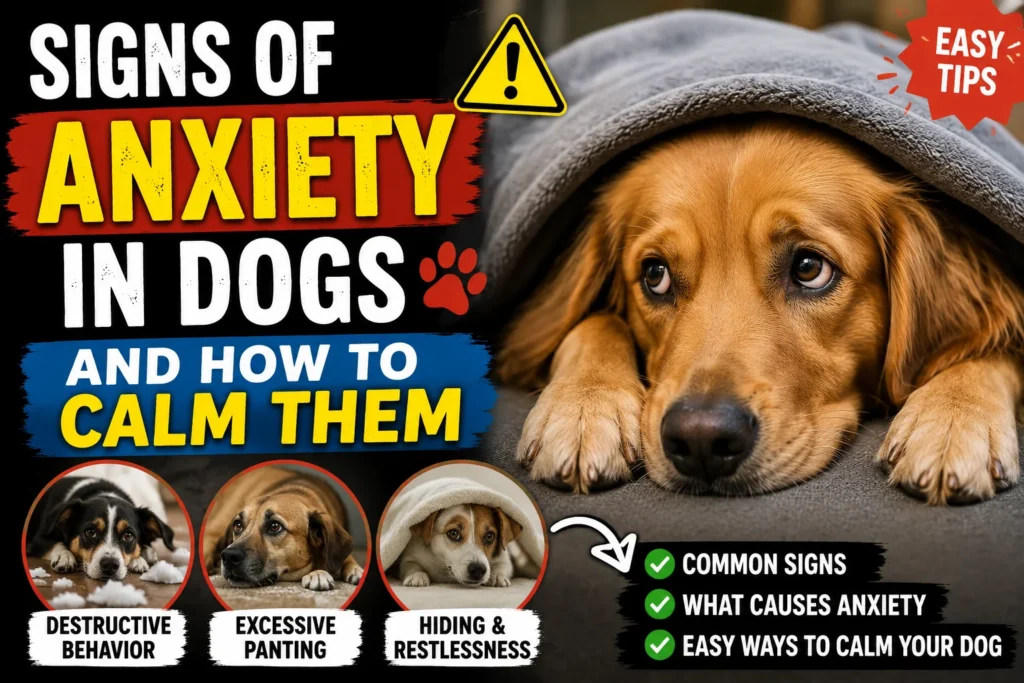
Signs of Anxiety in Dogs and How to Calm Them. In my career as a veterinarian, the single most common and heart-wrenching issue that clients present me with is how anxious their dog is. And here’s a vital secret: dogs who appear to “misbehave” often have a disease, the disease of anxiety! It’s when your normally vibrant, playful animal turns into a trembling basket of pure dread impacting his life in ways you only glimpsed.
In this guide, you will learn everything about identifying your dog’s anxiety, understand the potential triggers, and learn a science-based plan-full of proven methods-that will put a stop to the fear and anxiety for good.
Signs of Anxiety in Dogs and How to Calm Them
The first part of knowing how to help a anxious dog is learning to “speak dog”. This involves understanding the body language your dog use, since their signals for anxiety are very subtle most of the time. As owner we tend to ignore subtle signs of anxiety until the problem behavior is too out of control.
Below a list of the possible signs of anxiety we can have in our dogs:
Early Warning Signs (The Subtle Signals)
- Lip Licking and Yawning: When a dog licks their lips or yawns in the absence of food or sleep, it is a classic stress signal .
- Avoidance and “Whale Eye”: Turning their head away, avoiding eye contact, or showing the whites of their eyes (whale eye) are clear signs of discomfort .
- Body Posture: A hunched body, a tucked tail, or a rigid stance can all indicate fear or anxiety .
- Excessive Shedding and Panting: If your dog starts shedding a lot or panting when it’s not hot or they haven’t exercised, it’s often stress-related .
Moderate to Severe Signs (The Obvious Signals)
- Pacing, Shaking, and Trembling: An inability to settle and physical shaking are common indicators of acute distress .
- Vocalization: Whining, howling or continuous barking, especially when alone, is a hallmark of separation anxiety .
- Destructive Behavior: Digging at doors, chewing furniture, or attempting to escape are common responses to panic, particularly during separation or confinement .
- Loss of Bladder/Bowel Control: In extreme fear, a dog may lose control of their bodily functions .
Why is My Dog Anxious? Common Causes and Triggers
Anxiety rarely has a single cause. It’s often a result of a combination of factors. Understanding the root cause is essential for effective treatment.
- Separation Anxiety: This is one of the most common forms. It occurs when a dog becomes distressed due to being separated from their owner, often triggered by changes in routine, like returning to work after a period of being home .
- Noise Aversion: Fireworks, thunderstorms, and loud music are classic triggers. A sound-sensitive dog reacts fearfully and doesn’t recover quickly from the initial startle .
- Age-Related Issues (Cognitive Dysfunction): Senior dogs can develop anxiety as part of Canine Cognitive Dysfunction Syndrome. This can lead to pacing, panting, and disorientation, particularly at night .
- Past Trauma: Rescue dogs often carry the scars of past mistreatment or a lack of socialization, leading to anxiety in unfamiliar situations or around strangers .
- Resource Guarding and Territoriality: Anxious dogs may become aggressive when defending food, toys, or their territory, as they see these as scarce resources they must protect .
How to Calm an Anxious Dog: A Multi-Step Action Plan
Calming an anxious dog requires a comprehensive toolkit. You need strategies for immediate relief, ongoing management, and long-term solutions. As a vet, I recommend an integrated approach that combines environmental changes, behavioral modification, and professional guidance .
1. The “Anxiety First Aid” Kit: Immediate Relief for Acute Stress
When your dog is in the throes of a panic attack, such as during a thunderstorm, your goal is to de-escalate the situation.
- Remove the Trigger: This is the most effective immediate step. If the stimulus is outside the house, move your dog to the quietest, most interior room, away from windows. Close the curtains and turn on a fan, white noise machine, or calming music to mask the frightening sounds .
- Create a Safe Space: Ensure your dog has access to a “den” – a crate or a quiet corner with comfortable bedding. This should be a sanctuary, never a place of punishment. If they are crate-trained, they will often instinctively retreat there for safety .
- Physical Comfort (With Caution): Some dogs find comfort in pressure wraps like the “Thundershirt,” which provides a gentle, constant pressure that can have a calming effect . If your dog welcomes touch, gentle massage can also help. However, be respectful; an anxious dog may not want to be handled .
- Distraction and Redirection: Engage your dog in a familiar activity. Having them practice a simple, well-trained command like “sit” or “touch” and rewarding them with high-value treats can redirect their focus away from the stressor .
2. Behavioural Modification: The Foundation for a Calmer Life
This is the most critical part of managing anxiety. It involves teaching your dog to cope better with stressful situations over the long term. A consistent approach is key, as dogs thrive on predictability .
- Establish a Consistent Daily Routine: A stable routine of feeding, walking, and playtime creates a sense of security. If your dog knows what to expect, they will feel less anxious .
- Reward Calmness: Don’t just ignore calm and quiet doggy behavior. When your dog is hanging out happily while flat (and there is an absolute absence of demand barking), subtly toss some high value treats nearby so that they’re easy for the dog to snatch up without doing any major moving.
- Desensibilization: For separation anxious dogs, this means controlled and methodical exposure to aspects of the leaving scenario while your dog remains calm and you pair every experience with high value rewards. For example, it involves putting on your coat and keys and then sitting right back down, not ever reaching the front door.
- Let Your Dog Have “Me-Time”: Ensure that your dog doesn’t become overly reliant on your presence. Stuff a Kong with a high-calorie treat, and give them that in a separate room where you won’t make eye contact or acknowledge them until they’ve finish licking or destroying it. This helps with confidence building.
Also Check: Can Dogs Eat Boiled Eggs Every Day?
3. Natural Remedies and Complementary Therapies
Many owners treat their pets with natural alternatives such as: – Herbal supplement: You and your veterinarian need to ensure that any supplement you choose to provide your pet isn’t one that could be unsafe given your pet’s current health condition, or conflict with any current medication.
- Pheromones: Adaptil, for example, can help put an anxious dog at ease with its synthesized canine version of pheromones the mothers emit to soothe their pups. Comes in spray form, diffusion product, or can be worn by the dog on a collar.
- Calming Supplements:
- Alpha-casozepine: A milk protein derivative that has been scientifically shown to promote calm behavior .
- L-theanine: An amino acid which should increase relaxation without causing sedation .
- Herbal Extracts: Lemon balm and lavender essential oil has recently been shown to be successful in dog’s calming effects. A 2025 study indicated that topical lavender oil significantly reduced behavioral signs of stress on clinical examination in dogs and another study showed that Valerian root and Lion’s mane mushroom could be beneficial in reducing anxiety associated behavior.
- Essential Oils: Essential oils should never be used neat or with dogs as they can ingest them. Lavender or camomile properly diluted and diffusing can create a good atmosphere. Recently a formulation of 30% lavender oil was shown to improve behavioral signs of stress when applied to dogs ears. Consult your vet prior to using any essential oils on your dog.
4. Veterinary Intervention: When to Seek Professional Help
If your dog’s anxiety is significant enough to decrease his quality of life, and you’ve not found effective management strategies to help him at home, it’s time to talk to your vet.
- Rule Out medical reasons: A thorough physical exam is very important to be sure that underlying illness or pain are not causing or contributing to the behaviour. Veterinary behaviourist (DVM’s with additional training in behaviour management) If necessary your vet will refer you to a behaviour specialist.
- Behavioural intervention plan: Prescription medications Many cases the help of medications is lifesaving!
- That is not to say medication will miraculously cure your dogs anxiety but it will provide enough relief so the the dog can learn from behavioral training.
- The FDA has recently approved new drugs like tasipimidine (Tessie), which targets both noise aversion and separation anxiety .
- Clomipramine (e.g., CaniQuell) is another medication proven to be effective for separation anxiety when combined with a behavior modification plan.
Frequently Asked Questions (FAQs)
What are some early, mild indicators of anxiety for my dog?
There are several, more nuanced indications that often go undetected. These include such behavioural adjustments as: A guarded body-language attitude; Keeping tails tucked; Avoiding eye contact; Frequent lapping at their Lips and yawning when there are no indications the dog is tired.
What is there to get my dog from flipping during the 4th of july & fireworks?
Get into an interior space where there is no sound to include the 4-by-6’ (at a minimum) panel/’sh curtain so they cant hear/view the thunder/firecracker & play soothing songs while noise canceling/blocking 4 some background noise may & it helps some owners find solace, safety and serenity with 4-to-6’ sized dog vests called ‘thunder shirt’ the vests that also appear a/’safety space’ den (crate) for dogs that may be anxious!
Does punishment work to stop anxious behavior?
No. Punishment, such as yelling or using harsh training methods, will almost always make anxiety worse. It increases your dog’s fear and erodes the trust between you. Positive reinforcement is always the best approach.
Are there over the counter medicines for dogs experiencing anxiety?
There are calming supplements that are available over the counter (like Zylkene, or Anxitane), but a true anti-anxiety medicine is by prescription only. The first and best source is always your dog veterinarian, when it comes to any new supplements or medicines.
Is it ok to coddle my dog when I see that he or she is scared?
Yes, with limitations. I would advise against smothering a dog who is in extreme panic (as this could reinforce their feelings of fear), but a generally calm and encouraging attitude and the provision of a quiet place can definitely assist.
How should I treat my dog’s separation anxiety?
There is no single treatment method. It takes a holistic approach. This includes desensitization (practicing departures), counter conditioning (making departures positive), building your dog’s independence, and in many cases, working with your vet on medication to help your dog cope with the training.
My dog is anxious around other dogs and people. What can I do?
This is often a fear or territorial issue. Start by managing the environment to prevent negative interactions. Work on desensitization, such as allowing them to see a trigger from a great distance and rewarding calm behavior. Consult a behaviorist to create a safe and effective plan.
Does exercise help an anxious dog?
Absolutely. Physical exercise is a fantastic stress reliever. A tired dog is generally a calmer dog. A good walk or play session before a potentially stressful event can help drain excess energy and lower anxiety levels.
Can a senior dog’s anxiety be a sign of something else?
Yes. Anxiety that starts suddenly in a senior dog, especially with symptoms like pacing at night, can be a sign of Canine Cognitive Dysfunction (doggy dementia). It’s vital to see a vet for an evaluation to rule out medical issues.
When should my dog see a veterinarian for anxiety?
You should go to your veterinarian as soon as possible if you observe lasting symptoms of anxiety. Your veterinarian can help you rule out physical reasons, offer a diagnosis and treatment plan tailored to your dog and can recommend any other needed care or medication that would help your dog and your family.
Conclusion
So whether it’s a tremble to the jingle of the keys, ears flat back and a low growl to strangers or digging holes in the walls to get to you learning your dog’s anxiety signals and how to react is perhaps the best gift that you can give him. It’s obviously a process, so don’t be discouraged and get help to find the best coping mechanisms for you both.