
Advanced Dental Care Tips for Cats at Home
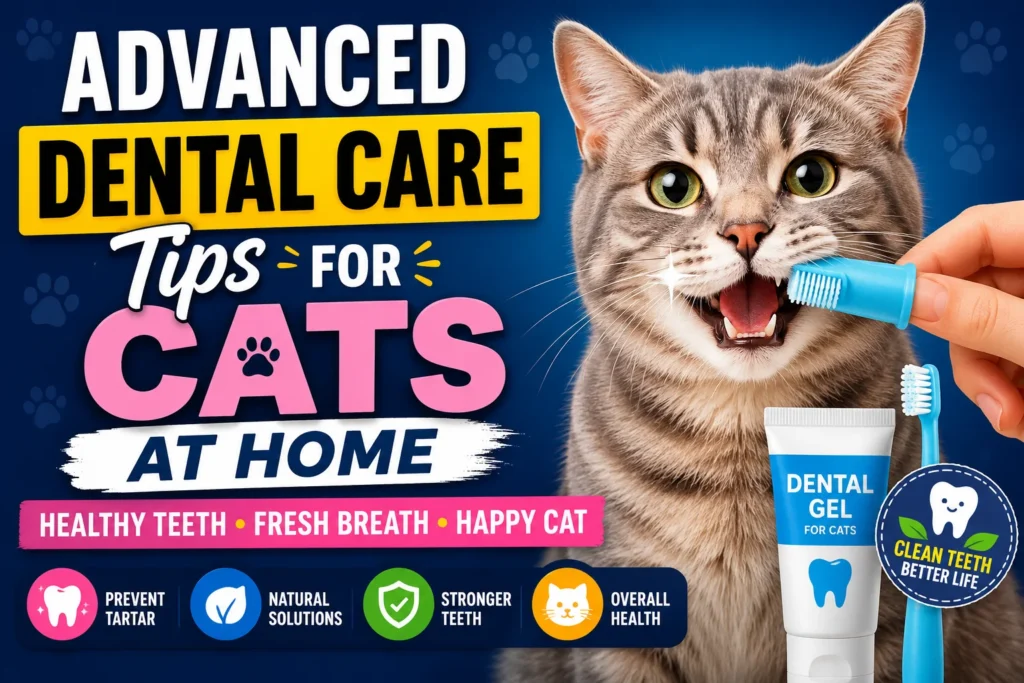
Advanced Dental Care Tips for Cats at Home. As a veterinarian, I know the devastation caused by a cat with neglected teeth and gums. It is not uncommon for 85% of cats three years and older to have dental disease of some degree . But there is excellent news – a high-quality, consistent, and ongoing home dental care plan will be your cat’s best line of defense against this all too common and painful problem. Here are tips for a master plan for your cat’s dental care.
Advanced Dental Care Tips for Cats at Home
Why Advanced Home Dental Care is Non-Negotiable?
Plaque Dental disease in cats begins when plaque-a sticky film of bacteria-develops on a cat’s teeth immediately after it eats. If not removed within 24 to 72 hours, plaque can harden to become tartar (calculus)-a yellow-brown crust that cannot be removed by brushing. Tartar can cause the gums to become inflamed (gingivitis) and, without treatment, eventually progress to irreversible disease that destroy teeth and the surrounding tissues and bone. This not an issue localized to the mouth.
Advanced periodontal disease and ongoing chronic inflammation can lead to the proliferation of oral bacteria that can gain entry to the circulatory system and lead to damage to other organ systems such as the heart, kidneys, and liver. As stated in the 2025 Feline VMA Feline Oral Health and Dental Care Guidelines, the caregiver must take a more participatory role in his or her cat’s oral hygiene and dental health.
Recognizing the Hidden Signs of Dental Distress
A Word to the Wise: Don’t Ignore That! Cats excel at masking pain and may even be eating regularly while in the throes of a severely sore mouth. As an astute pet owner, it’s your job to play the detective:
Halitosis (bad breath): Let’s face it-cats don’t usually stink but consistently unpleasant breath is often an oral problem.
Changes in eating behavior: Your cat may favor soft foods, be a messy eater, drop food, chew on only one side of the mouth or even refuse to eat.
Check out his gums: Are they red, inflamed or bleeding? See brownish, yellow plaque on teeth? If he recoils at head-touching, his mouth may hurt.
Behavioral signs: Pacing, pawing at the mouth, drooling and less self-grooming can indicate he’s not feeling his oral best.
Any of these signs: warrant a trip to the veterinarian as oral issues may be more serious (and costly to treat!) if left untreated.
The Gold Standard: Mastering the Art of Toothbrushing
Brushing your cat’s teeth: The single greatest way to prevent build up and a true “gold standard” of home dental hygiene – not that difficult really, once you figure it out with your feline friend .
Step-by-Step Guide to Introducing a Toothbrush
1. Gather Your Supplies:
Dog-friendly soft toothbrush, finger brush. A small toddler’s soft-bristle toothbrush would work in a pinch, too. Veterinarian-approved enzymatic dog toothpaste. Always buy a dog toothpaste-human toothpastes can include fluoride and xylitol, which are toxic to pets, but a toothpaste for cats (which come in bacon, beef, and seafood flavors) can be a safe alternative if you run out!
2. Build Positive Associations (This is Key!):
- Take it Slow: Do this for a few days, just have him let you feel the head, gently open their lips, then let them have praise, or even a reward.
- Let Them Taste The Toothpaste: Let them have a tiny amount on your fingertip and have them lick at it, so that the flavor of toothpaste is somewhat familiar to them. 3. Let Them Have A Sniff: Let your cat sniff the toothbrush for a minute before you try it out in their mouth.
- Stand at the position: Position your cat with his or her back to you. This position can be less confrontational and offers you the best control .
- Pull up the lip: Carefully tilt your cat’s head up and using your thumb, pull up the upper lip exposing the teeth and gum line.
- Brush the outside: While brushing in small circles using gentle movements, brush the outside of the cat’s teeth. Start in particular on the bigger back teeth which attract the plaque more often. It’s important not to worry about the insides of the teeth as your cat is good at licking its teeth on its own .
- Keep it short initially: Initially 10-20 seconds for each side is sufficient and you gradually build up to 30-45 seconds on each side, depending on how your cat accepts the toothbrush. Brushing your cat’s teeth daily is recommended but don’t let that deter you if you cannot brush it every day.
Advanced Alternatives for Resistant Cats
It just plain goes without saying that some cats will simply not allow you to brush them. A multi-modal approach is required for these patients and this is where home care goes to the “next level.” This is the part of home care where your creative juices will really need to flow.
Dental Gels and Wipes
Dental Enzyme Gels: These gels include enzymes which assist in eliminating the bacteria responsible for developing plaque and tartar. The gel is then placed directly onto the teeth and gums utilizing a finger applicator or a cotton swab which is suitable for cats who do not like toothbrush bristles.
Dental Wipes: Dental wipes are much like a dental enzyme gel; you merely wrap one of the dental wipes around a finger as well as rubbing the surface of the teeth and gums. The physical rubbing also helps eliminate some plaque while applying beneficial products.
Also Check: What To Do If Your Dog Eats Chocolate?
Water Additives and Oral Rinses
They’re odorless and tasteless water additive for cats and to help freshen bad cat breath. Always buy the VOHC approved, cat only, formulas, and offer a second bowl of normal water because some cats do not like the flavor of the dental drops.
The Power of Diet and Treats
What your cat eats affects oral health in a surprisingly big way and it’s not often one people think about when planning for advanced care. Prescription Dental Diets Hill’s Prescription Diet t/d and Royal Can in Dental come in a unique, large- kibbled form. When your cat takes a bite of the food it effectively acts as a toothbrush, helping to clean the surfaces of the tooth. The food is only most effective when the prescription diet is your cat’s only food.
Dental Treats: The VOHC recommended dental treats may help with tartar and plaque removal. It’s like a treat for your cat and an extra step, but they shouldn’t be used in lieu of tooth brushing or a specific dental diet.
Dental Toys
Some play items are made from a netting or textured surface material that will assist in flossing a cat’s teeth while they gnaw and chew. This a stress-free way of helping with oral health of the cats that love to play and gnaw on toys .
The Critical Role of VOHC and Professional Care
Look for the VOHC seal on any dental products, from treats to water additives. This ensures the product passed scientifically based standards for preventing plaque or tartar buildup.
The Truth About Anesthesia-Free Dentals
It is important to understand that at-home care and a professional dental cleaning from your veterinarian do different jobs. Home care is for plaque, to prevent tartar. Once tartar has been allowed to form, it is a very hard, cement-like material that can NOT be brushed or wiped or put into the mouth with gels to get off the teeth.
The ONLY safe and efficient way to remove tartar (and it can start below the gum line to begin the disease process!) is to have the teeth scaled and polished under general anesthesia by a qualified veterinary professional.
Most veterinary dental specialists: DO NOT recommend at-home, anesthesia-free dentistry procedures. These cleaning methods only clean the visible tooth surface and offer the pet owner a false sense of security. They do not probe under the gum line to look for pockets or eliminate the disease bacteria residing there, and can cause a lot of stress for the cat. Anesthesia-free dentistry fails to identify the actual disease.
Conclusion
Excellent care of your cat is a layered undertaking It includes the gold standard of toothbrushing and complementary diets, the usage of recommended supplies and what most significantly, your cats normal veterinary check-ups. A few moments per day dedicated to this area of your cat will not solely maintain their breath clean, nevertheless will ward off constant suffering, losing tooth, and lethal systemic illnesses. There aren’t too many simpler things you’ll be able to accomplish to offer your feline buddy a long and satisfying life.
Frequently Asked Questions (FAQs)
Do I need to brush my cat’s teeth every day?
Yes, it’s ideal. Plaque solidifies into tartar in 24-72 hours. Even brushing 2-3 times a week would make an improvement from no brushing.
Can I use human toothpaste or baking soda on my cat?
Absolutely not. Human toothpaste is extremely toxic because it contains detergent, fluoride and xylitol (a cat toxic sweetener that can cause intestinal distress or even kidney failure). Only use specially made dental toothpastes for cats.
My cat hates the toothbrush what can I do?
If your cat despises the toothbrush, consider using a finger brush, a soft cloth or gauze around your finger for manual teeth cleaning and gum care, or try pet dental wipes. You may want to incorporate a Veterinary Dental diet, dental water additive or a VOHC approved dental gel.
What is the VOHC seal? What does it mean?
The Veterinary Oral Health Council (VOHC) is a respected and unbiased organization that provides a seal of approval for products shown through studies to meet certain requirements for plaque/and/or tartar reduction. This means a product is proven effective and you’re not just throwing away your money.
Will eating dry food clean my cat’s teeth?
Generally, no. Most cats gulp their dry food down whole, so there is no abrasive, mechanical action, like there is with Veterinary Dental diets.
How do I know if my cat is experiencing oral pain or a toothache?
Cats are masters at concealing pain. If your cat develops a sudden eating change (they might opt for softer foods), drops their food while eating, only eats on one side of their mouth, salivates more than usual, paws at their mouth/face, they no longer like you touching their face, or their behavior changes becoming more irritable or reclusive, they could be in oral pain.
Is it ok if my cat’s gums bleed when I brush their teeth?
If there is slight bleeding when you first start brushing, that’s fairly normal; it’s a sign of minor gingivitis. With healthy gums, the bleeding should subside. If it’s heavy or persistent, stop the process and see a veterinarian.
Is there a risk in anesthesia for my senior cat during dental cleaning?
No. Age is not a disease, and a professional cleaning with anesthesia administered by a vet and in the correct manner is extremely safe. Most vets will run pre-anesthetic bloodwork to check that it is safe. Often, the benefits of cleaning a senior cat’s teeth for comfort outweigh the risk of the cleaning itself.
What are the risks of anesthesia-free dental cleanings?
Anesthesia-free dental cleanings are only cosmetic. Plaque cannot be removed from under the gum line (the part that the majority of the damage caused by periodontal disease), the enamel can be damaged, it can cause stress, and the vet won’t be able to diagnose and treat any potential conditions beneath the gum line.