Signs of Heat Stroke in Short-Nosed Dogs During Summer
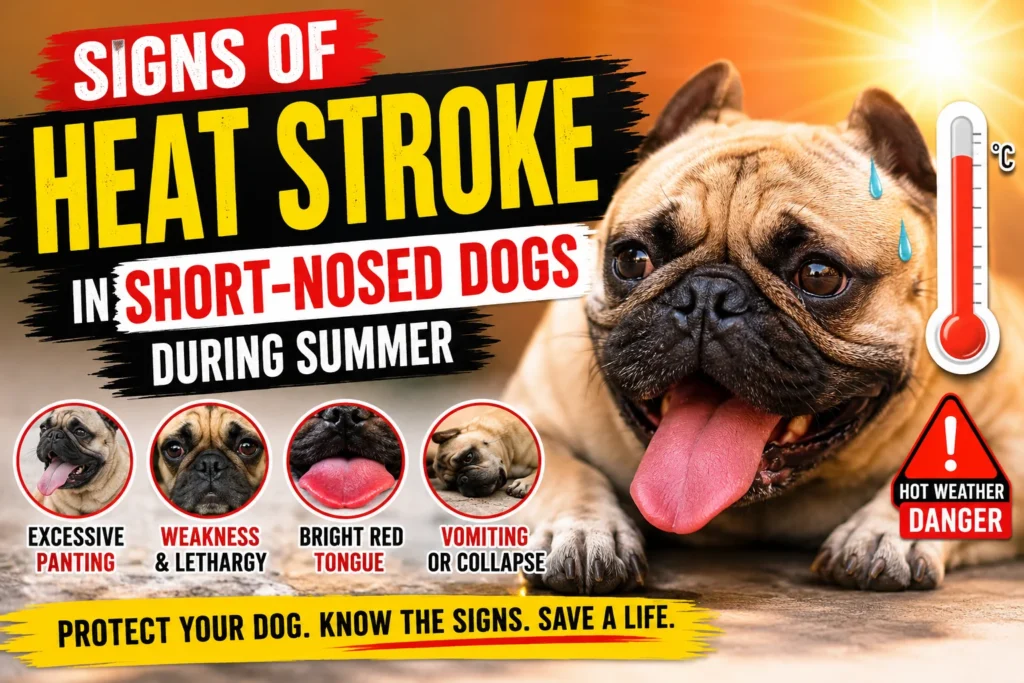
Signs of Heat Stroke in Short-Nosed Dogs During Summer. Most pets have a grand time during the summertime months but summer temperatures can be lethal to dogs with short, flattened noses or broad heads called short-nosed (brachycephalic) dogs. Certain dog breeds including pugs, French bulldogs, Boston Terriers, Shih Tzus, bulldogs and boxers do not have anatomically appropriate faces to facilitate proper cooling. In order to provide adequate ventilation for short-nosed dogs, they will need to avoid exertion and limit their activities during warmer days or even on walks throughout a warmer day may put them at risk for heatstroke.
Dogs can become dehydrated in even a matter of minutes and heatstroke is considered to be one of the more dangerous medical emergencies during warm temperatures that requires prompt emergency medical intervention in order to support failing brain, liver, kidney and/or heart organs.
In the interim, owners commonly overlook symptoms because they interpret them to be as though the dog has tired easily, been too excited, or is thirsty when in fact, heatstroke could be setting in and medical care needed to avert death.
What Is Heat Stroke in Dogs?
What Is Heatstroke In Dogs?
Heatstroke can happen to any dog when their body gets too hot and can no longer cool itself down enough. Dogs’ normal body temperature is typically between:
101-102.5° F (38.3-39.2° C) They can typically tolerate body temperatures up to 104° F (40° C) before experiencing heatstroke and temperatures over 106° F (41.1° C) are life-threatening and require veterinary intervention immediately.
Why Short-Nosed Dogs Are More Vulnerable
Dogs like us, can’t cool off by sweating but they pant instead.
However, short-nosed dogs just don’t have the capacity for this due to their:
- Long
- soft palate
- Short airways and nostrils
- Small windpipe
- Reducedairflow
This prevents adequate air exchange when panting and means heat isn’t escaping the body, leading to the development of heatstroke.
Breeds that are particularly at risk include:
- Pug
- French bulldog
- English bulldog
- Boston terrier
- Shih tzu
- Boxer
- Cavalier
- King Charles
- Spaniel
- Pekingese
Signs of Heat Stroke in Short-Nosed Dogs During Summer
Recognizing symptoms early dramatically improves survival.
1. Excessive Panting
Your dog’s panting may seem
Loud
Fast
Continuous
- More excessive than their normal panting
- Your dog might appear to be having a hard time taking in oxygen.
2. Heavy Drooling
During periods of excessive heat, dogs may have…
- Thick slobber
- Ropey saliva
- Lots and lots of drool
3. Bright Red Gums
Normally pink healthy gums are a good indicator your dog is doing fine. In cases of heat stroke, dogs’ gums might look:
- Bright red
- Dark red
- Purple
4. Extreme Restlessness
A dog experiencing a high level of heat stress may be observed to:
- Pace frantically
- Be unwilling to lie down
- Appear nervous or panicked
- Act like they are constantly searching for cool spots
5. Weakness
As your dog’s temperature rises further, you’ll notice they might…
- Move at a slower pace
- Stop moving altogether
- Suddenly fall to the ground
6. Rapid Heart Rate
The dog’s heart is working overdrive to try to regulate their internal temperature, so you might notice…
- A fast heart rate
- Heavy breathing
- A weak pulse
7. Vomiting
When heat stroke occurs, many dogs
Vomiting occurs
Drool a foam, rather than saliva
throw up blood
8. Diarrhea
An increase in internal temperature also affects their digestive system. If you notice your dog is experiencing
- loose stools
- Bloody diarrhea
A sudden indoor potty accident
it may be an indicator of heat stroke.
9. Confusion
A body whose temperature is too high for optimal function of its organs, especially its brain, may start to show symptoms such as
- Blank stares
- A disregard for commands
- The dog may even walk into inanimate objects
- Appearing disoriented
10. Collapse
If you witness your dog collapse, that is a serious symptom and is cause for immediate veterinary assistance.
11. Seizures
The rising body temperature can also have a profound effect on the brain, and seizures are a sure sign that your dog’s temperature is critically high. These might include
- Twitching muscles
- Complete body seizures
- Loss of consciousness
12. Loss of Consciousness
This is one of the more obvious symptoms of heatstroke, and is a sure sign that it is an emergency situation and immediate veterinary care is needed.
Also Check: Is an Essential Oil Diffuser Safe Around Pet Birds?
Common Causes During Summer
Heatstroke can come on surprisingly quickly, and here are some of the common triggers:
- A walk on the hot pavement in the heat of the afternoon
- Playing too long in direct sunlight
- Being left outside when it is too hot
- Dogs with a history of respiratory problems
- Traveling with your dog and leaving them in the car for a while
- Exercising vigorously at high temperatures
- Hot, humid conditions
- Lack of access to cool water
Emergency First Aid for Heat Stroke
If you suspect heat stroke:
Move Your Dog Immediately
Take your dog into:
- Air conditioning
- Shade
- A cool room
Apply Cool Water
Wet:
- Belly
- Paws
- Neck
- Armpits
Use cool water, not ice-cold water.
Use Fans
Circulate some air. Fan your dog with air flow that can evaporate heat off their fur. You will actually speed the heat up with air flow, but as the water is evaporating from their skin, they will cool themselves off.
Provide small amounts of water.
If your dog’s body is over heating, there may be a few other parts that do not work right either so just give them a sip or two and let them drink as much as they would like.
What NOT to Do
DO not just shove the whole bowl into there throat to force the dog to drink up all there water for there body. Call Your vet Now!. Just in case your dog feels a bit better by the time you get a water or dog to get there dog to the vets in case of the organs have the internal damage still progressing. Contact Your Veterinarian Immediately
Veterinary Treatment
Your veterinarian may provide:
- Oxygen therapy
- IV fluids
- Blood testing
- Cooling therapy
- Blood pressure monitoring
- Organ function monitoring
- Medication for seizures
- Hospitalization
How to Prevent Heat Stroke
Walk Early or Late
Choose:
- Before 8 AM
- After sunset
Avoid midday heat.
Keep Fresh Water Available
Carry portable water during walks.
Provide Shade
Dogs outdoors should always have access to:
- Trees
- Covered patios
- Cooling shelters
Limit Exercise
Keep play sessions short during hot weather.
Never Leave Dogs in Cars
Temperatures inside vehicles can exceed 120°F within minutes.
Use Cooling Products
Helpful options include:
- Cooling mats
- Cooling vests
- Elevated beds
- Portable fans
Maintain a Healthy Weight
Overweight brachycephalic dogs overheat much faster.
Which Dogs Are Most at Risk?
Risk increases in:
- Senior dogs
- Puppies
- Obese dogs
- Dogs with heart disease
- Dogs with breathing disorders
- Thick-coated breeds
- Flat-faced breeds
Recovery After Heat Stroke
Recovery depends on:
- Body temperature reached
- Duration of overheating
- Speed of treatment
- Organ damage
Some dogs recover within days, while severe cases may require hospitalization and long-term monitoring.
When to Visit an Emergency Vet
Even if your dog appears better, internal organ damage may continue developing.
- Collapse
- Vomiting
- Bloody diarrhea
- Seizures
- Difficulty breathing
- Purple gums
- Loss of consciousness
- Body temperature over 104°F
Do not delay treatment.
Frequently Asked Questions (FAQs)
Can a dog survive heatstroke?
It is very often the case for dogs to make a 100% recovery with prompt veterinary attention, although severe cases can lead to irreparable organ damage or can be fatal.
Should I cool my dog down with ice water?
It is advised to use just lukewarm or cool water, since ice water can cause constriction of blood vessels thus impeding the cool down process.
How high does the temperature have to be to induce heat stroke on a short-nosed breed?
Heat stroke can occur with temperatures even in excess of 80F (27C) and the incidence of heat stroke increases with high humidity; avoid vigorous exercise in the warm temperatures.
When should I seek veterinary assistance for my dog?
When your dog loses consciousness or becomes difficult to breathe, vomiting or having a bout of vomiting multiple times, suffers from seizures or the presence of purple gums.
Which dog breed will be most prone to heat stroke?
Short nosed breeds including the pug, French Bulldog, English Bulldog, Boston Terrier, Boxers, Pekingese, and the Shih Tzu have a predisposition to suffering heatstroke.
What is the first symptom of heatstroke in dogs?
Excessive and rapid panting is normally the most prominent early indication that something is wrong with your pet.
How quickly does heatstroke in dogs develop?
In humid hot conditions it can occur very quickly, even in a few minutes – especially if your dog is active outdoors, or trapped inside a parked car.
Can heatstroke in dogs occur inside?
Indeed it can. If there’s no proper ventilation or air conditioning, the temperature indoors can also become excessive.
If my dog is vomiting, is it heatstroke?
Vomiting alone isn’t necessarily heatstroke but if your dog is also vomiting profusely, seems very weak, and is panting very heavily take the dog to the vet.
Are cooling mats useful for my dog?
Cool pads help lower the temperature of your dog and give relief.
However, cooling mats shouldn’t replace the provision of fresh water, shade, and of course veterinarian support when required.
Final Thoughts
As far as one of the most dangerous and also most avoidable emergency that occur every summer time is concerned, this has actually obtained to be heatstroke (particularly for short-nosed dogs). Many of the brachycephalic breed like pugs, bulldogs as well as French Bulldogs have much shallower throats making them extra prone to over-heating during a heat wave. Looking out for common signs such as additional panting, salivation, intensely red gum tissues, lethargy as well as disorientation are the initial action in assisting your canine to get the appropriate treatment, get their body temperature level down quickly and avoid significant medical issue and/or death.