
Benefits of Adding Chia Seeds to Dog Wet Food for Coat Shine
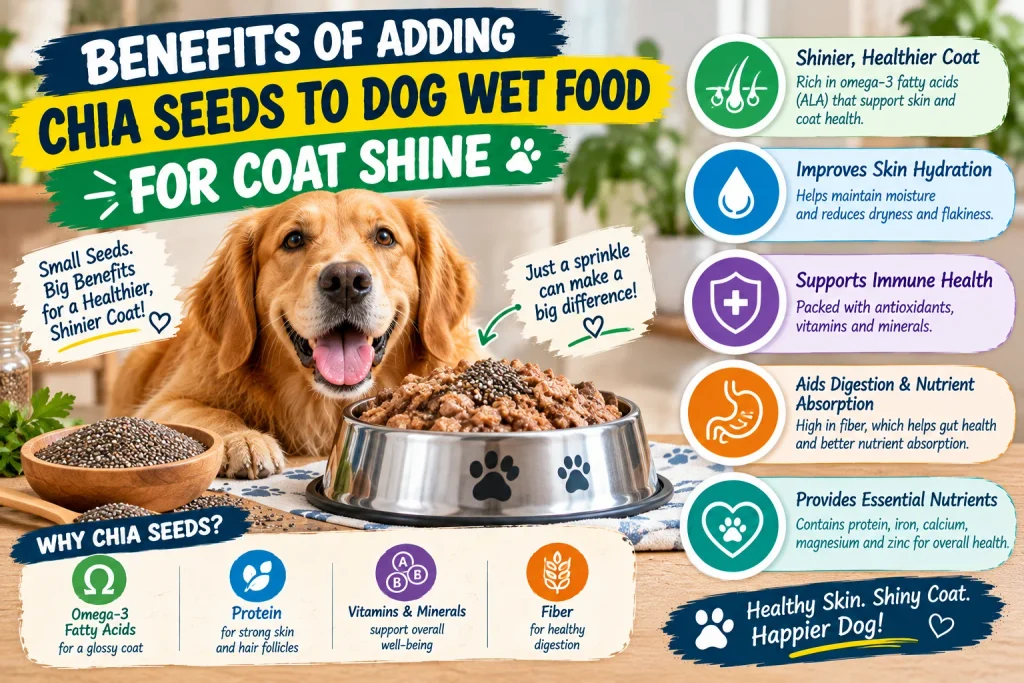
Benefits of Adding Chia Seeds to Dog Wet Food for Coat Shine A shiny, soft coat is one of the first things pet owners notice, and chia seeds have become a popular “topper” for dog food. But do they really help, and are they safe? The short answer: chia seeds can be a safe, nutritious extra for many dogs when prepared properly, but they are not a miracle cure for a dull coat. This guide explains what chia seeds offer, what the research actually shows, and how to add them to wet food safely.
What Are Chia Seeds?
Chia seeds come from the plant Salvia hispanica, native to Central America. They are tiny, rich in fibre and a good plant source of omega-3 fatty acids, in the form of alpha-linolenic acid (ALA). They also contain protein, minerals such as magnesium and zinc, and antioxidants.
As a rule, chia seeds are considered safe for dogs in small amounts. They are not a complete nutrition source, and they work best as a small extra on top of a balanced diet.
What Could Chia Seeds Benefits of Adding Chia Seeds to Dog Wet?
Omega-3 fatty acids support the skin barrier, help skin hold on to moisture and can reduce inflammation. These effects are why vets often recommend omega-3 supplements for dogs with dry skin or a dull coat.
Here is the important detail: most of the strong evidence is for the omega-3s EPA and DHA, which come from fish and algae oil, not for ALA from plant seeds. For example, a 2020 placebo-controlled study (Combarros et al., Prostaglandins, Leukotrienes and Essential Fatty Acids) gave 24 dogs with poor coat quality either a placebo or an EPA and DHA oil supplement for 90 days. The supplemented dogs showed higher EPA and DHA levels in their blood cells and more lipids on their hair shafts. That study used fish-type omega-3s, not chia.
Dogs convert ALA into EPA and DHA only inefficiently. So while chia seeds provide healthy fats and fibre, you should not expect them to work like fish oil. No large clinical trial has tested chia seeds for coat quality in dogs, and the evidence so far is limited.
Chia Seeds vs Fish Oil: Which Is Better?
| Chia seeds | Fish or algae oil | |
|---|---|---|
| Main omega-3 | ALA (plant-based) | EPA and DHA |
| Evidence for skin and coat | Limited in dogs | Stronger |
| Extra nutrients | Fibre, protein, minerals | Mostly just the oil |
| Good for | Dogs who can’t have fish, owners wanting a plant-based topper | Dogs who need a proven omega-3 source |
| Needs preparation | Yes, soaking is recommended | No |
Chia can be a reasonable option for dogs with fish sensitivities, but if your dog has a real skin or coat problem, ask your vet whether an EPA and DHA supplement (fish or algae oil) would be more effective.
Why Wet Food Is a Good Way to Serve Chia
- Moisture. Dry chia seeds absorb many times their weight in water and swell into a gel. If a dog eats them dry, they could swell in the throat or stomach. Mixing chia into wet food, or soaking it first, lets it hydrate before your dog eats it.
- Even mixing. The tiny seeds can sink to the bottom of a bowl of dry kibble. In wet food they spread evenly through the meal.
- Palatability. Chia has a mild, nutty taste that most dogs barely notice in wet food.
How to Add Chia Seeds to Dog Food Safely
- Check with your vet first, especially if your dog has digestive problems, pancreatitis, diabetes, allergies, kidney disease or is on a prescription diet.
- Pre-soak the seeds. Stir about 1 teaspoon of chia into 3 to 4 tablespoons of water and wait 10 to 15 minutes, until it forms a gel.
- Start tiny. Begin with about ⅛ teaspoon of the gel mixed into a normal meal of wet food.
- Watch your dog for a few days. Gas, loose stools, vomiting, itching or swelling mean you should stop and call your vet.
- Increase slowly, only if tolerated. Your vet can tell you what amount suits your dog’s size, calories and overall diet. Chia is high in fibre and calories, so keep it a small topper and never replace part of your dog’s balanced food with it.
- Provide plenty of fresh water.
Possible Risks and Who Should Avoid It
- Digestive upset: too much fibre can cause gas, bloating or diarrhoea.
- Blockage risk: if dry seeds are eaten in large amounts without enough fluid.
- Extra calories: a concern for overweight dogs or dogs on a weight-loss plan.
- Allergy: rare, but possible.
- Medical conditions: dogs with pancreatitis, sensitive stomachs, or special diets should only try chia if their vet agrees.
What If Your Dog’s Coat Is Dull?
A dry, dull or brittle coat is not always about diet. It can be a sign of allergies, parasites, hormonal conditions such as hypothyroidism, skin infections or poor overall nutrition. If your dog has hair loss, itching, scabs, a strong smell or a sudden change in coat, see your vet before trying supplements.
Simple coat-care habits help too: regular brushing, parasite prevention, a complete and balanced diet, and keeping your dog at a healthy weight.
Frequently Asked Questions
Are chia seeds safe for dogs?
In small amounts, and when prepared properly, chia seeds are generally considered safe for most dogs. Introduce them slowly and check with your vet first, especially if your dog has health problems.
Do chia seeds make a dog’s coat shiny?
They may support skin and coat health as part of a balanced diet, but the research on chia specifically in dogs is limited. The strongest evidence for coat improvement is for EPA and DHA omega-3s from fish or algae oil.
Can I give my dog dry chia seeds?
It is safer to soak them first or mix them into wet food, because dry seeds swell as they absorb liquid.
How much chia should I give my dog?
There is no official dose for dogs. Start with a very small amount (about ⅛ teaspoon of soaked chia), and ask your vet for the right amount for your dog’s size and diet.
How long does it take to see a difference?
In the fish-oil study above, changes in blood and hair fatty acids appeared over weeks to a few months. Coat changes from any supplement take time, and results vary from dog to dog.
Are chia seeds better than fish oil?
Not necessarily. Chia supplies plant-based ALA, which dogs convert to EPA and DHA only inefficiently. Fish or algae oil provides EPA and DHA directly. Chia can be useful for dogs who cannot have fish, but fish oil is usually the better-studied choice for skin and coat.
Can chia seeds cause allergies?
Allergies are uncommon but possible. Stop feeding chia and call your vet if you see itching, swelling, vomiting or diarrhoea.
Should I talk to my vet first?
Yes. Your vet knows your dog’s health history, weight and diet, and can say whether chia or another supplement is a good idea.
Final Thoughts
Chia seeds can be a harmless, fibre-rich topper for many dogs when they are soaked, introduced slowly and kept in small amounts. They are not a proven coat treatment, and they do not replace fish or algae oil if your vet recommends one. If your dog’s coat is dull, dry or unhealthy, start with a vet visit to find the cause, then build a plan that fits your dog.





One Comment