Signs of Canine Cognitive Dysfunction vs Normal Senior Dog Memory Loss 2026
Your dog is slowing down, sleeping more and sometimes seems a little lost. Is it just old age, or is something more going on? It can be hard to tell. Many senior dogs live with a condition called canine cognitive dysfunction syndrome (CCDS), often called dog dementia, and many owners put the changes down to “getting old” without ever mentioning them to a vet.
The good news is that CCDS is real, recognisable and manageable. This guide explains the signs to watch for, how they differ from normal aging, what else can look like dementia, and what your vet can do to help.
What Is Canine Cognitive Dysfunction Syndrome?
CCDS is a chronic, progressive, age-related brain condition that causes changes in thinking and behaviour. It shares similarities with Alzheimer’s disease in people. In affected dogs, the brain can show changes such as protein (amyloid) deposits and shrinkage of the cortex, which gradually affect memory, awareness and behaviour.
The key point is that CCDS is more than a few forgetful moments. It becomes a problem when the changes are persistent, get worse over time, and start to interfere with your dog’s daily life.
How Common Is It?
More common than most owners expect. A large owner survey published in 2011 (Salvin et al., The Veterinary Journal) found that about 28% of dogs aged 11 to 12 showed signs of cognitive decline, rising to about 68% of dogs aged 15 to 16. The same study found that around 14% of dogs aged 8 and over showed at least one sign, yet only about 2% had actually been diagnosed by a vet. In other words, CCDS is widely under-diagnosed.
The Six Signs of CCDS: DISHAA
Veterinary behaviourists use the acronym DISHAA to organise the signs of CCDS. Here is how each one differs from normal aging.
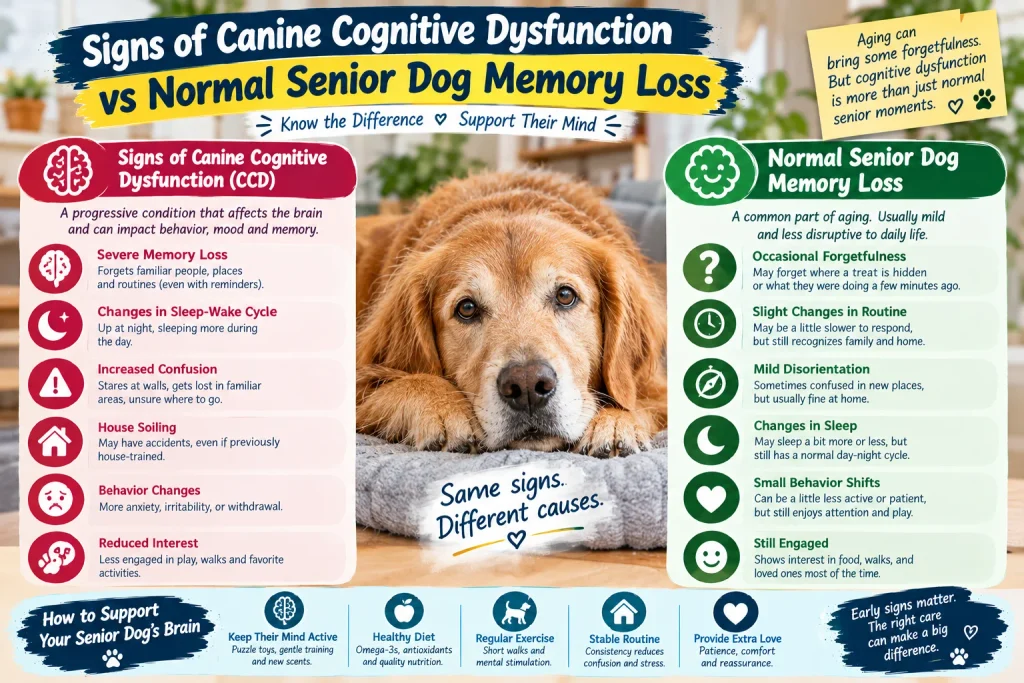
| Sign | Normal aging | Possible CCDS |
|---|---|---|
| D – Disorientation | Pauses in a doorway for a moment, then carries on | Gets stuck in corners, stares at walls, waits at the wrong side of a door, seems lost in familiar rooms |
| I – Interaction changes | Still happy to see you, but greets you from the bed instead of the door | Unusually clingy and follows you everywhere, or withdrawn and seems not to recognise family; sometimes irritable or fearful |
| S – Sleep-wake changes | Sleeps more during the day | Restless at night, pacing, wandering or barking or whining, then sleeps through the day |
| H – House soiling, learning and memory | Occasional accidents because of slow mobility or arthritis | A house-trained dog soils indoors despite having just been outside; forgets commands and routines |
| A – Activity changes | Plays less and tires sooner | Loses interest in favourite things, or paces and wanders aimlessly, staring into space |
| A – Anxiety | A little more cautious in new places | New fears (storms, noises, being alone) or separation anxiety that was not there before |
Normal Aging vs CCDS: The Big Difference
The easiest way to separate the two is to look at impact and progression.
- Frequency: normal aging changes are occasional and situational. CCDS signs are consistent.
- Progression: normal aging is stable or very slow. CCDS worsens over months.
- Daily life: normal aging does not disrupt routines. CCDS interferes with sleep, relationships, safety and house training.
A dog who is slower but still knows the household, enjoys their routine and sleeps through the night is probably aging normally. A dog who is lost in the house, awake and pacing at 3 a.m. and has forgotten their house training needs to be examined.
Other Conditions That Can Look Like Dementia
Before your vet diagnoses CCDS, they will first rule out other problems, because many treatable conditions can mimic it:
- Arthritis and pain: a dog in pain may avoid greeting you, resist going outside or seem withdrawn. (See our guide to senior dog joint care.)
- Kidney or liver disease: can cause extra thirst, frequent urination and accidents indoors.
- Urinary tract infections: a common and often overlooked cause of house soiling.
- Vision or hearing loss: can cause confusion, wandering and withdrawal.
- Brain tumours or seizures: need different tests and treatment.
- Other medical issues: hormonal disease or medication side effects can also change behaviour.
This is why it matters not to assume “it’s just old age”. Some of these causes are very treatable.
How Vets Diagnose CCDS
There is no single test for dementia in dogs. In December 2025, an international CCDS Working Group published the first standardised diagnostic guidelines in the Journal of the American Veterinary Medical Association. In summary:
- Screen early. Dogs should be screened for behaviour changes from about age 7, using a short senior health questionnaire.
- Use a cognitive questionnaire. From about age 10, a CCDS questionnaire (such as DISHAA, CADES or CCDR) is recommended roughly every six months.
- Examine and test. The vet performs a physical, orthopaedic and neurological exam, plus blood work and urine tests, to rule out other causes. Brain imaging such as MRI may be used in some cases.
- Stage the condition. CCDS is described as mild, moderate or severe, depending on how much it affects daily life.
Can CCDS Be Treated?
There is no cure, but early support can slow progression and improve quality of life. Your vet may suggest a combination of:
- Medication: selegiline (sold as Anipryl in the US) is approved for treating canine cognitive dysfunction in the United States. Your vet will decide whether it suits your dog.
- Diet: some therapeutic diets and supplements contain antioxidants, omega-3 fatty acids and medium-chain triglycerides (MCTs), which may support brain health.
- Mental enrichment: gentle training, puzzle feeders, sniff walks and short play sessions keep the mind active.
- Environmental support: night lights, non-slip floors, ramps, easy access to food and water, and a predictable daily routine reduce confusion and stress. Keep gentle exercise going too; see our guide to exercises for senior dogs with arthritis.
Always check with your vet before starting any new medication or supplement.
What You Can Do at Home Right Now
- Keep a simple diary of what you notice: what happens, when, and how often.
- Take short videos of nighttime pacing, staring or confusion to show your vet.
- Keep routines consistent: feeding, walks and bedtime at similar times each day.
- Make the home safe: block stairs if needed and keep furniture in the same places.
- Be patient and calm. A confused dog is not being naughty.
When to See the Vet
Book an appointment if your senior dog shows any of these:
- Getting lost or stuck in familiar places
- Restlessness or crying at night
- Sudden house-training accidents
- New fears or aggression
- Not recognising family members
See a vet urgently for sudden collapse, seizures, severe confusion that appears quickly, or repeated vomiting.
Frequently Asked Questions
Is it normal for my old dog to get confused sometimes?
Brief, occasional confusion that passes quickly can be part of normal aging. Frequent confusion that keeps getting worse, such as standing in corners or seeming lost at home, should be checked by a vet.
At what age does canine cognitive dysfunction start?
Signs most often appear from about age 9 or later, although they can begin as early as age 7. Screening is recommended from around age 7.
Can CCDS be cured or reversed?
No, it cannot be cured. Treatment and lifestyle support can slow its progression, and some signs may improve, especially when it is caught early.
What does DISHAA stand for?
Disorientation, Interaction changes, Sleep-wake cycle changes, House soiling and learning/memory, Activity changes, and Anxiety.
My dog paces at night. Is that dementia?
Night-time pacing, restlessness and vocalising are common signs of CCDS, but pain, urinary problems and other illnesses can cause them too. A vet visit can tell the difference.
Can arthritis look like dementia?
Yes. A dog in pain may avoid interaction, struggle to go outside or have accidents indoors. Your vet will check for orthopaedic problems as part of the workup.
Final Thoughts
Behaviour changes in an older dog are not always “just old age”. CCDS is common, often missed and, importantly, can be managed. If your senior dog is acting differently, write down what you see and talk to your veterinarian early. A little attention now can give your dog more comfortable, calmer and happier senior years.