Why Is My Dog Vomiting Yellow Foam? 7 Reasons Your Dog Vomiting Yellow Foam
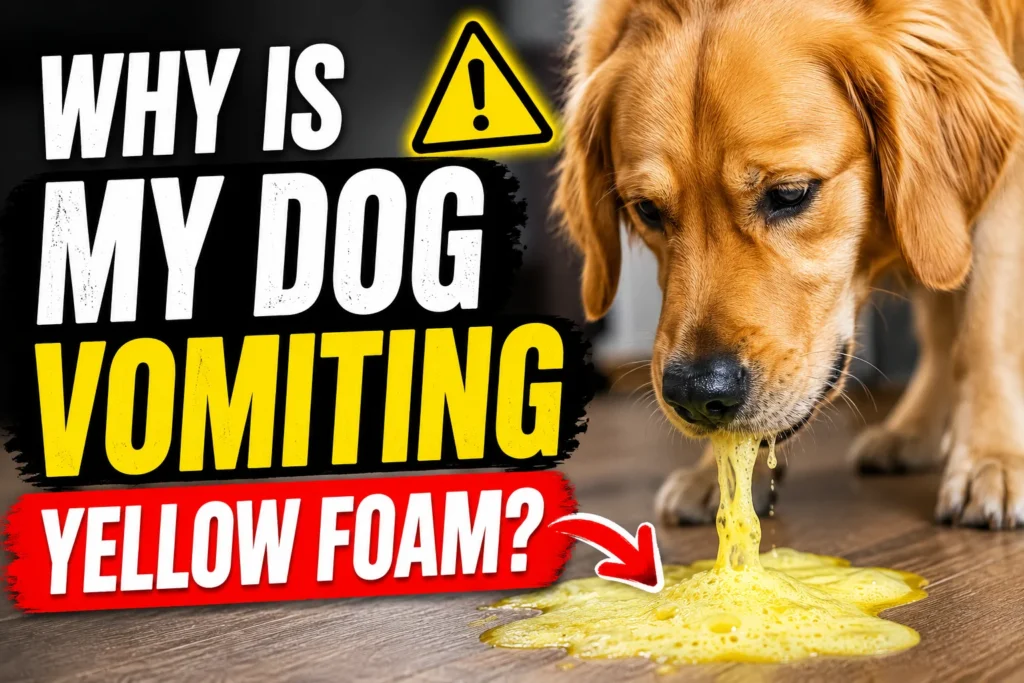
Why Is My Dog Vomiting Yellow Foam?Waking up to the sound of your dog retching is never pleasant. But when you see a puddle of slimy yellow foam instead of digested food, it’s natural to panic.
As a veterinarian, I see this specific symptom technically called bilious vomiting syndrome (BVS)almost daily. The good news? A single episode is rarely an emergency. The bad news? Repeated yellow vomiting can signal serious underlying issues.
Why Is My Dog Vomiting Yellow Foam?
That bright yellow or pale gold foam is bile a digestive fluid produced by the liver, stored in the gallbladder, and released into the small intestine to break down fats.
Unlike stomach acid (which is clear or white), bile turns yellow when it mixes with air and saliva, creating that frothy, soapy texture.
Insight: Bile belongs in the small intestine, not the stomach. When you see it in vomit, it means something caused bile to backflow into the stomach and then get expelled.
Top 7 Reasons Your Dog Is Vomiting Yellow Foam
1. Empty Stomach (Bilious Vomiting Syndrome)
This is the most common cause, especially in dogs fed once daily or those who go 10–12 hours without food. Without food to absorb bile, the acidic fluid irritates the stomach lining, triggering nausea and vomiting.
Typical timing: Early morning or late at night.
Breeds at risk: German Shepherds, Golden Retrievers, and small breeds like Yorkies.
2. Acid Reflux (GERD)
Just like humans, dogs can suffer from acid reflux. Excess stomach acid splashes up into the esophagus, causing gagging and vomiting of yellow foam, often after sleeping or lying down.
3. Dietary Indiscretion (Garbage Gut)
Did your dog raid the trash, eat spoiled food, or swallow a foreign object (sock, toy)? The stomach reacts by violently expelling contents. If the stomach is empty, only bile foam comes up.
4. Pancreatitis
Inflammation of the pancreas often causes repeated vomiting of yellow foam, accompanied by a praying position (rear end up, chest down), abdominal pain, and lethargy. High-fat meals (bacon, table scraps) are common triggers.
5. Liver or Gallbladder Disease
Because bile originates in the liver, chronic yellow vomiting can indicate hepatitis, gallstones, or a liver shunt. Other signs include jaundice (yellow gums/eyes), dark orange urine, and weight loss.
6. Intestinal Blockage
If your dog vomits yellow foam frequently but cannot keep water down, suspect a blockage. This is a surgical emergency. Other red flags: unproductive retching, bloated belly, and extreme lethargy.
7. Addison’s Disease (Hypoadrenocorticism)
Often called “the great pretender,” Addison’s causes vague, intermittent vomiting of yellow foam, weakness, and shaking. It’s easily missed but treatable.
When Is Yellow Vomit an Emergency? (Red Flags)
Call your vet immediately or go to an emergency clinic if the yellow foam is accompanied by:
- Blood (red streaks, coffee-ground appearance, or dark tar-like)
- Repeated vomiting (3+ times in 2 hours)
- Lethargy (won’t get up, walk, or respond to name)
- Bloated or hard belly (could be bloat/GDV life-threatening in large breeds)
- No food or water retention (vomits everything within 20 minutes)
- Suspected toxin ingestion (rat poison, xylitol, chocolate, grapes)
If your dog is acting completely normal after one episode of yellow foam, you can usually monitor at home for 4–6 hours.
How to Settle Your Dog’s Stomach at Home (Vet-Approved)
For a single episode with normal behavior:
- Withhold food for 6–12 hours to let the stomach rest, but never withhold water.
- Offer ice chips or small amounts of water every 30 minutes to prevent dehydration.
- Feed a bland diet after fasting:
- Boiled white rice (75%) + boiled boneless chicken breast (25%)
- Or plain canned pumpkin (not pie filling) 1 tbsp per 20 lbs
- Small, frequent meals 4–5 tiny meals per day instead of 1–2 large ones.
Natural anti-emetics: Slippery elm bark powder (1/4 tsp per 10 lbs mixed with water) can coat the stomach. Always consult your vet before herbs.
Veterinary Treatments for Chronic Yellow Vomiting
If your dog vomits yellow foam 2+ times per week, your vet may prescribe:
- Antacids (Omeprazole, Famotidine) to reduce stomach acid
- Anti-nausea medication (Cerenia or Metoclopramide)
- A prescription GI diet (low-fat, highly digestible)
- Ultrasound to rule out liver disease, gallstones, or masses
Prevention: Stop Yellow Foam Before It Starts
- Feed dinner later Move the evening meal to 9–10 PM to prevent overnight empty stomach.
- Give a bedtime snack A small handful of kibble or a rice ball before bed works wonders.
- Use a slow feeder Gulping air causes reflux and regurgitation.
- Elevate food bowls For deep-chested breeds (Dobermans, Great Danes) to reduce GERD.
- Avoid fatty table scraps Even one bacon slice can trigger pancreatitis.
The Bottom Line
One episode of yellow foam = Likely empty stomach.
Repeated yellow vomiting = Vet visit required.
Yellow foam + blood or lethargy = Emergency.
Your dog can’t tell you they feel nauseous, but that yellow foam is a clear signal. Listen to it, but don’t panic. Most cases resolve with simple feeding adjustments.
Frequently Asked Questions (FAQs)
Is yellow foam the same as bile?
Yes. Yellow foam is almost exclusively bile a digestive fluid. Clear or white foam is stomach acid.
Can stress cause a dog to vomit yellow foam?
Absolutely. Stress colitis or anxiety can speed up gut motility, pushing bile into an empty stomach. Common during boarding, travel, or loud noises (fireworks).
Should I feed my dog immediately after they vomit yellow foam?
No. Wait at least 6 hours to let the stomach settle. Then offer a tiny bland meal (2–3 tablespoons for small dogs, ¼ cup for large breeds).
Why does my dog vomit yellow foam only in the morning?
That’s classic bilious vomiting syndrome. The stomach has been empty for 8+ hours overnight. A late-night snack usually solves it.
Can puppies vomit yellow foam?
Yes, but it’s more dangerous. Puppies dehydrate faster. If a puppy vomits yellow foam more than twice in 12 hours, see a vet immediately (parvovirus is a concern).
Is yellow foam a sign of parvo?
Not alone. Parvo causes foul-smelling, bloody diarrhea, severe lethargy, and refusal to drink. Yellow foam alone is unlikely to be parvo.
My dog ate grass then vomited yellow foam normal?
Very common. Dogs eat grass to induce vomiting when they feel nauseous. The grass irritates the stomach, bringing up bile. Monitor for 24 hours.
Can I give my dog Pepto-Bismol for yellow vomit?
No. Pepto-Bismol (bismuth subsalicylate) can cause gastrointestinal bleeding and is toxic to cats. Never use human anti-diarrheals without vet approval.
How much does it cost to treat chronic bilious vomiting?
A basic vet exam ($50–100) + prescription antacids ($20–40/month). If an ultrasound is needed ($300–600), costs rise. Most mild cases resolve with diet changes alone.
Will a bland diet stop yellow foam permanently?
For empty-stomach cases yes, if fed in small, frequent meals. But if your dog has liver disease or pancreatitis, you’ll need prescription veterinary diets (e.g., Hill’s i/d or Royal Canin Gastrointestinal).