Can Cats Catch a Cold From Humans?
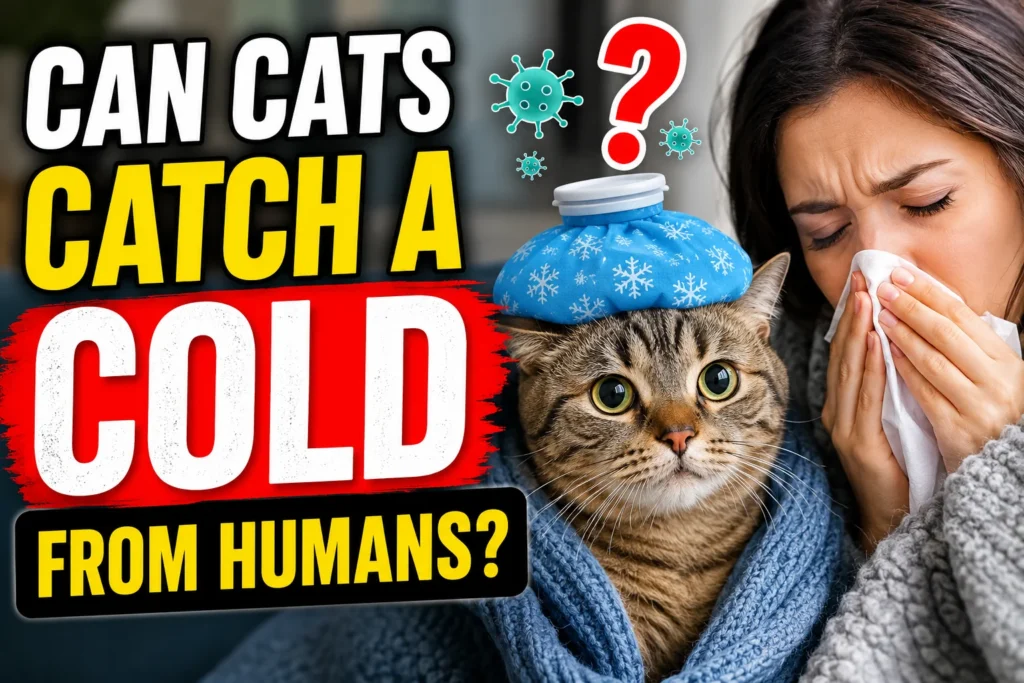
Can Cats Catch a Cold From Humans?.Now that winter has come, many cat owners are spending time with a box of tissues in their hands. As you glance over your precious little furball snuggled on your sofa and ask yourself, do cats get colds from their owners?
A great question as it is clear to see how much you love and worry about your furry friend. simple answer based on the veterinary knowledge is no, you won’t pass your common human cold to your feline. But the truth about it is slightly more complicated.
Understanding the Common Cold: Human vs Feline
To answer “can cats catch a cold from humans” we first need to look at the viruses responsible.
- Human colds are most often caused by rhinoviruses and coronaviruses.
- Feline colds are typically caused by feline herpesvirus and feline calicivirus.
These viruses are species-specific. That means a rhinovirus has evolved over centuries to attach to receptors inside your nose and throat not your cat’s. In very simple terms: your cold virus cannot replicate inside a cat’s body.
The Verdict from Veterinary Science
No scientific evidence supports the transmission of the common human cold to cats.So if you’re coughing and sneezing from a standard winter cold, you can still cuddle your kitty without fear of making them sick.
But Wait Can Cats Get Sick From Humans at All?
While your standard cold is safe, there are a few rare exceptions where cross-species transmission occurs. These are not common colds but specific pathogens.
- Influenza A: Yes, cats can catch the human flu. Cases of H1N1 and H3N2 have been documented in cats. Symptoms include fever, lethargy and coughing.
- COVID-19 : Cats are susceptible to the coronavirus that causes COVID-19. They typically show mild signs and usually recover quickly.
- Bacteria : Bordetella bronchiseptica can pass from humans to cats in extremely rare cases, though this is uncommon.
Key takeaway: Your everyday “cold” is safe. The seasonal flu or COVID-19? That’s a different story. If you have a high fever and body aches, practice good hygiene around your cat.
How Do Cats Actually Catch a Cold?
Since they don’t catch human colds, where do feline upper respiratory infections come from? Cats catch colds from other cats.
Feline herpesvirus and calicivirus spread through:
- Direct contact.
- Sharing food/water bowls or litter boxes.
- Airborne droplets.
- Contaminated surfaces.
High-Risk Cats
While any cat can get a cold, these groups are most vulnerable:
- Kittens.
- Senior cats.
- Unvaccinated cats.
- Stressed or recently sheltered cats.
Signs Your Cat Has a Cold
Because you won’t give your cat your cold, symptoms in your cat will differ slightly from yours. Watch for these feline upper respiratory infection signs :
- Sneezing
- Runny nose
- Watery eyes
- Coughing
- Lethargy
- Loss of appetite
- Fever
If you notice these signs, your cat has a feline cold not one they caught from you.
When to See a Vet (Don’t Ignore These Signs)
Most healthy adult cats recover from a mild cold in 7–10 days with supportive care. However, some symptoms warrant an immediate vet visit :
- No eating for 24+ hours.
- Green or bloody nasal discharge
- Open-mouth breathing
- Lethargy so severe they won’t move.
- Squinting or pawing at eyes
Note for veterinarians: Do not give your cat any cold medication made for people. Acetaminophen and Ibuprofen are deadly to cats.
How Do Cats Get a Cold from People?
If your cat has a cold and is active, here are some treatments you can try for your pet:
1. Increase Moisture
Run a coolnmist humidifier in the room where your cat sleeps or take them into the bathroom while you run a hot shower for 10–15 minutes. The steam loosens nasal congestion.
2. Clean Their Face Gently
Use a warm, damp cloth to wipe away eye or nose discharge several times a day.
3. Warm Their Food
Microwave wet food for 5–10 seconds to boost aroma. A strong smell encourages eating when noses are stuffy.
4. Reduce Stress
Keep the environment calm. Use Feliway diffusers or provide a quiet hiding spot.
5. Encourage Hydration
Offer tuna water or switch to wet food temporarily.
Also Check: Why Is My Cats Stomach Bloated and Hard?
Preventing Colds in Cats
You cannot prevent feline herpesvirus or calicivirus by avoiding your cat while you’re sick but you can take these steps:
- Vaccinate. The FVRCP vaccine is highly effective.
- Quarantine new cats for 10–14 days before introducing them to your resident cat.
- Always ensure that your hands are washed whenever you come into contact with other people or stray cats.
- You will be have to sanitize your pet’s feeding bowls and litter box on a weekly basis.
- If YOU have the flu or COVID-19 limit close face to face contact or wear a mask and wash hands before feeding or after petting your cat.
Can Cats Catch a Cold From Humans? Final Answer
| Scenario | Can your cat catch it? |
|---|---|
| Common human cold | No |
| Human influenza | Yes, rarely |
| COVID-19 | Yes, rarely |
| Feline herpesvirus or calicivirus | No these are cat specific |
Bottom line: Snuggle your cat when you have a sniffle. But if you have a high fever from the flu, keep a little distance until you’re better.
Frequently Asked Questions (FAQs)
Can cats get a cold because I’m sneezing?
No. The viruses found in your sneezing cannot be caught by your cat. This may be attributed to dust, allergies or feline viruses.
Can I give my cat a sore throat?
The sore throat may result from viral infection or bacterial infection. No, you cannot give your sore throat to your cat.
Can my cat get stomach flu from me?
Infections resulting from human norovirus and rotavirus do not impact cats. The vomit or diarrhea from your cat could be caused by other infections such as the intake of wrong foods, parasites and panleukopenia that require urgent treatment.
Is it advisable to keep away from my cat in case I am infected with Coronavirus?
Yes, it is advised because according to the CDC, one should limit interactions with their pets when affected by Coronavirus. Get someone else in the family to take care of your cat or wear a mask when handling your pet and wash your hands before that.
How can I contract a cold from my cat?
Rarely. Feline herpesvirus cannot be transmitted to humans. can carry Bordetella bronchiseptica or ringworm. Normal hygiene measures will prevent most problems.
How long does a cat cold last?
Mild cases: 7 to 10 days.. Severe or secondary infections can last 2–3 weeks. If symptoms persist beyond 10 days, see your vet.
Can indoor cats catch colds?
Yes. Viruses can easily be brought into the house through the shoes, clothes or hands after touching other cats. Stress also triggers latent herpesvirus infection in indoor cats.
What antibiotic should be used for a cat’s cold?
None of the available antibiotics will work on viruses. Your vet will prescribe antibiotics if there is a secondary bacterial infection. Never use human antibiotics.
Can a kitten die from a cold?
Yes, unfortunately. A kitten is vulnerable to infections. Even a minor cold can trigger pneumonia or anorexia.
Is there a home test to see if my cat caught my cold?
No home test exists. Diagnosis is clinical. If you’re worried, your vet can perform PCR testing on eye/nose swabs to identify feline herpesvirus or calicivirus