How to Treat a Respiratory Infection in a Pet Turtle?
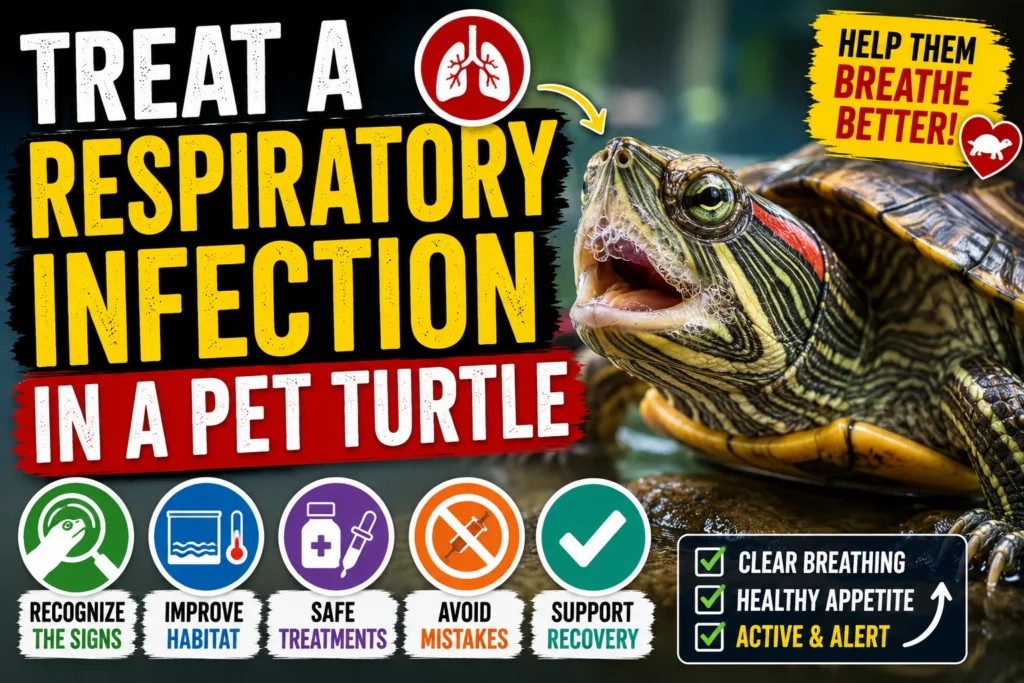
Treat a Respiratory Infection in a Pet Turtle. As a veterinarian who focuses on exotic pets, one of the conditions that I most frequently and worry about seeing in my patients is a respiratory infection in the turtle. It’s obviously an unsettling and frightening sight to have your pet shell-dweller in respiratory distress, however, the encouraging thing is that the prognosis for many can be excellent given prompt and proper care. This article, designed from a veterinary, yet accessible, approach will guide you through the whole gambit of your pet turtles respiratory infections from signs and symptoms, to treatment options, and how to go about prevention!
Understanding the Threat Treat a Respiratory Infection in a Pet Turtle
Respiratory disease can be very serious in turtles and almost always means there is another problem typically that their Husbandry has been inadequate. As these animals are cold-blooded or ecoto thermic, their temperature (which directly affects the efficiency of their immune system) is regulated entirely by their environment, and thus bad husbandry will lower their immune response to pathogens.
Common Causes
More often than not, infection is caused by bacteria such as Pseudomonas spp, Aeromonas spp, and Mycoplasma spp . This is more likely to be a secondary infection, stemming from a vitamin A deficient diet (such as lettuce iceberg or and all-meat diet) which will break down the membranes and allow other infections to develop .
Other causes include:
- Viruses
- Herpesvirus
- Ranavirus: can be fatal or very damaging.
- Fungi : aspergillus (pneumonia).
- Parasites: lungworms (rhadbidiasis).
Key Predisposing Factors
These are the key environmental failures that lead to illness:
- Temperature Off: The water could be too cold or the basking area could not be hot enough.
- Poor Water Condition: Bad filtration may also permit certain bacterias to proliferate in your tank.
- Unhealthy diet: If the tortoise can’t get a suitable amount of Vit A in his diet it may cause a condition called Avitaminosis A.
- Stress: They could be stressed from too many tortoises, too much petting, or an ill conceived layout of the enclosure.
Recognizing the Signs: Symptoms of a Respiratory Infection
Early detection is critical. Watch for these signs:
Early Symptoms:
- Nasal Discharge: bubbles or fluid coming from the nostrils.
- Lethargy: Decreased activity levels or sleeping for longer durations.
- Loss of appetite (anorexia): Not eating anything at all.
- Swelling of eyes: Puffiness on and around eyes, potentially including some discharge.
- Advanced Symptoms (Pneumonia): When to Worry about Your Breathing Whether you’re swimming laps for fitness, diving down into a pool, snorkeling along the shallow end of the ocean or just going about your daily life in the water, problems with the way you’re breathing can send serious red flags waving. Any kind of shortness of breath is a definite warning sign. Beyond that, be aware of these other signals you need to stop swimming or any activity involving breath, and seek help.
- Open Mouth Breathing or Gasping: A clear sign of respiratory distress.
- Wheezing or Clicking Sounds Audible sounds when breathing. Neck Extension Stretching the neck out to breathe more easily. Buoyancy Issues Tipping to the side while swimming or having trouble diving down. Pneumonia may affect your lungs in such a way that the body can’t create or maintain balanced buoyancy by shifting or even diving.
What is Pneumonia In Turtles? Expert Note: Turtle tilts on one side while in water – it’s a telltale symptom of pneumonia – see a vet as soon as you can! It will not go away on its own.
The Path to Recovery How to Treat a Respiratory Infection
- Step away: Quarantine the ailing reptile away from your other reptile species
- Try a slight heat increase: for water temperature- (at 80-85 degrees for an affected individual) as well as for temperature in the basking site, 90-95 degrees, this may boost her body’s immune system so they combat infection, it does not fix it although.
- Bathe turtle in an incredibly hot & & T. 3.
- UVB radiation, 8-12 hours per day will help a person’s immune functions.
- Will NOT offer food water
Immediate Steps You Can Take at Home (Supportive Care)
While you schedule a vet appointment, optimize the environment to boost your turtle’s immune system .
- Separate your sick turtle from other reptiles: Raise the temperature: water-80-85 degrees and the temperature in the basking area-90-95 degrees; that will help their body to improve immunity for infection-fighting; not a cure however.
- Use very clean, fresh water for bathing: Provide UVB-rays for 8-12 hours a day for their immune systems. Don’t use food water supply.
Also Check: Can Cats Eat Pumpkin Pure for Diarrhea?
Veterinary Treatment: The Professional Cure
A Respiratory infection won’t resolve itself without a visit to the veterinarian. Your veterinarian will likely prescribe.
1. Diagnosis
- Physical Exam & History: To check how overall health status. To review your home care history, which help rule out any potential conditions. Radiographs (X-rays) – An X-ray can confirm pneumonia and show how much lung tissue is affected by the infection.
- Blood Tests: We can check how healthy the organs are functioning and make sure there is no sign of general body infection.
- Culture and Sensitivity: Taking a sample from the nasal or oral secretions can culture for different bacteria. This can identify the exact bacteria and choose appropriate antibiotics .
2. Medications
Antibiotics: Your best bet! These can be given by shot, mouth, or as a nose drop . Injections may be best in giving the meds to the turtle because it’s faster and less traumatic to the turtle and most certainly not the to take down by hand ! Common examples are :Enrofloxacin, doxycycline, and azithromycin .
- Antifungals: In the case the fungal diagnosis occurs .
- Antiparasitics: In the event that lungworms are discovered .
3. Advanced Therapies
- Nebulization: We know that by using a fine mist of antibiotic or bronchodilator delivered directly to a turtle’s lungs can be very helpful. Most commonly we have clients place their pet in a sealed but well-ventilated box that has been treated with an aerosolized medicine (we sometimes refer to this as the “box method” for water turtles). We can put a pet turtle in such a box in our clinic as well.
- Fluid therapy: If the patient is dehydrated your vet may administer subcutaneous or IV fluids.
- Feed support: If the patient is reluctant to eat, your vet can perform an esophagostomy placement for an esophagostomy tube. This will allow our vets to feed and medicate a sick patient with the least amount of stress possible. Pain medications Pneumonia is uncomfortable. Pain medications will be prescribed that are appropriate for your turtle.
- Hospitalization: may need intensive care and have to be placed at the hospital if he is quite ill.
Prevention: The Best Medicine
Precaution is better than the cure and with a little care for proper husbandry and you will largely prevent them altogether:
- Proper environment: Temperature: Put a good heater and basking light in your setup for your thermal gradient.
- Filtration: Invest in a top-notch filter system for aquatic turtles, and perform regular water changes.
- Ventilation: Make sure that there is adequate air circulation inside the tank to not cause undue moisture build up. Feed a good Quality pellet based diet enriched with dark, leafy greens like collard greens or Romaine lettuce and, optionally, a varied diet.
- Include occasional: fresh food such aslive insects or small fish. Avoid ice berg lettuce with turtles, ever.
- Use a UVB source of Light: Many people fail to remember that UVB bulbs must be replaced every6–12 months through their normal life due to the fact that UV B rays decline over their lifetime.
- Quarantine Any new turtle(s): Any new additions must be separated from the rest of the pack for at least3 months prior to interaction.
- Avoid handling the turtles: Minimize handling; provide an abundance of hiding spots within the enclosure.
Frequently Asked Questions (FAQs)
Will a turtle recover from a respiratory infection on his own?
No. Even if your turtle seems to get better on his own from a case of mild infection, respiratory disease is usually a life-threatening emergency and requires diagnosis and treatment by a vet and prescription for an appropriate antibiotic or other medication; otherwise, it’s very likely your turtle will die.
What is the most frequent cause of a turtle respiratory infection?
The 1 cause of turtle respiratory infections is from a bacterial process, but often as a secondary consequence of a deficient vitamin A diet, sub-standard husbandry including inappropriate temperature regulation, and lack of cleanliness.
What does it look like if a turtle has a respiratory infection?
Symptoms can include bubbles coming out of a turtle’s nose or mouth, increased breathing at an open mouth, a wheezing or crackling respiratory sound, general decreased activity, lack of eating, and on an aquatic turtle, tilted swimming.
What is the best way to treat a respiratory infection in my turtle?
Best treatment is via vet because he will be able to perform cultures and select the appropriate antibiotic for your turtle’s infection (injectable antibiotic for a much higher chance of getting into the blood stream), supplemented with fluids, heat, etc..
Can I administer antibiotics to my turtle myself at home?
Absolutely not. A vet must issue any antibiotic and too high or low dose or wrong antibiotics may be toxic or non efficient. It is preferable the use of injection but still need the presence or supervision of the veterinarian.
What should I do with home remedies to treat the pneumonia at home?
Keeping the terrarium environment as warm as needed or sterilizing it is important for healing, but not a treatment, and only helps to speed up the healing provided by the antibiotic.
What is the chance that my turtle can recover if diagnosed with pneumonia?
If you diagnose and treat pneumonia at an early stage and immediately you have very good chances of recovering you have high probabilities, if the damage is more extensive than chances are moderate. Most of animals react very good with correct medication.
What period of time would my turtle be sick?
It might take weeks to recover, sometimes longer; there is a time duration that up to 28 days if intrapulmonary antibiotics were used in the treatment. However it all depend of the type and the gravity of pneumonia and also depends of the animal in general.
How can I make sure my turtle never gets sick again?
Prevention starts by addressing your husbandry as precisely as possible. That includes a proper temperature gradient, a healthy diet, excellent water quality, and appropriate UVB lighting.
When should I take my turtle to the veterinarian?
Any of the above mentioned signs/symptoms are an immediate indication. If your turtle’s behaviors aren’t within their norm, then it’s time for the vet to see your friend.