
Are Smart Litter Boxes Safe for Small Kittens Under 3 Months 2026?
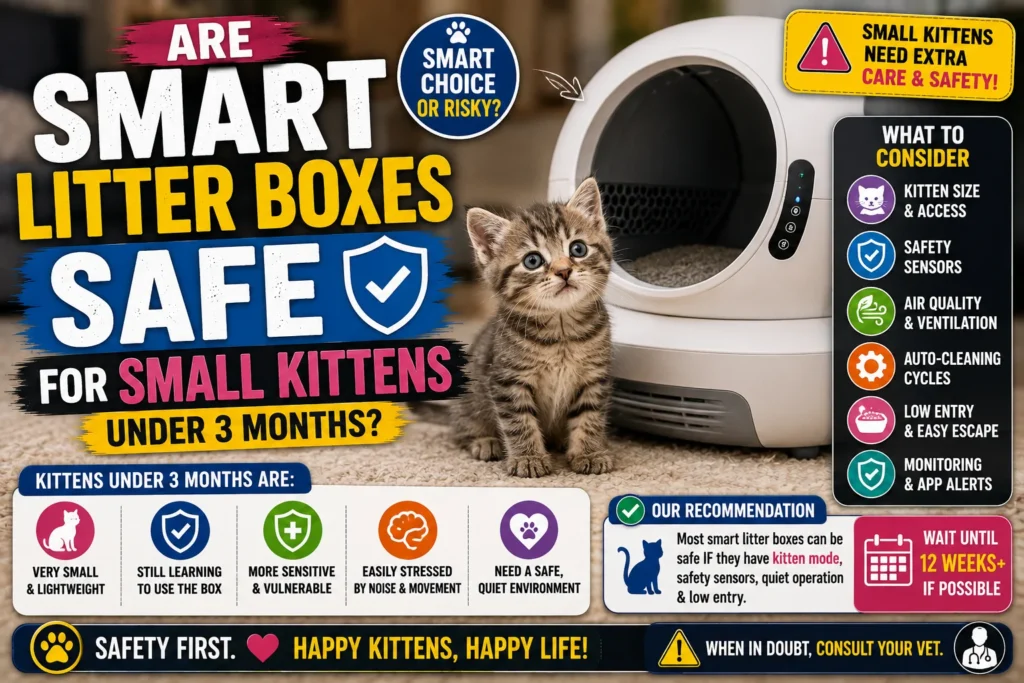
Smart Welcoming a new kitten into your life is a joyous experience, and you certainly want to do the best you can for your new furry family member, which sometimes might entail technology.
You might even have an all new smart, self cleaning litter box ready and waiting, hoping to start off right with high tech amenities for your kitty. In most cases with a kitten under 3 months of age, the answer is no mostsmart litter boxesso not suitable or safe.
The Critical Weight and Safety Sensor Problem
The primary safety concern: The sensors. Most smart litter boxes have a weight sensor to recognize when a cat is inside the machine, preventing the cycle from beginning. A typical three month old kitten will weigh between 2 to 3.5 lbs.
The weight limit on a good percentage of the popular smart litter boxes is actually 3.3 lbs (1.5kg), and sometimes even greater than that.
If your kitten is still less than that, the sensor likely won’t pick up your tiny furball and the machine could cycle while he is inside potentially resulting in injury or entrapment.
Manufacturer Warnings
This level of danger is taken extremely seriously by product manufacturers themselves, so they will also make warning notes on their packaging that it is not appropriate for very young kittens:
PaWz warning says: “not advised for kittens aged less than 6 months and weight less than 1.5kg”
PETKIT says: “applicable range of weight for cats is 1.5kg to 8kg; do not use for pets under 6 months of age”
Nature’s Miracle will tell you not to use until kittens are “over six months of age”
CATLINK will allow it, but only in “MANUAL mode” for kittens under 3.3 lbs, which you have to push anyway, so there is an element of control and the ability to see the box is empty.
There are newer higher end models such as Litter-Robot 5 Pro that claim to register as light as 2 lbs, but the vast majority of mart boxes, the risk is simply too high.
Physical and Psychological Barriers
Beyond the safety sensors, there are other practical challenges for a very young kitten.
A Matter of Size and Access
For a 3 month old kitten, even an average smart litter box is HUGE. The opening can be high, and inside there’s a great big gaping space. Cornell University College of Veterinary Medicine says your litter box should be 1 ½ times the length of your cat large and potentially intimidating for tiny legs. So your kitten may be too imitated by the robot or simply unable to climb into the massive device and he ends up having accidents elsewhere.
Noise and Fear
Kitten in a strange new home and they were already suspicious and frightened; the noise and action of the motor whirring, and not knowing where they would end up could well scare a kitten tremendously and make it an unpleasant and perhaps even traumatic experience. The negative association with the litter box at such an early age can be very tough to overcome and can manifest as an aversion to the box for a considerable length of time, or even for life.
Expert Recommendations: Start Simple and Safe
Ask any veterinarian or pet professional about the most reliable and healthy litter box choice for a kitten younger than 6 months, and most would tell you that the classic, minimalist box is the right fit.
The Best Choice for Your Kitten
In the first few months, choose an open plastic pan of size with low sides. It’s easy because: Kitten will have no problem to step in and out Kittens feel safe for a low profile pan, so there’s no movement nor sound
Focusing on Litter Training
During these early weeks it’s important to be patient to establish successful litter training habits. Choose a fine, clump-free litter that smells sweet and has a soft texture for delicate paws, and ideally it will feel like the natural terrain for yourkitten’s needs. Once your kitten reliably and reliably used the box (something they have a natural instinct to do) and is old enough to be the recommended minimum age for your litter box (or has reached a manufacturers minimum weight, typically 6 months), you might look to invest in a smart litterbox.
The “Kitten Mode” Caveat
What to look for if it shows “Kitten Mode” If there is a smart litter box being marketed with a “Kitten Mode,” know that usually it means one of two things: The cleaning is automatically postponed for a bit to allow for time for the kitten to exit.
The box just operates on a manual mode and you just click a button to start the cycle In still this is a step in the right direction but this does not address the physical barriers with the large opening or if the kitten is afraid. Pay close attention to the details about weight limits or limitations.
Conclusion
Overall The consensus when it comes to smart litter box safety for kittens is it’s not recommended for any kitten under the age of 3 months. The physical and psychological risks of these machines to your small feline friend outmatch the benefit of a clean box by a considerable margin. Use an open box until your kitten is large enough and has a sufficient weight usually 6 months or more before even considering an automatic version.
For More : The Ultimate Guide to the Best Natural Ear Cleaning Solution for Floppy Eared Dogs 2026
Frequently Asked Questions (FAQs)
My smart litter box has a “Kitten Mode.” Is it safe?
It depends on what “Kitten Mode” means. Many brands, like CATLINK, use this term to indicate the box operates in a manual cycle meaning you must press a button to start cleaning. This prevents the box from cycling while the kitten is inside, but the kitten must still be large enough to trigger the weight sensor (often a minimum of 3.3 lbs). It is safer, but the physical barriers and potential for fear still exist .
At what age can my kitten start using a smart litter box?
Most manufacturers recommend kittens be at least 6 months old or weigh a minimum of 1.5 kg to 1.8 kg (roughly 3.3 to 4 lbs) to use the auto-cleaning feature . This ensures they are large enough to be detected by safety sensors and physically capable of using the box comfortably.
What are the specific risks of a sensor not detecting my kitten?
If a smart litter box cycles while your kitten is inside, it can cause severe injury, including crushing, pinching, or entrapment. Reports of serious injuries and even deaths have been linked to off-brand automatic boxes that lack proper detection for small kittens .
Can a smart litter box scare my kitten?
Yes. The sudden, loud motor noise and moving parts of a self-cleaning box can be terrifying for a young kitten in a new home. This negative experience can create a strong fear of the litter box, leading to inappropriate elimination (peeing/pooping outside the box) that can become a chronic, difficult-to-treat habit .
What type of litter box is best for a 3-month-old kitten?
Veterinarians recommend a small, open top pan with very low sides . This is easy for a tiny kitten to access, doesn’t trigger fear, and is simple to maintain and clean, which is essential for successful litter training.
How much should my kitten weigh to safely use an automatic litter box?
The minimum weight is typically around 3.3 pounds (1.5kg), but this varies by model . Some premium boxes, like the Litter Robot 5 Pro, have a lower threshold of 2 pounds . Always check the manufacturer’s specific requirements for the model you are considering. If your kitten is under the minimum, do not use the automatic feature.
I’m worried about cleaning a traditional litter box. Are there other options?
For a young kitten, hygiene is very manageable. Scoop the box at least once daily with a small scoop and use an enzymatic cleaner for weekly deep cleans . This daily routine is a small price to pay for your kitten’s safety and is a vital part of bonding and monitoring their health.
Are there any smart litter boxes specifically designed for kittens?
Currently, most are designed for adult cats. The Whisker Litter Robot 5 Pro is a notable exception, using AI powered cameras and advanced sensors to detect kittens as small as 2 pounds . However, such advanced safety comes at a significant cost and is not the standard.
My kitten is 2 months old and 2.5 lbs. Can I use a smart box if I turn it off?
If you plan to never use the automatic cleaning cycle, you could potentially use a smart box as a very expensive, traditional litter box. However, the high entry point may still be a barrier. It would be more practical and cost effective to use a simple low sided plastic pan until your kitten grows.
What’s the safest way to transition my kitten to a smart litter box later on?
When your kitten is old enough and meets the weight requirement, place the new smart box next to the old one . Start with the smart box in manual mode so the kitten can get used to its presence. Once they’re using it comfortably, you can switch to the auto cleaning feature. This gradual introduction minimizes stress and fear.






One Comment