
Recognizing Signs of Leaky Gut Syndrome in Allergic Dogs
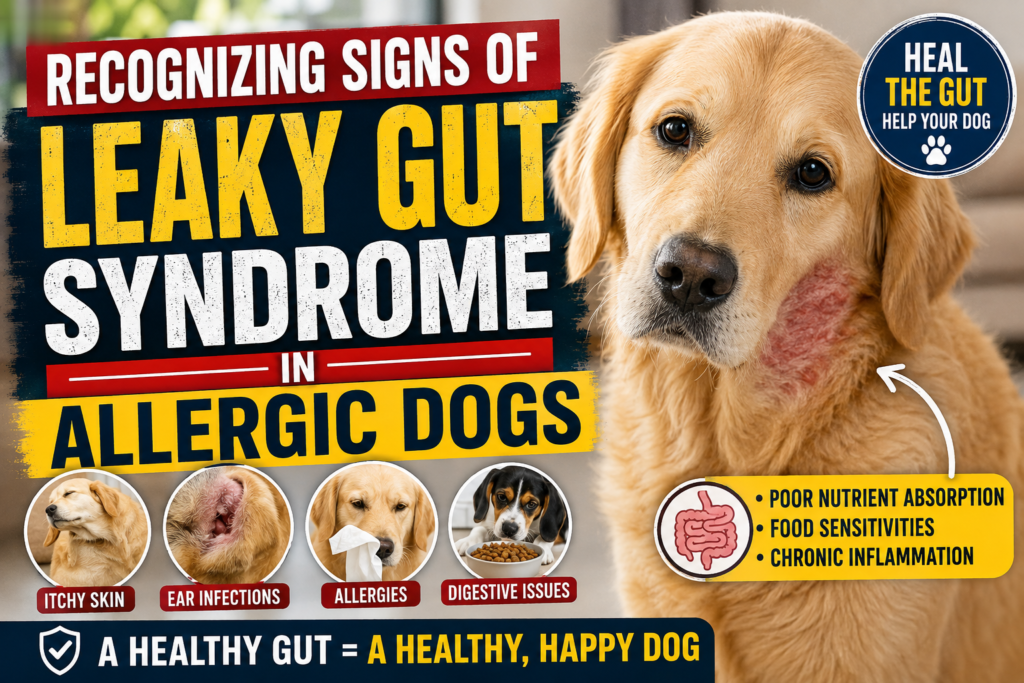
Recognizing Signs of Leaky Gut Syndrome in Allergic Dogs.
As a veterinarian, I witness many dogs stuck in a difficult cycle of scratching, reoccurring ear problems, and gut upset that is never fully resolved. What many of my clients don’t realize is that the “simple” allergy is actually leaky gut syndrome. Learning this connection between the skin and gut is where you can start healing your dog.
What is Leaky Gut Syndrome in Dogs?
This condition is also medically known as increased intestinal permeability. It basically means that the inner surface of your dog’s gastrointestinal tract is damaged. This lining is normally a barrier- a sieve that will allow digested nutrients and particles to enter into the bloodstream but keep out other less-than-desirable things like toxins and pathogens, even undigested food particles.
When your dog’s mucosal layer becomes inflamed the cells lose the tight seals between them. These small gaps will let the un-welcome items in and make it possible to leak into your dog’s circulation. This, in turn, will stimulate a huge alarm response in the immune system.
Your dog’s body constantly has an alarm ringing.
Because the immune system is always turned up, the same system may respond incorrectly to the very items that your dog usually lives happily with, and in more severe cases, the immune system may turn on parts of the body resulting in autoimmune diseases.
And that’s the main point where this ‘gut-skin axis’ comes into play. A damaged and inflamed ‘leaky gut’ contributes greatly to skin inflammation. A recent study supports this, noting that a strong association between canine allergic disease, also known as atopic dermatitis and gut damage suggest that damaged gut contributes to greater Allergen exposure leading to skin inflammation.
The Link Between Allergies and Leaky Gut
A real “chicken and the egg” situation! Do allergies cause leaky gut or does leaky gut cause allergies? Usually it’s both.
Food allergies can be the cause of a bacterial imbalance and resulting inflammation leading to leaky gut.
For example a dog that has a food allergy will develop ongoing, chronic gut inflammation which will cause damage to the intestinal lining.
However, when a dog develops a leaky gut, their immune system is bombarded with intact food proteins etc in the bloodstream. The constant over stimulation by various invaders in the blood and constant reaction to that exposure, predisposes your dog to developing new food sensitivities and environment allergies. It is an endless cycle; allergies contribute to leaky gut and leaky gut contributes to allergies.
Also Check: How to Encourage a Cat With Kidney Issues to Drink Water Naturally 2026
Key Signs of Leaky Gut Syndrome in Allergic Dogs
Leaky gut can cause symptoms classified into one of two groups – those impacting the GI tract, and those which become triggered systemically as a result of it being inflamed.
Primary Gastrointestinal Signs
These might not seem significant compared to skin issues, but digestive troubles are actually a primary clue. Signs to watch for include:
- Chronic Diarrhea or Soft Stools: One of the most common signs of a gut health problem. They can also be particularly smelly.
- Flatulence: Too much gas is a sign of an imbalance.
- Vomiting: If your dog just gets into everything and has the occasional vomiting bug that can often be caused by inflammation of the gut.
- Vomiting: In other cases and with increased frequency you can see vomiting as an indication of Gut problem, as stated by VCA.
- Weight loss: If the gut hasn’t the ability to digest what the dog is eating effectively even with normal hunger they can even get slim and lose weight.
Secondary Signs of Systemic Inflammation
Because a leaky gut compromises the immune system, it can lead to a wide array of inflammatory issues elsewhere in the body. This is where the connection to allergies becomes most apparent.
- Skin Problems: This is the most common reason dog owners seek help. Signs include:
- Chronic Itching (Pruritus): Excessive scratching, licking, or chewing, especially on the paws, belly, and face.
- Recurrent Skin Infections: Yeast infections (like Malassezia) and bacterial skin infections are common secondary problems in allergic dogs with leaky gut.
- Poor Coat Quality: A dull, brittle, or thinning coat can reflect poor nutrient absorption.
- Chronic Ear Infections: Reccurent ear infection/inflammation is a really, really classic sign of an allergy, and is often a consequence of the same cascading inflammatory processes that occur in a “leaky gut”.
- Lethargy/Fatigue: Our immune systems get worn out. An immune system working overtime is exhausting!. Your dog looks too tired and “draggy” the signs are not uncommon.
- Behavioural changes/Aggression: There are anecdotes from some holistic vets that the constant pain and systemic inflammation (which occur with leaky gut) can alter a dog’s character to become anxious and/or aggressive.
Frequently Asked Questions (FAQs)
How can I tell between a standard allergy and a leaky gut?
It can be difficult to distinguish if your dog is having leaky gut or allergies, as they are so closely linked. However, if you notices signs consistent in dogs, that of an itching dog along with chronal digestive issue such as loose stool and vomiting, you may begin to wonder if your dog has a leaky gut, therefore, a visit to vet for additional checks needed.
What is the dog “gut-skin” axis?
Gut-skin axis is the link and the connection within our animal’s digestive health and skin health, we can prove that if gut is damaged and our digestive are impaired this affects the condition of allergies on the surface of our skin as such such as an increased sensitivity to allergies of the atopic variety, if a gut has damage more irritant factors will enter the bloodstream.
How can I tell the difference between a normal allergy and a leaky gut?
It is hard to distinguish if your dog has leaky gut since it is related to allergies, but when you see classic signs for dogs such as skin itchiness and chronic digestive health problems such as loose stools or vomiting you may wonder your dog is leaking his gut. Visit your vets to check if any issues need to be tackled by both.
Are certain dog breeds more inclined to develop leaky gut syndrome?
Although any dog can be at a greater risk, it tends to happen in dogs more with breeds such as those inflammatory bowel disease, allergic reactions to food or dermatitis such as atopic dermatitis is more common in certain breeds. For example soft haired Wheat on Terriers can lead to protein losing entero pathy which is a common kind of gutted problems.
How is leaky gut diagnosed in dogs?
This condition is diagnosed by means of the use of symptoms the vets witness alongside a thorough record as well as other illnesses that could be ruled out by them. The vets will check a blood sample to find a couple of markers such as decreased DAD, the level of increased zonulin, which all reflect leaky gut in the body.
What is the best anti-inflammatory diet in allergic dogs?
Lean, “cool” proteins like fish, venison or bunny are most favoured versus beef or chicken until some skin issues can be mitigated in some cases. Some sort of carbohydrate supplement will aid assist with reduced swelling if your dog has protein losing entero pathy as protein losing entero pathy is a great kind of illness which usually causes food allergy in the body.
Should I administer probiotic for dogs to fix Leaky Gut syndrome?
Yes it comes as part of a healthy digestive programme for your pet to introduce beneficial bugs for a healthy gut. It likewise comes in combination prebiotics which consist of substances for these little buddies to grow.
Does leaky gut syndrome lead to negative behavioural modifications in pet dogs?
Yes, inflammation all throughout the physique and discomfort which is brought on by leaky gut syndrome in dogs which consequently leads to apathy as well as being restless leading to increased aggressive.
What newest research has the gutted and atopic dermatitis connection divulged?
Several studies revealed that dog owners can aid a dog if his or her skin conditions worsen with a damaged gutted. Recent studies over a 3 year span have also revealed that increasing the severity and the number of incidents of the pet and increasing markers such as below regular DAD along with increased degree zonulin may have a role on this and researchers would hope that an all-natural nutritional program, perhaps combined with supplements, might assist dogs with canine allergic reaction disorders or other skin sensitivities.
How many months does it require to fully get over leaking your gut as a dog?
It requires around a few months to resolve leaking gut which you should carry out as it causes other health issues on pets. They use diet programs for your pet dog’s conditions in order to create a difference in between the health conditions so 3 to 6 months time should give some improvement.