Signs of Food Allergies in German Shepherds
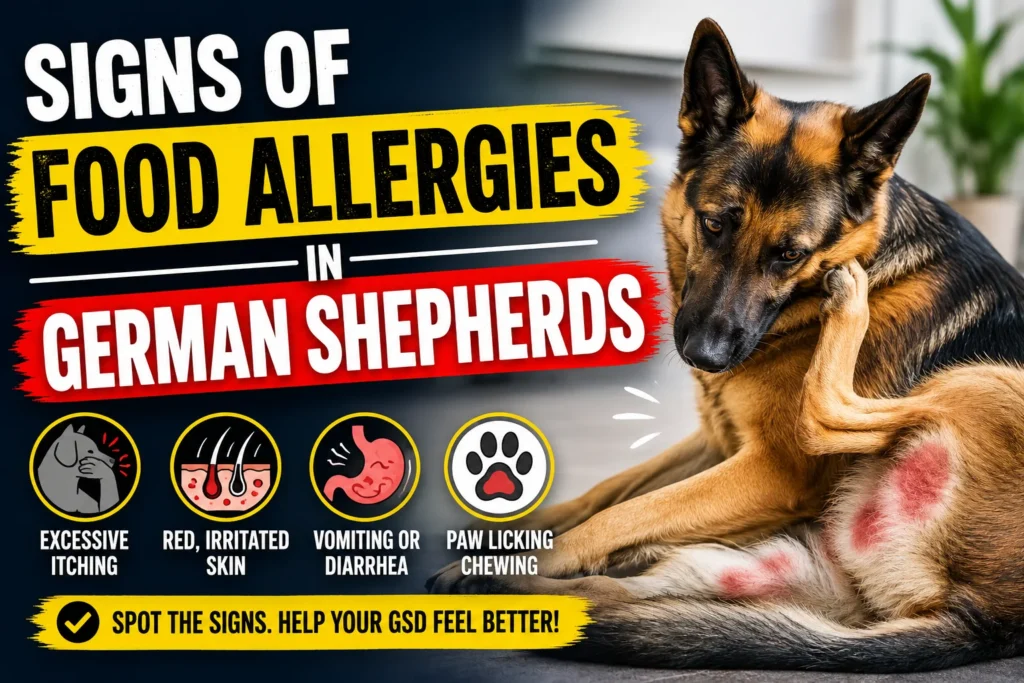
Signs of Food Allergies in German Shepherds. Being a vet, I cannot count the number of frustrated German Shepherd owners who have come into my clinic because their dogs are terribly itchy, losing hair and having diarrhea all the time. The dog has tried a multitude of medicinal treatments: flea repellents, pricey shampoos, and multiple different kibble brands.
The German Shepherd is one unique breed compared to the others due to the fact that it has a very delicate skin and digestive system. It will become easier for you to prevent spending lots of money in the vet’s office and avoid the harmful effects of food allergy on your German Shepherd puppy if you know the symptoms of the allergy in him.
Why are there cases of food allergy in German Shepherds?
Before we list the symptoms, understand the “why.” German Shepherds are genetically predisposed to atopy and cutaneous adverse food reactions. Unlike a true “instant” allergy, food allergies in GSDs are usually a delayed hypersensitivity. This means your dog might eat the offending ingredient today but not show symptoms for two to eight weeks.
The most common triggers? Chicken, beef, dairy, eggs, wheat and soy. Ironically, these are the primary proteins in most commercial dog foods.
10 Critical Signs of Food Allergies in German Shepherds
Here are the specific symptoms. Do not ignore mild signs in German Shepherds, they escalate quickly.
1. Non-Seasonal Itching
This is the 1 red flag. Unlike pollen allergies, food allergy itching happens all year round. Watch your GSD obsessively scratching their ears, face, paws, armpits and groin. If they are scooting their bottom on the carpet, that counts too.
2. Chronic Otitis Externa
A German Shepherd with clear, pink ears one month and dark, waxy, smelly ears the next is likely reacting to food. Food allergies cause inflammation in the ear canal. If your vet is prescribing ear drops every 8 weeks, you aren’t treating the root cause. Look for head shaking, ear discharge and a yeasty odor.
3. “Hot Spots”
GSDs are stoic. They will lick a paw for hours without you noticing. By the time you see a red, weeping, bald patch, the infection has taken hold. Food allergies are a primary trigger for these painful lesions, especially on the cheeks, flanks and paws.
4. Pododermatitis
Does your German Shepherd lick their paws constantly, staining the fur a rusty red color porphyrin staining? This is pododermatitis. In severe cases, the paw pads swell and develop cysts or boils. If your GSD limps for no reason, check between the toes.
5. Secondary Yeast Infections
The skin microbiome is affected by food allergies. In GSDs, there will be an abundance of yeast. You can detect an odor referred to by pet parents as either “musty corn chips” or “rancid cheese.” There may be grayish, black, or elephant-like patches of skin in the tummy and groin area.
6. Chronic Diarrhea or Constipation
Regarding the GI tract, watch out for soft stools that last for more than three weeks. GSDs can struggle to defecate and release mucus-laden stools. In contrast to diarrhea caused by a virus, food allergy diarrhea doesn’t come with blood.
7. Gas Formation and Gurgles in the Stomach
Flatulence with noise in the abdomen immediately after eating is a sign of inflammation in the digestive system. It may be true that your dog is not willing to eat, vomiting bile in the morning, and even eating grass in order to soothe their stomach.
8. Poor Growth in Puppies
For German Shepherd puppies, chronic inflammation from food allergies steals nutrients. A “failure to thrive” puppy one that is smaller than littermates, has a dull coat, or fails to gain weight despite a good appetite may have a food allergy, not just “being picky.”
9. Behavioral Changes
Pain changes personality.A normally friendly GSD may become resource-guarding, growly or withdrawn. If your dog snaps when you touch their back or paws, it is because they hurt. This is not “dominance” it is dermatitis.
10. Recurrent Anal Gland Issues
Food allergies cause soft stools. Soft stools do not naturally express the anal glands. Infected, ruptured, or infected anal glands result from licking their rear and pursuing their tail, or either scooting. Pay attention to diet as your dog performs these activities.
The Silent Allergy When There Are No Skin Signs
There is a note from your veterinarian that approximately 20% of German Shepherds have symptoms of a food allergy without any scratching/itchiness. Vomiting or intermittent diarrhea or reflux are the only symptoms your German Shepherd may show if sensitive stomach is noted on their medical records.
Also Check: Why Is My Puppy Suddenly Peeing on the Bed?
How to Confirm a Food Allergy
Seeing one or two of the signs above is suspicious. Seeing three or more is a diagnosis waiting to happen. Here is the only method that works:
- The Elimination Diet: Switch to a prescription hydrolyzed protein diet or a single novel protein for 8-12 weeks. No treats, no table scraps, no flavored medications.
- The Rechallenge: After symptoms resolve, add back the old food. If itching resumes within 2 weeks, you have your answer.
Warning: Blood, saliva and hair allergy tests are not accurate for food allergies. They are a waste of money for this specific diagnosis.
Frequently Asked Questions (FAQs)
At what age do German Shepherds develop food allergies?
Any age, but most appear between 6 months and 3 years. Puppies can show signs as early as 2 months after starting solid food. Late-onset allergies are possible but less common.
Is chicken really that bad for German Shepherds?
Statistically, yes. Chicken is the1 food allergen in GSDs, followed by beef and dairy. This is likely due to overexposure chicken is in nearly every kibble, treat and toothpaste.
Can a German Shepherd be allergic to grains?
True grain allergies are rare. Most GSDs are allergic to the protein in the grain or the meat protein. Do not switch to grain-free without a vet consult as it is linked to canine dilated cardiomyopath.
What does a food allergy rash look like on a GSD?
It starts as red bumps on the belly or inner thighs. With scratching, it becomes crusty, scaly, and hyperpigmented. Unlike hives which appear quickly, this rash is chronic and spreading.
How long after eating does a reaction occur?
Unlike anaphylaxis, food allergy itching takes 24 hours to 14 days to appear. This delayed reaction is why owners never connect the food to the symptom.
Can food allergies cause seizures in German Shepherds?
Rarely directly but severe GI inflammation can cause metabolic disturbances that lower the seizure threshold. If your GSD has both epilepsy and skin issues, a diet trial is strongly recommended.
What is the best dog food for German Shepherds with allergies?
Hill’s d/d or Royal Canin Hydrolyzed Protein. Over-the-counter: Limited ingredient diets with a single protein like salmon or lamb, provided they are not cross-contaminated.
My GSD only has diarrhea. Could it still be food allergies?
Absolutely. This is called “adverse food reaction without cutaneous signs.” If standard GI medications don’t work, request a hypoallergenic diet trial.
Are male or female German Shepherds more affected?
Slightly more common in males but both sexes are affected equally. Neutering does not prevent or cause food allergies.
Once diagnosed, will my GSD be allergic forever?
Yes. Food allergies are a lifelong management issue. However, with strict diet adherence, symptoms disappear completely. You cannot “cure” it but you can achieve remission.
Final Advice
Do not let your dog suffer through months of “maybe it’s the laundry detergent.” German Shepherds have a low pain tolerance for skin issues. If you see the signs above, schedule a vet visit to rule out mange, yeast, and bacterial infections then start that diet trial.