Signs Your Cat Has A Hairball Stuck In Their Stomach
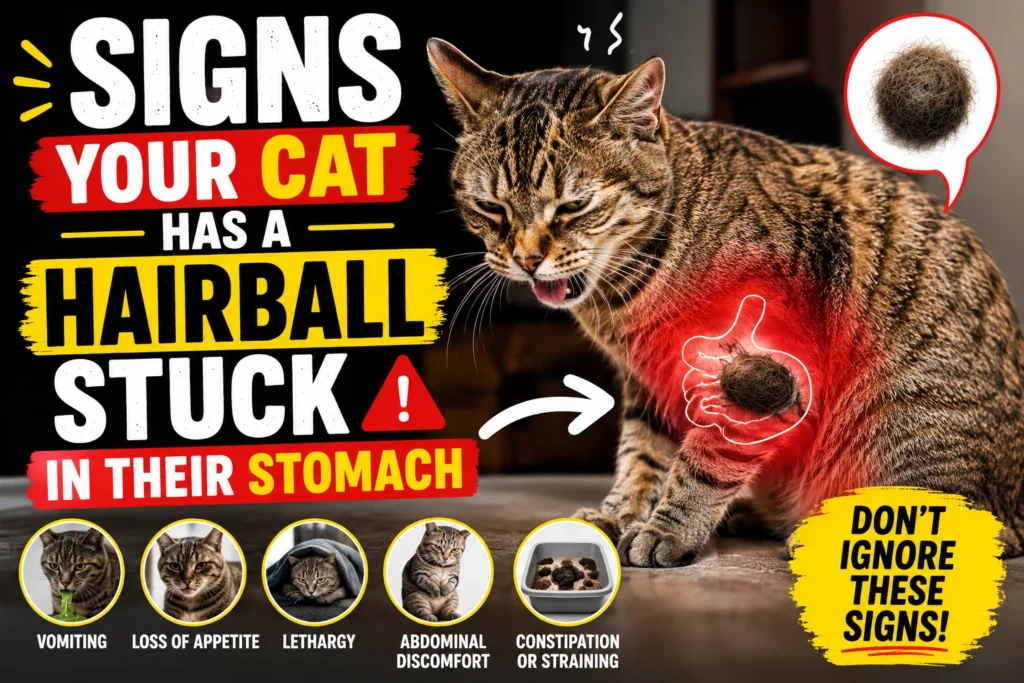
Signs Your Cat Has A Hairball Stuck In Their Stomach. One of the issues I see most often as a vet in my practice is hairballs. Of course, it is entirely natural for cats to vomit hairballs every now and then, but it is necessary to know the difference between the two: throwing up hairballs versus having a hairball. A hairball that becomes trapped in the digestive system of a cat is known as a trichobezoar, which is sometimes fatal.
This detailed guide will show you how to identify a normal hairball and a potentially dangerous blockage in the digestive system of your pet.
Signs Your Cat Has A Hairball Stuck In Their Stomach
Understanding the Hairball: Normal vs. Dangerous
Cats devote 50% of their active period to grooming themselves, with a barbed tongue that helps collect and ingest dead hairs . Most often, the hair is passed by the cat’s body and excreted along with its feces, but sometimes the hair remains in the cat’s stomach and is expelled as a tube like formation of hair hairball.
The problem lies in the fact that if the hairball is not vomited out or does not leave the stomach with food waste, then it leads to obstruction. This becomes a matter of emergency situation. Such problem usually develops in long-haired breeds such as Persian or Maine Coon, although it can occur in cats of any breed in case of excessive grooming due to various diseases .
The Telltale Signs of an Obstruction
The presence of hairballs inside your cat’s body would show some serious symptoms, which include:
1. Persistent Unproductive Retching and Gagging
You may see your cat crouch low, stretch their neck out, and make violent “cough-gag-retch” sounds as if they are trying to bring something up . The key warning sign is that nothing comes up. If your cat is repeatedly gagging without producing a hairball, this is a major red flag . The hairball is likely lodged and unable to move.
2. Frequent Vomiting with No Hairball
While vomiting might be expected by cats with an obstruction, the contents of their vomit will not consist of saliva, bile (yellowish green liquid), or partially digested food and NOT a hairball. It is when vomiting becomes more frequent without the presence of a hairball that another form of obstruction is probable.
3. Lethargy and Weakness
A cat with an obstructed stomach will certainly feel very ill. He/she will become weak and uninterested in his/her surroundings.
4. Loss of Appetite (Anorexia)
The refusal to eat or drink is always an indication of a very serious problem . A healthy cat should never stop eating even for a day if it was interested in the food previously.
5. Abdominal Pain and Distress
A cat suffering from a blockage may show signs of pain, such as a bloated or hard abdomen, vocalizing (whimpering or howling), or acting restless and unable to get comfortable .
6. Constipation or Changes in Bowel Habits
If the hairball is stuck in the intestines, your cat may strain to defecate without success or have a noticeable decrease in the amount of feces they produce . In some cases, you might even see diarrhea, which can be a sign of a partial obstruction .
7. Signs of a Fatal Complication: Choking
In the worse case scenario, the hairball becomes so big that it causes obstruction in the path of the esophagus, leading to choking. This kind of condition is indicated by the cat which has difficulty breathing or blue gums.
Also Check: Why Does My Cat Sleep on My Chest or Head?
When to See a Vet Immediately
You should not wait and see what happens before taking your cat to a veterinarian. Take your cat to the veterinarian immediately if any of the following signs show up:
- Repeated retching or gagging for more than 48 hours without producing a hairball .
- Inability to keep down food or water .
- A noticeably bloated, hard, or painful abdomen .
- Severe lethargy or a sudden drop in energy levels .
An intestinal obstruction is a medical emergency. Without treatment, it can be fatal . A veterinarian can diagnose a blockage through physical examination, X-rays, or ultrasound. Treatment often involves hospitalization with fluid therapy, but in many cases, surgery is required to remove the obstruction .
Prevention is the Best Medicine
The good thing is that most cases associated with hairballs are actually preventable. Here is what you need to do to protect your cat:
- Regular Grooming: This is the best way to avoid hairballs. Daily brushing of your cat’s coat will prevent your cat from ingesting loose hair .
- Specific Cat Food: There are numerous types of food for cats designed to reduce hairballs. The food usually contains a lot of fiber that facilitates movement of swallowed hair .
- Lubricant Pastes: There are over-the-counter gels and laxatives that can lubricate your cat’s digestive system allowing hair to pass through easily .
- Cat Hydration: The process of making the digestive system hydrated will improve its performance. You may use water fountains or moist foods for this purpose.
If you have some idea about the difference between regular hairballs and obstruction, you can do something to help your cat.
Frequently Asked Questions (FAQs)
What is the scientific name for a hairball that a cat produces?
The hairball is known as a trichobezoar. This is because of the accumulation of the hairballs in the stomach of the cat.
Is it normal for the cat to throw up hairballs ?
Yes, it is normal for the cat to throw up hairballs sometimes. For instance, once per week or two. In fact, they do so in order to expel the fur which they have swallowed through their self-grooming routine. However, if a cat vomits more often than that, then it may indicate some problems .
In case my cat keeps gagging, but does not vomit a hairball, then what should I do?
Should your cat keep gagging and heaving but fails to throw up any hairball after 24 to 48 hours, then this can be an indication of some obstruction, which means that you should seek out a vet immediately.
Is there any chance that a hairball can lead to a complete obstruction of the intestines?
Yes, indeed. It is quite possible for a big hairball to obstruct the stomach or intestine of the cat.
What are the symptoms of a cat choking from a hairball?
Symptoms of choking include panic, pawing at the mouth, gasping for air, and trouble breathing. These are urgent conditions and must be handled right away by a vet if present .
Why does the hairball appear in a tube or sausage shape rather than a ball shape?
Though called a “hairball,” the object regurgitated by the cat is actually often tubular and elongated in shape due to compression during the process of being pushed through the esophagus .
What is the ideal way of dealing with a hairball in your cat’s tummy?
If your pet is suffering from mild hairball problem, then your veterinarian may prescribe him lubricant gels or pastes. But if your pet has symptoms of obstruction in his intestines, don’t try to cure it yourself but take him to the vet.
Can you administer human laxatives to your cat for hairballs?
Never administer human laxatives to your cat because these medicines are toxic for cats. You need to use cat-specific medicines only.
Is wet food effective for cat hairballs?
Indeed, giving your cat wet food will be beneficial to dealing with hairballs. This is due to the high water content of the wet food which will ensure that your cat stays hydrated, allowing proper digestion to take place and helping with the passage of the ingested hair in its body.
Are there any cat breeds susceptible to hairballs?
Yes, there are some cat breeds which are very likely to have hairballs. They include the Persians, Maine Coon, and Birman cat breeds.