How to Tell If a Dog Is in Pain After Surgery?
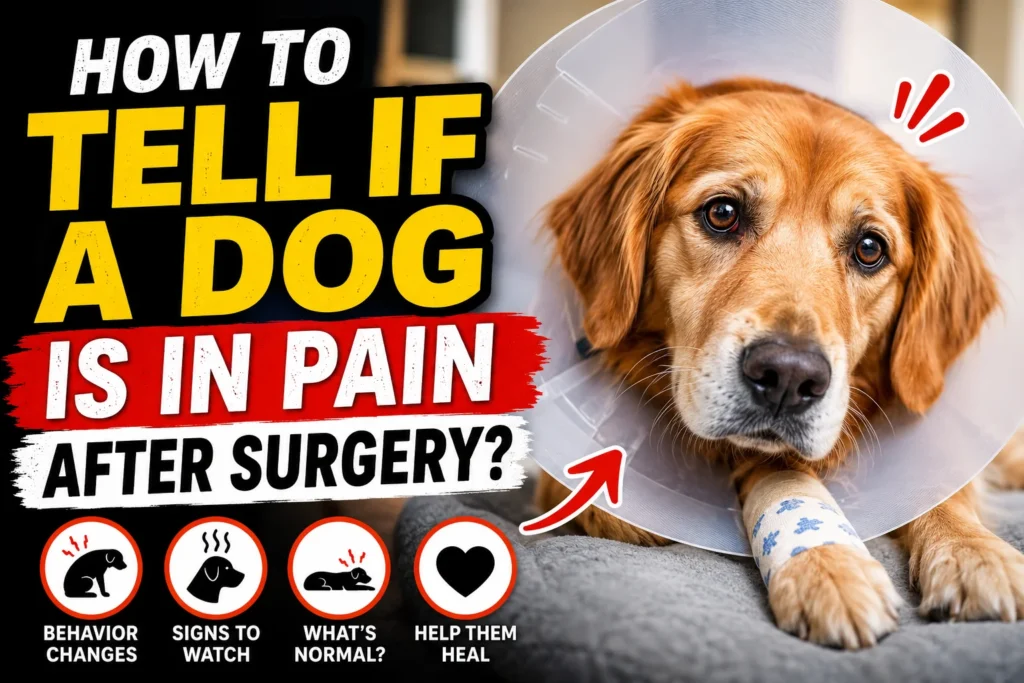
How to Tell If a Dog Is in Pain After Surgery? Bringing your dog home after surgery is a relief, but it also begins a phase of intense worry. Unlike humans, dogs cannot say, “It hurts right here.” They rely on instinct to hide weakness, making post operative pain detection one of the biggest challenges for pet owners.
As a veterinarian, I cannot stress this enough Controlled pain is healing pain. Unchecked pain delays recovery. As a content writer, I’ve structured this guide to help you recognize the quiet, often missed signs of suffering so you can act fast and get your AdSense friendly answer immediately.
Why Dogs Hide Pain (And Why You Must Look Closer)
In the wild, a limping or whining dog is a target for predators. Your domesticated pet retains this primal instinct. By the time a dog visibly cries out, the pain is often severe. After surgery, we rely on behavioral changes rather than vocalizations.
How to Tell If a Dog Is in Pain After Surgery? 10 Definitive Signs
1. The “Prayer Position” or Hunched Back
If your dog is standing with its front legs down, rear end up (resembling a stretch or play bow) but stiff, or if their back is arched like a Halloween cat this indicates abdominal or spinal pain. This is especially common after spays, neuters, or gastrointestinal surgeries.
2. Excessive Licking or Biting the Incision Site
Some licking is normal. Excessive licking where the dog cannot be distracted, or the skin around the stitches looks raw, red, or moist is a red flag. Dogs lick wounds to self soothe pain and inflammation. If you see this, an E-collar (cone) is non-negotiable, and contact your vet.
3. Changes in Breathing Pattern
Pain causes physiological stress. Watch for:
- Shallow, rapid breaths (even at rest)
- Panting that isn’t related to heat or exercise
- Grunting on exhale
Veterinary note: Post-surgical panting can also be a side effect of anesthesia or medications like opioids. However, if panting persists beyond 24–36 hours post-op, suspect pain.
4. Reluctance to Lie Down or Get Up
A painful dog will often “stand like a statue.” They may refuse their favorite bed because getting down hurts. Conversely, once lying down, they might resist rising to eat or drink. This hesitancy to change position is a classic sign of musculoskeletal or incisional pain.
5. Unexpected Aggression or Irritability
The sweetest Labrador might snap when you touch near the surgery site. Pain lowers the bite threshold. Signs include:
- Growling or snarling when picked up
- Ears pinned flat against the head
- A “hard eye” (whale eye showing the whites of the eyes)
Do not punish this behavior. It is a pain response, not a training issue.
6. Vocalization Beyond Whining
While whining is common immediately after anesthesia wears off, true pain vocalizations include:
- High-pitched yelps when moving a certain way
- Crying when you palpate (gently feel) the surgical area
- Moaning while sleeping
Any sudden yelp should prompt a call to your vet’s emergency line.
7. Loss of Appetite or Refusing Water
Pain triggers a stress hormone response (cortisol) that shuts down digestion. If your dog has not eaten within 24 hours of surgery or refuses water for 12 hours, this is medically urgent. Dehydration plus pain equals a dangerous spiral.
8. Restlessness and Pacing
A dog in pain cannot find a comfortable position. They may:
- Get up, walk two steps, lie down
- Immediately stand again
- Circle obsessively without settling
This is distinct from normal “post-surgery grogginess.” True restlessness means the pain relief protocol is inadequate.
9. Shivering or Trembling (Without Being Cold)
Pain-induced tremors are often localized (e.g., a shaking leg near the incision) or full-body shivers. If your home is warm, your dog has blankets, but they are trembling especially when breathing fast suspect pain.
10. Flattened Ears and Dilated Pupils
Facial expressions matter. A painful dog’s face looks “worried.” Their ears will be pulled back and down (not relaxed). Their pupils may remain large (dilated) even in bright light. Compare a photo from this morning to now the difference is stark.
Also Check: Why Do Budgies Lose Feathers Around Their Eyes?
What Is Normal After Surgery?
Do not panic over every tiny behavior. Normal recovery includes:
- Mild sleepiness for the first 12–24 hours
- Occasional soft whining as anesthesia fully wears off (first 4–6 hours)
- Reduced appetite for one meal
- Slight swelling or bruising around the incision (but not heat or oozing)
When to Call the Emergency Vet Immediately
Call your vet or an emergency hospital if you see:
- Gums that are pale, blue, or brick red
- The incision opens, bleeds profusely, or smells bad
- Uncontrollable vomiting or diarrhea
- Collapse or seizure
- Any of the above pain signs combined with a fever (over 103°F/39.4°C)
How to Help Your Dog Feel Better Now
- Do not give human painkillers. Ibuprofen, Tylenol, and aspirin are toxic to dogs.
- Stick to the prescribed schedule. Do not skip a dose of carprofen, gabapentin, or tramadol because “they look fine.”
- Use cold therapy. A towel-wrapped ice pack on the area away from stitches (ask your vet first) for 10 minutes can reduce inflammation.
- Create a “recovery zone.” Non-slip rugs, low-sided bed, water bowl at chest height.
Frequently Asked Questions (FAQs)
How long will my dog be in pain after surgery?
Most acute surgical pain lasts 24–72 hours. Soft tissue surgeries (spay/neuter) improve by day 3; orthopedic surgeries (bone) may cause pain for 5–7 days.
Is whining always a sign of pain?
No. Whining can also indicate anxiety, boredom, or the effects of anesthesia wearing off. Look for clusters of signs (whining + shaking + refusing food).
Can a dog hide pain so well that I miss it?
Absolutely. Cats are worse, but dogs especially stoic breeds (Huskies, Chows, working dogs) can hide severe pain until it is critical. Daily “pain checks” (observing them walk, lie down, and eat) are essential.
Why is my dog shaking after surgery but eating fine?
Shaking plus normal appetite often means pain is mild to moderate. Shaking plus no appetite means severe pain. Also, some anesthetics cause tremors for 24 hours.
Should I be able to touch the incision?
No. Do not routinely touch the incision. Redness, swelling, or discharge should be assessed visually. If you must touch (to apply vet-prescribed ointment), your dog flinching or pulling away = pain.
My dog is panting 2 days after surgery. Is that normal?
Post-operative panting beyond 36 hours is usually pain until proven otherwise. Schedule a recheck.
Can I use a heating pad for comfort?
No. Heat increases swelling and bleeding. Use only cold therapy if approved by your vet.
When should pain signs make me go to the ER vs. wait for my regular vet?
Go to ER if gums are pale/blue, dog collapses, incision bursts open, or you cannot control vomiting. Wait for regular vet if mild appetite loss, occasional whimpering, or slight lethargy.
What if my dog finished the pain meds but still seems sore?
Call your vet. Do not wait. They may prescribe an additional 3–5 days of anti inflammatories or a different class of painkiller.
How can I tell the difference between pain and sedation side effects?
Sedation causes floppy lethargy (dog will sleep deeply, wake briefly, then slump). Pain causes tense lethargy (dog lies rigid, ears back, eyes open, unable to truly sleep). The difference is muscle tone.
Final Verdict from the Vet Desk Trust your gut. You know your dog’s normal. If something feels “off,” it is always safer to call your vet and describe the specific signs from this list. Never wait “just one more night.”