How to Tell If a Rabbit Is Dying of Old Age
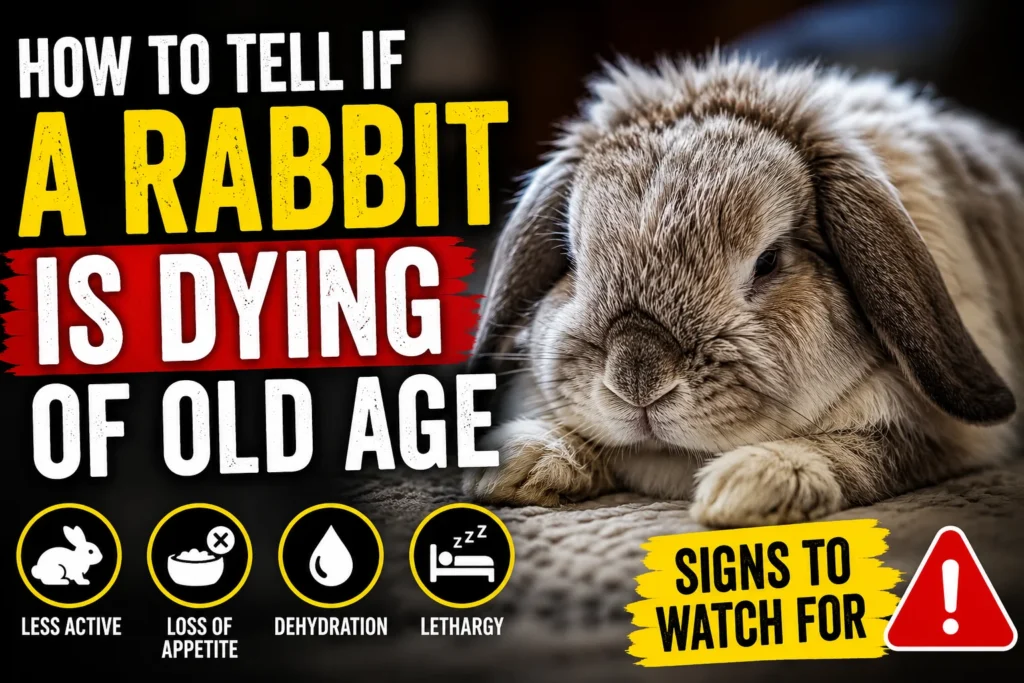
How to Tell If a Rabbit Is Dying of Old Age. It is always sad when our cherished animals begin to get on in age, as it always seems like the time with rabbits is just too short. A happy pet bunny may live 8 to 12 years, and these advanced years often come with confusing new changes both in their behavior and their physical state. Since a rabbit is prey animal as are cats and dogs (as we will discuss below), it generally tries to hide pain and weakness so as not to appear as an easy target for predators.
Therefore, you rarely “see” a rabbit who is sick until it is right near the end of its life.
Here’s what to consider when trying to discern between a medical illness and old age for a rabbit, to try to save them from further misery.
Understanding “Dying of Old Age” in Rabbits
From a medical perspective, rabbits don’t usually “shut down” without a reason. When a rabbit is dying of “old age”, it’s often a result of aged related organ failure, degenerative conditions that can no longer be treated effectively and are no longer worth treating effectively.
Should your rabbit be truly dying of old age, any treatment received from the vet would be of a palliative nature, not one to be curative in nature.
15 Definitive Signs How to Tell If a Rabbit Is Dying of Old Age
1. Extreme Lethargy and Unresponsiveness
A healthy rabbit is curious. A dying rabbit will spend 23+ hours a day in one spot. They stop grooming, stop investigating sounds, and may not react to you touching them. If they flop onto their side and cannot right themselves, this is a pre-terminal sign.
2. Complete Loss of Appetite
While older rabbits may eat less, a dying rabbit stops eating entirely. This includes hay, pellets, and even high-value treats like banana or herbs.
Warning: Do not force-feed a dying rabbit unless instructed by a vet, as aspiration risk is high.
3. Refusal to Drink Water
Dehydration accelerates organ shutdown. You may notice the water bowl remains full for 24+ hours. Check skin turgor, severe dehydration is present.
4. “Floppy Rabbit Syndrome” Loss of Muscle Tone
In the final 12–24 hours, the rabbit loses control of their hind legs, followed by front legs. They will feel limp and heavy, like a stuffed animal. This is due to metabolic collapse.
5. Drastic Drop in Body Temperature
A normal rabbit temperature is 101°F–103°F. Using a digital rectal thermometer, a dying rabbit’s temperature will fall below 98°F. The ears, feet and nose will feel ice cold to the touch.
6. Agonal Breathing
This is not normal breathing. Look for:
- Open-mouth breathing a rabbit only breathes through the mouth in extreme distress.
- Head extended upward a sign of oxygen starvation.
- Long pauses between breaths.
7. Cyanosis
Lift the lip. Healthy gums are pink or pale pink. In dying rabbits, gums turn blue, purple or chalky white due to poor circulation and low oxygen.
Also Check: How to Stop a Puppy From Biting Your Hands When Playing
8. Sunken Eyes
Dehydration and fat metabolism cause the eyes to sink into the sockets. The third eyelid may partially cover the eye and not retract.
9. Unusual Vocalizations
Rabbits are nearly silent. A dying rabbit may let out a loud, piercing scream or a soft, repetitive moaning/teeth grinding. Grinding that is loud and slow indicates severe pain, not contentment.
10. Loss of Bladder and Bowel Control
In the final hours, the anal and urethral sphincters relax. You may see a sudden puddle of dark urine or soft, unformed cecotropes beneath the rabbit. They are too weak to move away from their waste.
11. The “Death Stare” Fixed Pupils
The eyes will remain open, but the pupils are fixed and dilated and do not respond to light. The rabbit will appear to stare at nothing. This indicates brain hypoxia.
12. Severe Weight Loss & Spine Prominence
Over weeks prior to death, the rabbit will feel bony. You can easily feel the individual vertebrae of the spine, the hip bones and ribs with no fat covering.
13. Matted, Wet Fur on the Chin and Paws
Because they stop grooming, drool and water drips from drinking attempts matte the fur. “Slobbers” leads to bacterial dermatitis.
14. Seizures or Tremors
As blood sugar drops and toxins build up, the rabbit may have mild facial twitching, paddling of the legs or full-body grand mal seizures.
15. Seeking Isolation
If housed with another rabbit, the dying rabbit will hide in a corner away from its companion. In the wild, sick rabbits leave the warren to avoid attracting predators. This is an instinctive behavior.
Is It Old Age or a Treatable Emergency?
Critical: Do not assume “old age” until a vet rules out reversible conditions.
| Symptom | Could be old age | Could be treatable |
|---|---|---|
| Not eating for 12 hours | Yes, end-stage organ failure | GI stasis highly treatable if caught early |
| Cold ears | Circulatory collapse | Hypothermia from wet bedding or low room temp |
| Teeth grinding | Pain from arthritis/cancer | Dental spurs easily filed by a vet |
| Hind leg weakness | Degenerative myelopathy | E. cuniculi treatable with anti-parasitics |
Action step: If your senior rabbit exhibits any of the warning signs and hasn’t had a physical within the last month, bring them for an emergency examination. Bloodwork and an x-ray will distinguish natural old age from a treatable ailment.
The Vet’s Role: Euthanasia vs Natural Death
The role of the vet In my work as a rabbit vet, people often ask “should I let my rabbit die naturally at home?” In short, almost never.
A natural death from old age in a rabbit is usually gradual, accompanied by the agonizing prospect of starvation, dehydration and hypoxia for a beloved friend.
Only when death is imminent and a rabbit is in active pain should a pet be euthanized.
If you choose a natural death, a rabbit veterinarian can prescribe:
- Meloxicam
- Subcutaneous fluids
- Antiemetics
How to Comfort a Dying Rabbit at Home
If you have decided with your vet to manage natural death:
- Keep them warm: Wrap them in a fleece blanket over a low-heat heating pad. Never place a weak rabbit directly on a heating pad.
- Syringe water: Offer 0.5–1ml of unflavored pedialyte or water on the lip every hour do not force.
- Elevate the head: Use a rolled towel under the chin to help breathing if they are open-mouth breathing.
- Dim lights and quiet: Reduce stress. Play soft classical music at low volume.
- Do not separate bonded partners: Let the other rabbit be present for 10–15 minutes after death so they understand and do not search for their friend.
When Death Has Occurred
After the rabbit passes:
- Close the eyes gently.
- Wrap the body in a towel and place in the refrigerator, if you want a necropsy or cremation.
- In warm weather, the body will stiffen in 3–4 hours.
- Allow yourself to grieve. The loss of a senior rabbit is significant.
Frequently Asked Questions (FAQs)
How long does the dying process take in an elderly rabbit?
Once a rabbit stops eating and drinking completely, death typically occurs within 24 to 72 hours. The final “active dying” phase usually lasts 2–6 hours
Do rabbits hide that they are dying?
Yes, intensely. Because they are prey animals, a rabbit will act “fine” until they are critically ill. After you see the above-mentioned signs, death is around the corner..
What is the average life expectancy for a pet rabbit?
Small breeds: 10-12 years;Large breeds: 5-7 years;Crossbreeds: 8-10 years.
Shall I force-feed Critical Care to my dying rabbit?
No. This can be harmful since forcing your dying rabbit to eat Critical Care through syringe can cause aspiration pneumonia that is extremely painful death experience. Feed the rabbit only while it is awake and hungry
Can a rabbit of 10 years old rabbit die abruptly?
Yes, especially in the absence of any signs. Old rabbits have sudden deaths due to heart attack, aortic thromboembolism or stroke. Rabbit begins to eat then it screams and dies suddenly.
Will a dying rabbit still eat treats?
No. A complete refusal of high-value treat for more than 24 hours is a grave sign in any rabbit, regardless of age.
Is it cruel to let him die in the home?
No it is not, if the rabbit is sleeping and dies in sleep. If the rabbit is seizing, gasping or screaming for hours, it is cruel without veterinary intervention.
What does a death scream sound like in rabbits?
It is a high-pitched, blood-curdling shriek that lasts 1–3 seconds. Owners often describe it as “sounding like a child screaming.” It indicates extreme, sudden pain.
How do I know if my rabbit is suffering?
Signs of suffering include: teeth grinding, hunched posture in a corner, unwillingness to move, open-mouth breathing and a “staring” expression with wide eyes.
Should I get another rabbit for my surviving senior rabbit?
No. A grieving senior rabbit may bond with a younger rabbit, but introducing a new rabbit during end-of-life care causes stress. Instead, give the surviving rabbit extra attention. Wait 1-2 months before considering a new adoption.
Final Word from the Vet
Figuring out if a rabbit is dying of old age may be the last and most difficult expression of your love for your bunny. You know, deep down in your heart. If you see your bunny and feel something’s truly off, act on that instinct. Hospice and emergency vets are ready to make their last moments peaceful.