Is Grain-Free Dog Food Bad for Heart Health?
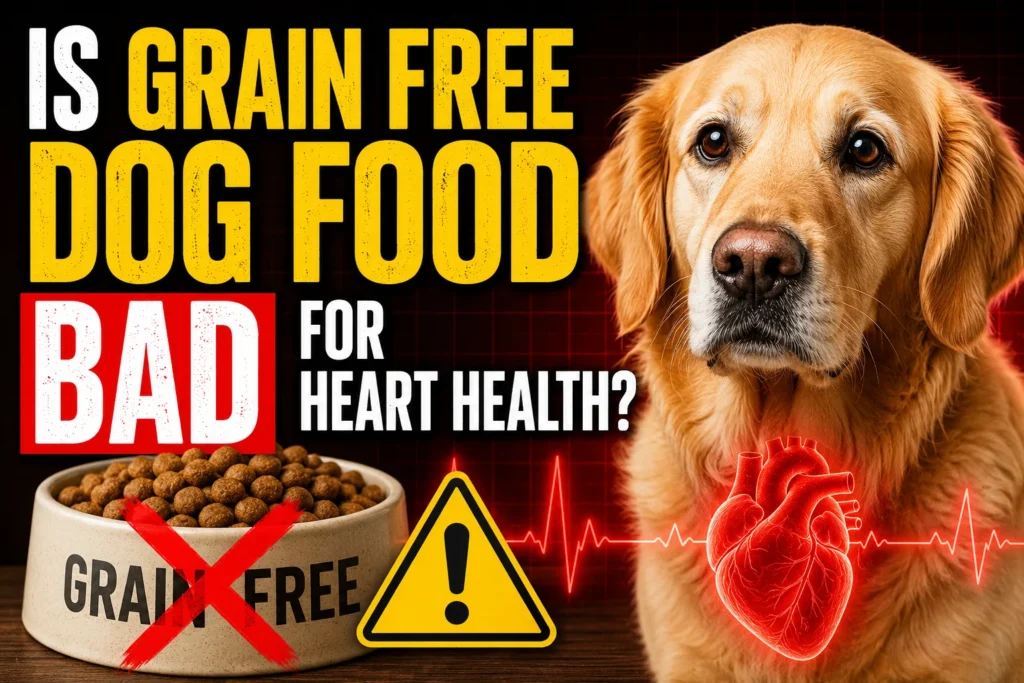
Is Grain-Free Dog Food Bad for Heart Health?. Can Grain-Free Food Harm a Dog’s Heart?. I get that you’re concerned because you’re watching the FDA’s investigation of dilated cardiomyopathy and diet. You transitioned to grain-free, wanting to feed something closer to what your dog’s ancient, wolf-like ancestors ate, and now the headlines are raising alarm bells.
Here’s the truth: not every grain-free diet poses a risk, but research has indicated a definite correlation between certain formulas and heart disease.
The Heart of the Issue: DCM What is dilated cardiomyopathy?
Dilated cardiomyopathy is a disease of the heart muscle that results in an abnormally enlarged, thin, and weak heart, similar to a stretched rubber band. Because of this weakening and enlargement, the heart is unable to pump blood effectively. This causes blood to back up in the lungs, leading to fluid build-up.
DCM that isn’t diet related usually occurs in specific breeds and is genetic.
Often affected breeds are those with larger frames and long snouts like Dobermans, Great Danes and boxers. Nutritional DCM affects those same dogs’ hearts but inbreeds that aren’t traditionally affected like Golden Retrievers, Labrador retrievers and small mutts.
The FDA’s probe: what’s really up with that?
From 2018-2022, the FDA received reports from more than 1,100 individuals regarding suspected diet-related dilated cardiomyopathy. Even more surprising: more than 90% of these reported cases were associated with grain-free dog foods.
However, grains were not the villain. Researchers realized the problem wasn’t the absence of corn, wheat, or rice. The problem was what replaced them.
The “Legume Hypothesis”
To make kibble without grains, manufacturers use high concentrations of:
- Peas
- Lentils
- Chickpeas
- Potatoes
- Beans
So what happens? The dog body cannot make Taurine because the dog needs to either get that acid through diet (like from the meat in regular dog food) or have the body make it but apparently some of these ingredient just messes up this production or makes the body expel it way to fast.
Also Check: Why Does My Dog Keep Licking His Paws Raw?
The Golden Retriever Study: A Game Changer
At UC Davis, a study put a group of Golden Retrievers on different diets: Those on traditional diets supplemented with grains were fine, those on a grain-free, legume-based diet developed low taurine levels and showed evidence of heart dysfunction.
The kicker: most dogs were back to normal and showed improved heart function after switching off the grain-free diet and being given taurine. It’s nutritional not a death sentence.
So, Is Grain-Free Dog Food Bad for Heart Health?
No. But context is everything.
Grain-free IS necessary if:
- Your dog has a confirmed true grain allergy.
- Your dog has specific medical conditions like certain forms of colitis.
Grain-free IS risky if:
- You are feeding a “Boutique” brand (small, trendy manufacturer) with Exotic ingredients from a “Legume-heavy” formula. Veterinarians call this the “BEG” diet.
- You are feeding a healthy dog without a grain allergy.
Which Diets Are Safe? A Vet’s Buying Guide
In order to support your dog’s health and keep their heart safe, the “Grain-Free” statement on the front of the bag can be a lie. Let the bag down and look at the Nutritional Adequacy Statement. Grain-rich diets are often just a food filler. These grains DO NOT inflammation and do NOT contribute to heart issues.
They make dogs fat.
Also look to see if there are many types of fruits, grains, vegetables, and legume’s listed in the ingredients of these “grain-free” dog foods. These all could cause a dog with a food allergy to have some reaction. Grain Inclusive Foods. Some dogs like grains just like humans!
Grain-rich dog foods are healthy.
Grain Inclusive foods contain a few very digestible and nutrient-dense food items, such as: •Rice, barley and oats. These three foods DO NOT make your dog obese, inflammatory, cause itchy skin and these grains do NOT cause the heart disease we have been discussing. A few companies make some grain-free dog foods that do not cause the heart disease discussed.
The Bottom Line
The companies are now replacing grains with tapioca and cassava and are also supplemented with synthetic taurine. These specific grain free dog foods are a “cleared grain-free” and don’t carry risk. The Bottom Line The answer to, “Is grain-free dog food bad for the heart,” for the most dogs without specific grain allergy, is a potentially complicated and somewhat frightening Yes.
Most of the risk is for dogs that are given a grain-free dog food recipe, high in lentils and peas.
The potential for risk associated with nutritional DCM is much greater than any potential benefit currently, for most dogs, from eating grain free dog food. If your dog is eating a grain-free food that lists peas, potatoes, or lentils as one of its first three ingredients, do not hit the alarm buttons, but go make a phone call to your vet right away. A simple taurine blood test as well as a dog heart evaluation by the vet, may go a long ways toward identifying problems in their early stages.
Frequently Asked Questions (FAQs)
Does grain-free dog food lead to heart failure?
Yes. The connection in question concerns Nutritional Dilated Cardiomyopathy. This condition causes heart failure if not treated in time. Yet, if discovered timely, heart function could be restored by changing the diet.
What are the early symptoms of diet-related DCM?
They are rather mild and may include tiredness, difficult breathing after light activity, unwillingness to play, and oversleeping. More advanced signs include bloated abdomen, fainting or a wet-sounding honk-like cough.
Does grain-free dog food always cause DCM?
No. The risk is highest in “BEG” diets that are high in peas, lentils, and potatoes. Major brands that meet WSAVA guidelines are generally safe, even if they have a grain-free line.
Is taurine supplementation the solution?
Not always. Some dogs with DCM have normal taurine levels, suggesting the legumes may have a direct toxic effect on the heart muscle. You should never supplement taurine without a vet’s guidance.
Should I switch my dog off grain-free food immediately?
If your dog is showing no symptoms, you should transition slowly over 5-7 days to avoid stomach upset. If your dog is panting heavily or collapsing, stop the food immediately and see an emergency vet.
Are peas really that bad for dogs?
Peas in small amounts are fine. The danger is when peas are one of the top three ingredients in kibble, making up a massive percentage of the daily diet.
What dog food brands do vets recommend for heart health?
Most vets recommend brands that conduct feeding trials and employ board-certified nutritionists: Hill’s Science Diet, Royal Canin, Purina Pro Plan and Eukanuba.
My dog has a grain allergy. What do I feed him?
True grain allergies are rare. Ask your vet for a hydrolised protein diet or a therapeutic diet specifically for adverse food reactions. Do not use over-the-counter grain-free diets for allergies.
Are raw or fresh food diets (like Farmer’s Dog) safe?
It depends on the formulation. If the fresh food is grain-free but uses vegetables instead of legumes, it is likely safer. However, you must ensure it is nutritionally balanced by a veterinary nutritionist.
How do I know if my dog’s heart is healthy?
A veterinarian can listen for a murmur or arrhythmia. The gold standard for diagnosis is an echocardiogram. A blood test for NT-proBNP can also screen for heart stress.