
Foam in Dog Urine: What It Means and Is It a Kidney Issue?
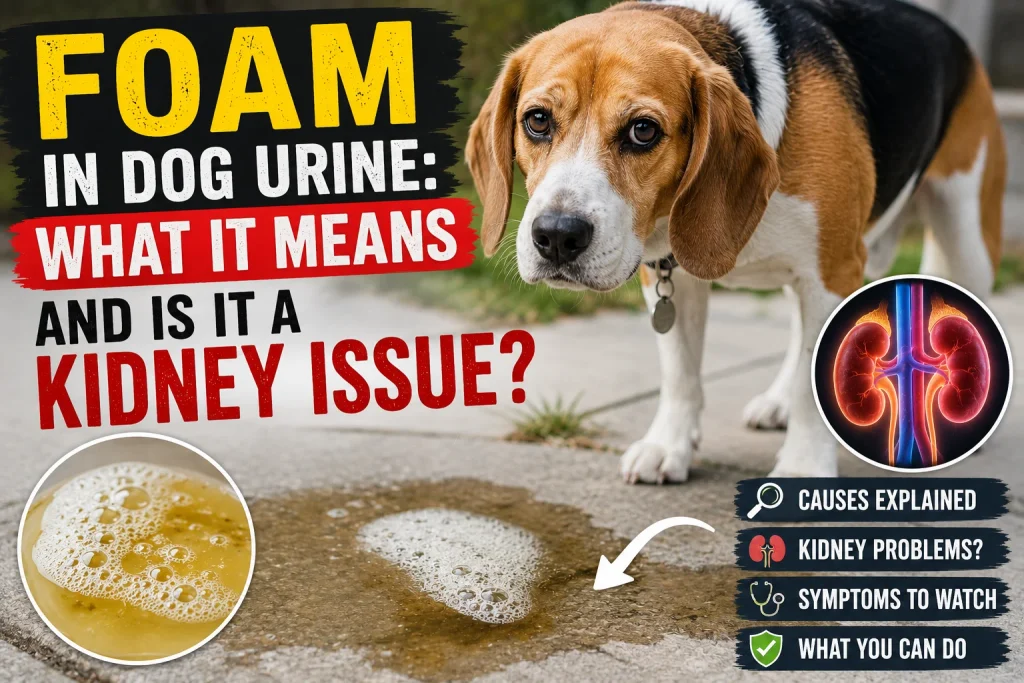
Foam in Dog Urine: What It Means and Is It a Kidney Issue?
Does your dog’s urine look foamy and bubbly? If so, don’t panic in many cases, foamy urine isn’t a sign of a major problem, but it is a symptom you need to take seriously. Foaminess is frequently an indication of proteinuria – which just means protein in the urine and this usually can be an indication of kidney problems.
Foam in Dog Urine: What It Means and Is It a Kidney Issue?
Foam in pee is generally due to an adjustment in surface pressure from within the urine which is commonly due to variations in the substances that make up pee. Below is an outline of the main factors that cause pee foaming with varying levels of severity from most severe to least most severe:
1. Proteinuria and Kidney Disease
This is by far the most concerning symptom. Ideally, the kidneys remove toxins from the blood while maintaining the integrity of important proteins in the blood. When the kidney’s filtering components (glomeruli) are damaged, proteins “leak” from the blood stream into the urine.
Glomerular disease: Glomerular disease represents damage to the kidney’s filtering unit and is the most common underlying disease causing substantial proteinuria and leading to Chronic Kidney Disease (CKD). Certain kidney diseases with a glomerular origin have a hereditary predisposition in certain breeds such as:
- Bernese Mountain Dog
- English Cocker Spaniel
- Doberman Pincher
- Poodle
This progressive disease worsens in terms of protein loss and the progressive increase in the level of proteinuria is a significant marker of kidney deterioration.
Nephrotic syndrome:The most severe manifestation can result in edema formation (fluid retention, cholesterol accumulation, a tendency toward thrombus formation due to the loss of some crucial clotting factors).
2. Other Health Conditions
While kidneys are considered one problem, protein may exist in the urine due to underlying conditions such as:
UTI or bladder infection: Infection can cause inflammation of the bladder leading to the temporary passage of protein and foam through the urine. Others signs include straining, increased frequency of urination and changed smell or color of the urine.
Immune-mediated diseases: This implies an illness that causes widespread inflammatory state or damage to tissues. When the kidneys is the target of the immune-mediated diseases, there will be kidney damage and result in proteinuria.
Endocrine disease: Disorders such as Cushings diseases (hyperadrenocoticism) or Diabetes Mellitus results in metabolic disturbance and can hence lead to the abnormal function of kidneys resulting in proteinuria.
Secondary to other disease: Conditions such as cancer, cardiac failure or other chronic infection will lead to secondary damages on the kidney which would then result in proteinuria
3. Non-Medical Causes and Medications
Not all foam is caused by sickness.
The ground reaction: “A normal and innocent trick of the eye. When an animal urates forcibly on a hard or dry surface such as concrete or gravel, theforce of the urine can cause impact bubbles to form in the urine which can mimic foam.”
Concentrated urine: ” When a dog is dehydrated, or not drinking sufficient fluid, the urine can be more concentrated and appear to be foamy, but it is not the main reason why the urine looks proteinaceous (foamy) 2 .”
Medications: “Some medications, in particular steroids, like Prednisone, andcertain other medications, like certain antibiotics, are notedto have foamymurine astheir side effects 2.”
The Veterinary Diagnostic Process
So, if you are lucky enough to notice the foamy urine without it involving hitting the ground at all, then this is something you need to check with your vet as your dog will go through:
A full history. Your vet will question you about your dog’s water intake, habits of passing urine, food and energy levels and any drugs the dog is receiving.
Urinalysis; this will be the first test and will consist of a urine protein, crystals, and infection check. Standard testing with a ” dip-stick” however for protein is not fully reliable.
The urine protein-Creatinine ratio (UPC). This is the ” gold” standard of testing; and precisely how much protein the urine contains:
<0.2 (non-proteinuric).
0.2 -0.5 (borderline proteinuric).
>0.5 (proteinuric) will have further investigation and treatment with your vet.
Blood Work: This test will check for azotemia (raised BUN/ Creatinine indicating a decrease kidney function) to stage your dog if kidney disease is established.
Blood Pressure Measurement: Hypertension is both a cause and result of kidney disease and need to be managed/ treated.
Further Testing: If constant protein loss is confirmed your vet may check an abdominal ultrasound to look at the kidneys (kidney structure), or a renal biopsy may be used in complex cases to establish the cause of protein loss.
Management and Treatment
Treatment depends on the cause . As you can guess , you’d use antibiotics for your cat if he had a bacterial infection (e.g. UTI ), and hormones if his problem were Cushing’s disease .
More specifically , with proteinuric kidney disease , which is most common .
Treatment has three components:
Therapeutic Diet: Prescription renal diet food which is usually lower in high-quality protein, sodium, and phosphorus . In fact a lot of studies demonstrate that even in alone , a diet alone may significantly lower proteinuria !
Drug therapy.
Usually administered along with a diet by your vet : ACE inhibitors (enalapril or benazepril) and/or Angiotensin II Receptor Blockers (ARBs) (telmisartan) are used to block protein loss from your cat and help manage his high blood pressure . These drugs lower the pressure within the kidney’s small filters which is how protein escapes from your cat into his urine and helps slow the damage your cat is incurring . Management of complications.
In cases of more advanced disease (where your cat develops nephrotic syndrome and starts retaining fluid), your vet might add something to prevent blood clots.
Also Check: Natural home remedies for mild dog cough using raw honey
Frequently Asked Questions (FAQs)
What exactly is “proteinuria” in dogs?
Proteinuria is the medical term for having an abnormally high amount of protein in the urine. It is detected via a urine test and is often a sign that the kidneys are not filtering waste properly .
Is a little bit of foam in my dog’s pee always a sign of kidney failure?
No. A small amount of foam can sometimes happen from the urine hitting a hard surface. However, persistent foam is a sign that needs checking. Proteinuria is an early marker of kidney issues, not necessarily end-stage failure. Early intervention is key .
What causes kidney damage leading to foamy urine in dogs?
Causes include genetic predisposition (certain breeds), immune system disorders (immune-mediated glomerulonephritis), infections, toxins, and underlying diseases like Cushing’s disease .
Can my dog’s diet cause foamy urine?
Yes, indirectly. A diet that is very high in protein doesn’t cause normal kidneys to leak protein. However, if a dog has existing kidney damage, the type and amount of protein they eat can affect how much protein is lost in their urine, which is why prescription renal diets are crucial .
My dog’s urine is foamy but he is acting normal. Should I still be worried?
Yes. Kidney disease is often called a “silent killer” because dogs can lose up to 66-75% of their kidney function before showing clinical signs like lethargy or vomiting. Foamy urine is often an early warning sign you should not ignore .
What is a UPC ratio and why is it so important?
The Urine Protein-to-Creatinine (UPC) ratio is the main test used to measure proteinuria. It compares the amount of protein to the amount of creatinine in a single urine sample. It is essential for diagnosing and monitoring the severity of kidney disease .
What are the side effects of kidney medications for dogs?
Common medications like ACE inhibitors (enalapril, benazepril) are usually well-tolerated. However, they can sometimes cause a slight drop in kidney function or a rise in potassium levels. Your vet will need to do follow-up blood tests a week or two after starting the medication to monitor for these effects .
Can a urinary tract infection (UTI) also cause foamy urine in dogs?
Yes. Infections and inflammation in the bladder or urinary tract can cause a temporary increase in protein in the urine, leading to foam. A urinalysis can help differentiate between a UTI and kidney disease .
How is the cause of foamy urine diagnosed?
A veterinarian will use a combination of a urinalysis, a UPC ratio to measure protein levels, blood tests to assess kidney function (BUN and creatinine), and a blood pressure check. An ultrasound may be used for more detailed imaging .
What is the prognosis for a dog with foamy urine due to kidney disease?
The prognosis varies depending on the severity of the disease, how early it is detected, and how well it responds to treatment. With early diagnosis and proper management (diet, medication, monitoring), many dogs can live comfortably for many months or even years. It is a chronic condition that is managed, not cured .
Conclusion
This may very well signal a problem, particularly that your dog may be experiencing protein in her urine or proteinuria. But proteinuria may not be the only potential reason for foamy pee so please do not put it off as it is important for your veterinary doctor to have a look if you notice this on a regular basis. It makes it easier to get problems under management very quick if you have begun to get a diagnosis.