Why Is My Pet Snake Not Shedding Its Skin Completely?
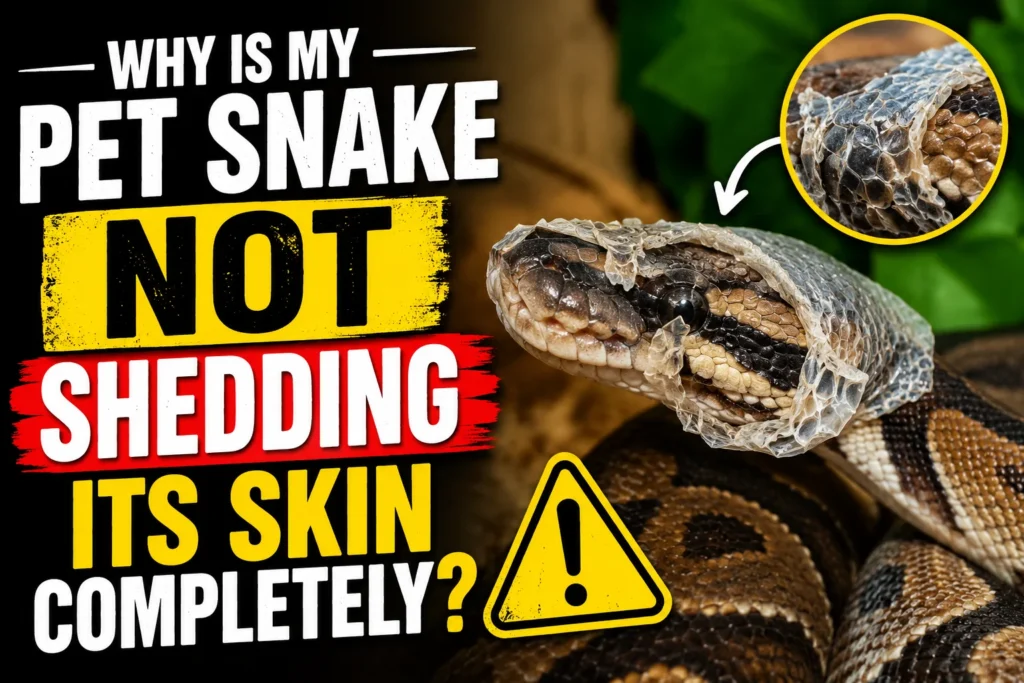
Why Is My Pet Snake Not Shedding Its Skin Completely? If You’re Finding Half a “Ghost” Shed It’s Always a concern for a snake owner when you don’t get a perfectly complete shed. This incomplete shed process, called dysecdysis, is the most frequently encountered veterinary problem for snakes in captivity and should be a very strong signal that something in your snake’s diet, environment, or overall health state needs to be addressed.
Why Is My Pet Snake Not Shedding Its Skin Completely?
Understanding the Shedding Process (Ecdysis)
Why snakes don’t shed cleanly As well as what we mean by a “normal” shed, we can consider what causes a bad shed to shed the entire old skin is needed as snakes are confined to a certain length so skin can’t expand as snake continues to grow which means skin must be replaced. Ecdysis is initiated with hormones which means that the snake has different stages to the process of shedding. This means that a snake’s skin will start to develop a faint pink color on its belly then the eyes begin to appear hazy and blue or gray as fluid forms to help split the layers apart (going “into blue”).
This is later removed the shedding will occur when the snake goes off food for a while then goes into blue after several days, clears its eyes then scratches his or her nose along something sharp to break the skin and the shedding will continue in an ideal inside out shape.
If any of these steps don’t go smoothly we may get dysecdysis which the snake doesn’t shed well or in patches.
The Primary Causes of Incomplete Shedding
Why does this happen? In the vast majority of cases, dysecdysis is not a disease itself but a symptom of an underlying problem. These problems can be broadly categorized into environmental/husbandry issues and health-related issues.
1. Inadequate Humidity and Dehydration
This is, by far, the most common culprit behind shedding problems . The separation of the old skin from the new layer relies on the presence of fluid in the cleavage zone . If the humidity in your snake’s enclosure is too low, the skin can become dry and brittle, preventing it from separating cleanly . Similarly, a dehydrated snake lacks the bodily fluids necessary to create this crucial cleavage zone, leading to shedding difficulties . Even species from arid environments may seek out humid microclimates when it’s time to shed .
2. Suboptimal Temperature
Snakes are ectothermic (“cold-blooded”), which requires them to rely on their environment to help control their body temperature. Temperature gradients is important for all life processes, including shedding . A temperature too cool in an enclosure can reduce a snake’s metabolic rates, which is can prevent adequate shedding . Temperature gradients allow a snake to thermoregulate and to find a good spot to aid in all of the other things needed for proper shedding.
3. Poor Nutrition and General Health
If a snake is sick or on an inadequate diet, it simply won’t have the metabolic energy to complete the shedding process adequately . Low blood protein levels, called hypoproteinemia, can impair enzyme release needed to dissolve the shedding process from within the skin layer. A healthy, well-fed snake should have an easier time to shed it clean.
4. Ectoparasites: The Snake Mite
One really irritating source of shedding difficulties is snake mites (Ophionyssus natricis). These small, external bugs tend to congregate on the periocular (area around the eye) cleft and eat skin. When these mites chew the snake’s eye, it gets inflamed, can result in a scar and prevent the spectacle and surrounding skin from being removed normally.
5. Infections and Skin Conditions
Bacterial or fungal skin infections (dermatitis) can also disrupt the shedding process by damaging the skin’s integrity . Similarly, old injuries or scar tissue can create weak points where the skin tears during shedding .
6. Lack of Abrasive Surfaces
To initiate the shed, a snake needs to rub its nose against a rough surface like a rock, branch, or rough-edged hide . An enclosure that is too bare may prevent the snake from getting the necessary friction to start the process, leading to a piecemeal shed.
Also Check: How To Treat Fin Rot In Goldfish At Home Fast?
The Most Critical Area: Retained Spectacles (Eye Caps)
One of the most important parts of the shed to check is the eye caps, also known as spectacles. Snakes have no eyelids; instead, they have a clear, protective scale over each eye . This spectacle must be shed along with the rest of the skin. When it fails to come off, it’s called a retained spectacle .
Why are Retained Spectacles Dangerous?
A retained spectacle looks like an opaque or cloudy surface, that appears sunken or creased over the eye. Several retained spectacles can layer over each other if not removed, interfering with sight and causing very nasty infections or abscesses under the spectacle. Do not be tempted to pick out or prise off a retained spectacle with tweezers or fingers as this can cause permanent blindness if the live spectacle beneath is removed or even lose the eye – eye tissues are fragile, so do not be rough!
A Step-by-Step Guide to Safely Help Your Snake
If your snake has had an incomplete shed, here’s how to safely assist them while addressing the root cause.
1. Assess and Correct Husbandry First
The very first thing you should do when you notice that your snake may be having trouble shed and also be to take a look at his surroundings and ensure that nothing needs modification. There needs to be an issue at the root of the issue, otherwise, he will certainly repeat the exact same actions once again. The humidity your particular species of snake needs for a proper shed varies depending on the snake.
To get the suitable level of moisture you need to spray down the tank a number of times each day, offer him a bigger water dish, or use an extra sort of snake bed substrate.
A more simple method of keeping the humidity up is to add a “humid hide,” which you can purchase from an online pet retailer or make it by filling a plastic container that has an opening in the lid, with damp sphagnum moss or a couple of damp paper towels, on top of the heating mat. If you temperature level does not fall into the range appropriate for your serpent you will certainly wish to check the temperatures in your terrarium with a dependable thermostat as well as maintain your snake in a place where he could cool down or heat as he might need to.
2. The Warm Water Soak
If the shed is stubborn, a warm water soak can work wonders .
Put your snake in an airy container or in about half their body length with lukewarm (not hot!) water (about 80-85F). Let it soak for 20-30 minutes under your eye at all times (never leave alone!) Once out of the soak, allow the snake to walk through a wet towel- friction will sometimes take care of any dead, softened skin.
3. When to See a Vet
If you’ve rectified the husbandry and had the snake in a soak, but the skin (specifically eye caps or “spectacles”) remains retained, or if you suspect your snake has any other underlying issues, it’s best to take them to a vet with experience in treating reptiles . A vet is also best suited to help you remove difficult retained spectacles and deal with any other health concerns, such as parasites or infections.
Prevention is Key
The best way to manage dysecdysis is to prevent it. Properly. Ensure humidity, temperatures, and decorations meet the requirements of the species you are keeping. This is the biggest thing you will ever do to avoid this problem. Watch for the shed. After the shed, examine the skin.
It will typically look perfectly normal, except for two small clear covers on the head that are actually scales called glasses. If these are missing then there has likely been a shed problem. Use a humid hide. Even if the humidity is in good range throughout the cage, providing a humid hide will encourage the snake to seek it out and may help with the process.
Frequently Asked Questions (FAQs)
Can I just pull the stuck skin off my snake?
No. You should never forcibly rip, pull, or tear stuck shed off your snake-especially around the eye(s), tail tip, and toes. You risk tearing flesh, constricting circulation, creating ulcers, and possibly damaging your snake’s eyes permanently. Remove it safely using soaking methods.
How long can a snake go without shedding completely?
Your snake may take a few weeks to complete the shed; one bad shed isn’t usually an emergency, but a shed that is constricting the tail or has retention around the eye(s) requires intervention sooner rather than later.
What does “in blue” mean and why do my snake’s eyes look cloudy?
“In blue” refers to the pre-shed phase where the skin between layers goes cloudy/milky due to accumulating moisture under the old skin to loosen the new skin for shedding, and that affects the eyes most of all. Your snake’s eyes will be clear a couple of days before he sheds the skin itself.
Why are the eye caps (spectacles) the most common part to get stuck?
The spectacle is a delicate area, and the tissue surrounding the eye crevices are thin enough to easily rip and tear during dry sheds or if there are skin issues such as an infestation (like mites). This results in the spectacles being retained while the rest of the skin sloughs off normally.
Is an incomplete shed always a sign of a bad owner?
No, but it is usually. Usually it’s a problem with humidity but can be due to other things such as aging (older snakes don’t shed as efficiently), a parasitic or bacterial infection, or previous damage. Regardless, it’s always a sign you need to double and triple check your husbandry!
Is it okay to handle my snake when it’s shedding?
It’s best not to handle snakes while they are in the pre-shed (in blue) phase, as they can become disoriented, defensive, and temporarily sightless. After the snake has completed his shed, and after you have a chance to inspect the shed skin, your snake may be more amenable to handling.
My snake has patches of skin stuck on its body, is that serious?
Small bits of retained skin may come off during the next shed, provided the humidity has been adjusted. However, if there is a tight band or ring of skin around the tail, the circulation may be cut off, causing necrosis of the tip of the tail, which can result in the tip falling off. This is a serious situation that must be addressed immediately.
Do I need to increase humidity for all snakes when they shed?
Yes. All snakes need higher humidity levels to aid the shedding process. Whether they’re a desert or rainforest dwelling species, they all shed their skin via natural processes, which involves increased moisture.
How do I know if my snake has mites or an infection?
Mites usually appear as little black or red specks moving on the snake’s body or around the mouth and nostrils. They can also be found in the water bowl. Signs of an infection can include excessive soaking, restless movements, redness, inflammation, or blisters on the snake’s skin. You will need to visit a vet for these.
What if my snake still has a bad shed after I’ve fixed the humidity?
If you’ve made changes to the humidity, ensure other aspects of your husbandry are spot on (correct temperature range, adequate hides, proper substrate etc.). If the problem continues or happens with every shed cycle, it’s time to see a veterinarian to rule out underlying disease, parasitic infestation or nutritional issues.