Dark Red Blood in Cat Poop: A Guide for Concerned Pet Owners
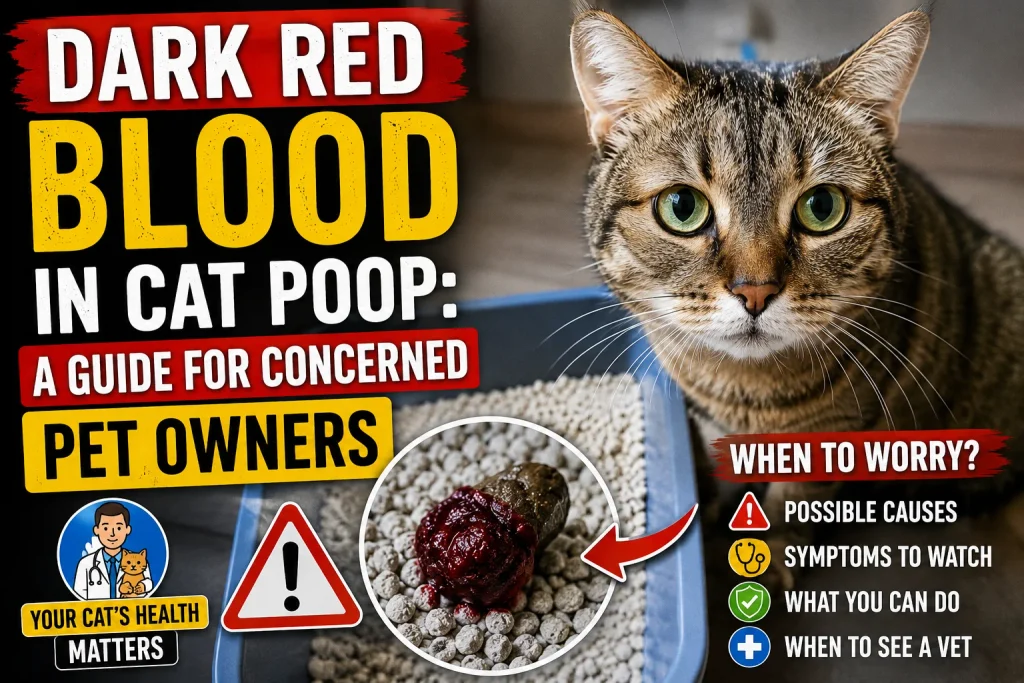
Dark Red Blood in Cat Poop: A Guide for Concerned Pet Owners.
As a veterinarian I am certain that you were scared when you first noticed a blood streak with your cat’s stool. Your cat IS having a problem but the colour of blood indicates many things so by informing the vet the colour of the blood is your cat’s best clue that can inform him of the cause.
So I will break down what this dark red, or tar-colored blood means to your cat, and the next course of action.
What the Color of Blood in Cat Stool Means
For the most part, there are two types of blood that appear in a cat’s feces and distinguishing between them is very important.
Bright Red Blood (Hematochezia): This type of blood in the stool signals bleeding occurring in the very lower part of the intestinal tract, the colon, rectum or even the anus. The blood is bright red in colour because it has not been digested prior to being passed out. Usually this condition is caused by simple constipation, stress related inflammation of the colon, parasites, or mild anal conditions.
Dark Red or Black Blood (Melena): This is more of an emergency. This blood is dark red or black, sticky and will have the texture of coffee grounds. It shows bleeding occurring much higher up in the intestinal tract, the stomach or small intestine. The blood turns these colors from the action of stomach acid, digestive enzymes and the passing through the body.
Why is the Blood Dark? Potential Causes of Melena
What is tar-like stool in a cat?
If your cat is producing stool that is dark and tar-like, you MUST see your veterinarian immediately. This indicates an more serious, underlying problem.
- Possible causes of tarry stool in cats include: Food Foreign Body: Your cat may have eaten something indigestible such as string, a bone or a toy that is causing a partial or complete blockage of the intestine. This is life threatening and may require surgery!
- Gastrointestinal ulcers: A very serious issue where bleeding ulcers in your cats stomach or small intestine can result in the gradual bleeding of this blood that becomes digested before being excreted.
- Inflammatory bowel disease (IBD): Chronic inflammation can result in bleeding ulcers anywhere along the intestinal tract although higher GI issues tend to result in tar-like stool.
- Neoplasia/ cancer: Tumor in the GI tract such as lymphoma of the GI tract can lead to bleeding.
- Coagulopathy / blood disorders: An inability of the body to clot blood (can be genetic or due to rodent poison consumption, for example) can lead to an inability of to prevent internal bleeding.
- Severe parasitic infestation: Although most parasitic infestations typically result in bright red blood, severe parasite burden can sometimes result in lower volume of blood in the upper digestive tract causing a tar-like consistency.
When to Call the Vet Immediately
Melena is not a “wait and see” symptom. You should contact your vet or an emergency animal hospital right away . Be especially vigilant if you notice dark blood alongside any of these other signs:
- Vomiting (especially if it looks like coffee grounds)
- Lethargy or weakness
- Loss of appetite or not drinking water
- Pale gums (a sign of anemia or blood loss)
- Straining to defecate or producing only small amounts
What to Expect at the Vet
YAt the veterinarian, he/she will do an overall physical examination of your dog to discover his problems. There are a series of tests that you may be requested to do to find out what the issue is.
Stool Examination to rule out/test for parasites, bacteria or blood.
Blood work to rule out/check for any organ failures (kidney/liver), infection and/or check red/white blood cell count
X-rays (radiographs) and ultrasound to determine if a foreign object is present and look for any masses and/or thick intestines.
Endoscopy or biopsy; a small camera will need to be attached to an endoscope or take a sample for examination.
Pro-Tip: Whenever you go to the vet try and bring a sample of stool with you if possible.
For More: How to Use Coconut Oil for Dry Itchy Skin on Senior Cats?
Frequently Asked Questions (FAQs)
Is dark red blood in cat poop an emergency?
Yes. Dark red or black, tarry stool (melena) indicates bleeding in the upper digestive tract and is considered a medical emergency. You should contact your vet immediately .
What’s the difference between bright red and dark red blood in cat poop?
Bright red blood (hematochezia) comes from the lower digestive tract (colon, rectum, anus). Dark red/black blood (melena) is digested and comes from the stomach or small intestine.
Can stress cause dark blood in a cat’s stool?
Stress is more commonly associated with bright red blood from stress-induced colitis (inflammation in the colon). Melena is usually due to a more serious internal issue like an ulcer or blockage.
What are the most common causes of dark blood in stool?
The most common concerns are ingestion of a foreign body (blockage), stomach or intestinal ulcers, inflammatory bowel disease (IBD), or tumors.
My cat has dark stool but is acting normal. Is that okay?
No. Even if your cat seems fine, melena is a strong indicator of a significant internal problem that should not be ignored. A vet visit is necessary to find the underlying cause before it worsens.
Can parasites cause dark red blood in cat poop?
While parasites are a common cause of bright red blood in the stool, they are less likely to be the primary cause of dark, tarry melena. However, a severe parasitic infection could contribute to bleeding in the upper GI tract.
What tests will the vet run for dark blood in stool?
The vet will likely recommend a fecal test to check for parasites, blood work to evaluate organ function, and X-rays or an ultrasound to look for masses, foreign objects, or blockages.
How is dark blood in cat stool treated?
Treatment depends on the cause. It could involve surgery to remove a blockage, medication for ulcers, dietary changes for IBD, or other specific therapies for cancer or clotting disorders.
Should I change my cat’s food if I see dark blood?
No. Do not make any dietary changes without consulting your vet. A sudden change in diet can complicate the clinical picture or worsen digestive issues. Your vet may recommend a specific bland or prescription diet as part of the treatment plan.
Can I give my cat any home remedies for this?
No. Dark, tarry blood is a serious symptom that requires professional veterinary diagnosis. Home remedies are not appropriate for melena and could delay life saving treatment. Contact your vet immediately.