The Silent Emergency: What a Sudden Drop in Dog Body Temperature Means in Seniors
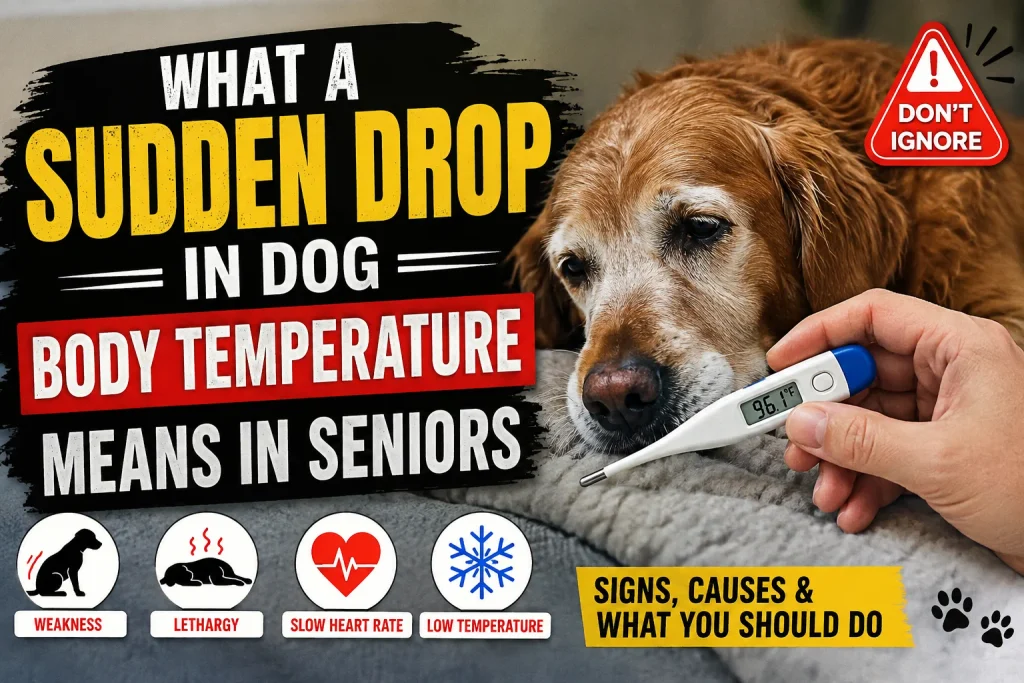
The Silent Emergency: What a Sudden Drop in Dog Body Temperature Means in Seniors. As the years pass and our precious fur babies enter their golden years, with their age comes a range of health conditions. Unfortunately, many of these conditions develop fairly suddenly, and one concern every owner should be aware of as their canine approaches his/her sunset years is a rapid and significant temperature decline. This is far more than the dog simply feelings cool.
For the older canine, a decreased temperature can be the sign of a critical health emergency.
For a healthy dog, between 38.0 C (100.5 F) to 39.2 C (102.5 F) is considered normal temperature for body mass. If a dog’s body temperature is lower than 37.5 C (99.5 F), it is hypothermia or simply- too cool body temperature. It is clearly a sign of systematic failure due to one of the many underlying conditions.
The Double Threat: Why Seniors Are So Vulnerable
A sudden temperature drop in an older dog can be attributed to two primary causes, and often, they work together. The first is environmental exposure: being in a cold room, wet after a walk, or out in chilly weather. Because senior dogs have a diminished ability to regulate their own body temperature, they can become hypothermic even in conditions a younger dog would tolerate with ease, such as temperatures above 7°C (45°F) .
However, the more critical and insidious cause is internal . This is when the dog’s body fails to produce enough heat to keep up with its normal loss, a condition that can happen even in a warm room. This failure is often a symptom of a severe underlying illness. Various conditions can disrupt thermo regulation in older dogs, including:
- Endocrine Disorders: In conditions like hypothyroidism or Addison’s disease metabolic heat production may become very low.
- Organ Failure: Both heart or kidney failure may present with an increasingly lower temperature due to decreased circulation and overall metabolic rate.
- Shock or Severe Illness: Severe conditions such as sepsis, infection or traumatic injury can result in a rapid drop in core body temperature.
- Metabolic Imbalances: Conditions that leads to an acute loss of energy may predispose someone to heat loss such as significant weight loss and malnutrition.
The Silent Emergency: What a Sudden Drop in Dog Body Temperature Means in Seniors
Recognizing hypothermia at an early stage is important. The state is cumulative, and the signs change as the temperature decreases.
Early to Moderate Signs: The Body Fights Back
In the initial stages, the body tries to generate warmth . Owners should watch for:
- Violent Shivering: This is the body’s first line of defense, an involuntary muscle activity designed to produce heat.
- Lethargy and Weakness: The dog may seem tired, reluctant to move, or unusually depressed.
- Cold Extremities: The dog’s ears, paws, and tail will feel noticeably cold to the touch.
- Pale Gums: As blood is diverted from the skin to protect internal organs, the gums may appear pale or even bluish.
Also Check: My Cat’s Spay Incision is Red and Swollen What to Do Next 2026
Severe Signs: The Body is Shutting Down
Once the temperature drops below 33°C (91°F), the situation becomes critical. The body’s compensatory mechanisms begin to fail .
- Shivering Stops: This is a grave sign. It means the body has exhausted its energy reserves and can no longer produce heat through muscle tremors .
- Muscle Stiffness and Disorientation: The dog may become rigid, confused, and have difficulty walking .
- Slow Heart Rate and Breathing: The body slows down to conserve energy, leading to dangerously low vital signs .
- Collapse and Unresponsiveness: In severe cases, the dog may lose consciousness, have fixed, dilated pupils, and lapse into a coma .
A Real-World Scenario: The Case of the 15-Year-Old Dog
The gravity of this situation is best illustrated by a common scenario. A case from a veterinary consultation platform describes a 15-year-old, paralyzed dog who had recently stopped eating . After receiving IV fluids at the clinic, he regained some appetite, but his owners were alarmed that his temperature remained stubbornly low, hovering between 36.0°C and 37.5°C .
The vets wording again clearly highlight the severity of the situation. “If a dog’s temperature continues to stay low for 48 hours it is highly dangerous”. The vets explanation continued in that simply warming the outside of the dog with an external heat source may have no effect and it was his lack of appetite and his age that meant he did not have enough energy to warm his own body and that while 36-37.5°C, does not produce a serious threat directly, a long duration in these conditions would soon bring about organ failure due to the slowing of the bodily system.
What to Do in an Emergency: Your Immediate Action Plan
Should you think that your older dog may be falling prey to the cold-and developing a low body temperature-it’s imperative that you warm him or her back to a safe, but correct temperature. The wrong methods of warming can actually do more harm than good.
First Aid Steps
- Remove from the Cold: Immediately bring your dog indoors and away from drafts.
- Dry Them Off: If the dog is wet, thoroughly dry them with towels to stop evaporative heat loss .
- Wrap Them in Warm Blankets: Use warm, dry blankets or towels. You can warm them in a dryer or with a hairdryer before using them .
- Apply External Heat Carefully: You can place hot water bottles wrapped in towels against the dog’s trunk and abdomen. Never apply a heat source directly to the skin, as this can cause severe burns .
- Do NOT Use Heating Pads or Hairdryers: Direct, intense heat from these devices can cause peripheral blood vessels to dilate too quickly. This can lead to “rewarming shock,” a dangerous condition where cold blood from the extremities suddenly rushes back to the heart, causing a drastic drop in blood pressure and potentially leading to cardiac arrest .
When to See the Vet
Right away. Your dog’s sudden drop in temperature indicates a serious issue that only your veterinarian can diagnose and treat.
- In minor cases the temperature is slightly below average, the dog is still attentive and lively; warming is likely to include at-home efforts and professional guidance is necessary to address the contributing factors.
- Moderate to extreme cases involve lethargic behavior in a dog that has already stopped shaking-get the animal to the emergency veterinarian immediately to address and correct the hypothemia.
- Treatment at the Clinic include confirming the temperature with a rectal thermometer. Controlled rewarming (if necessary) may occur via warmed IV fluids, warm water enemas, warm gases via an oxygen source, etc. The vet will provide diagnostics and a means to effectively remedy the reason for the low temperature.
Proactive Prevention: Protecting Your Senior Dog
Better to act beforehand than reach an emergency: as your dog gets old you may want to consider these things that prevent your dog from suffering due to cold.
- Keep them warm, make sure that your home is heated and ensure that your older pet has a warm bed, far from any sources of cold, in your home; it would be best if he/she had a warm dog-wear/ sweater. Some dog wears can do magic especially when you have a short-haired pet that shivers and to dogs with less mass. Small-built dogs will feel the cold too.
- Keep them out of the cold, for your dogs, try to keep walks very brief or avoid leaving them out in icy rain, snow or windy conditions. According to veterinary guidelines there is considered risk below the freezing point or 7C;
- Always seek medical care and control the dog’s situation, in old dogs, treat conditions such as disorders of thyroid gland or chronic kidney diseases early on, which could lead to a crisis due to temperature;
- control the dog’s weight and the level of nourishment the dog takes in, under-fed or poorly eating dogs tend to have fewer energy reserves, this applies too for dogs with health issues.
Frequently Asked Questions (FAQs)
What is the exact normal temperature range for a senior dog?
A senior dog’s normal body temperature is the same as any healthy adult dog: between 38.0°C and 39.2°C (100.5°F to 102.5°F).
What temperature is considered a medical emergency in a dog?
A temperature below 37.5°C (99.5°F) is considered hypothermic. Anything below 32.0°C (90°F) is categorized as severe and is immediately life-threatening.
My senior dog is shivering but acting normally. Should I be worried?
Shivering is an early warning sign that their body is trying to generate heat. While they might be okay if you warm them up immediately, it’s crucial to monitor them closely. If the shivering doesn’t stop, they become lethargic, or their gums turn pale, it is a medical emergency.
Why is my senior dog’s temperature dropping even though the house is warm?
This is a sign of an internal problem known as “secondary hypothermia.” It means their body’s regulatory system is failing due to an underlying disease like hypothyroidism, kidney failure, or severe illness. This requires immediate veterinary attention.
What is the biggest danger of warming up a hypothermic dog too quickly?
Warming a dog too fast with direct heat sources like heating pads or hairdryers can cause “rewarming shock.” This causes blood vessels in the skin to expand rapidly, sending cold blood from the extremities to the heart and causing a dangerous drop in blood pressure, which can be fatal.
What first-aid steps should I take if I find my dog with a low temperature?
Move them to a warm room, dry them if wet, and wrap them in warm, dry blankets. Place warm (not hot) water bottles wrapped in towels against their abdomen and trunk. Contact a vet immediately.
Can a low temperature be a sign of a dog dying?
Yes, a sudden and unstoppable drop in body temperature is a common sign of a systemic failure and can be a sign that the body is shutting down. This is a very serious and potentially terminal symptom in senior dogs.
What tests will a vet run to find the cause of the low temperature?
The vet will start with a physical exam and rectal temperature. They will likely recommend a complete blood count, chemistry panel, electrolyte tests, and a thyroid test to check for infections, organ failure, or metabolic disorders.
At what outside temperature is it unsafe for my senior dog to go for a walk?
As a general rule, you should exercise caution when it’s below 45°F (7°C). For senior, small, or short-haired breeds, temperatures between 32-45°F (0-7°C) can be dangerous. Below 32°F (0°C), hypothermia and frostbite risks increase significantly.
Are small breed senior dogs more at risk for hypothermia than large breeds?
Yes. Small breeds and thin dogs have a higher surface area-to-volume ratio, meaning they lose heat to their environment more quickly than larger, heavier breeds.
Conclusion
In an elderly dog, an acute decline in body temperature is an emergency. This is almost never as simple as being ‘a bit chilly,’ but instead indicates an extremely critical failure of the body’s motor to power itself due to a serious medical condition. Being alert to the developing stages and understanding what to and what NOT to do could prove life or death.
When you are in doubt, always, always see a vet.
When your ancient animal develops this symptom there can only be one course of action.