
My Cat’s Spay Incision is Red and Swollen What to Do Next 2026
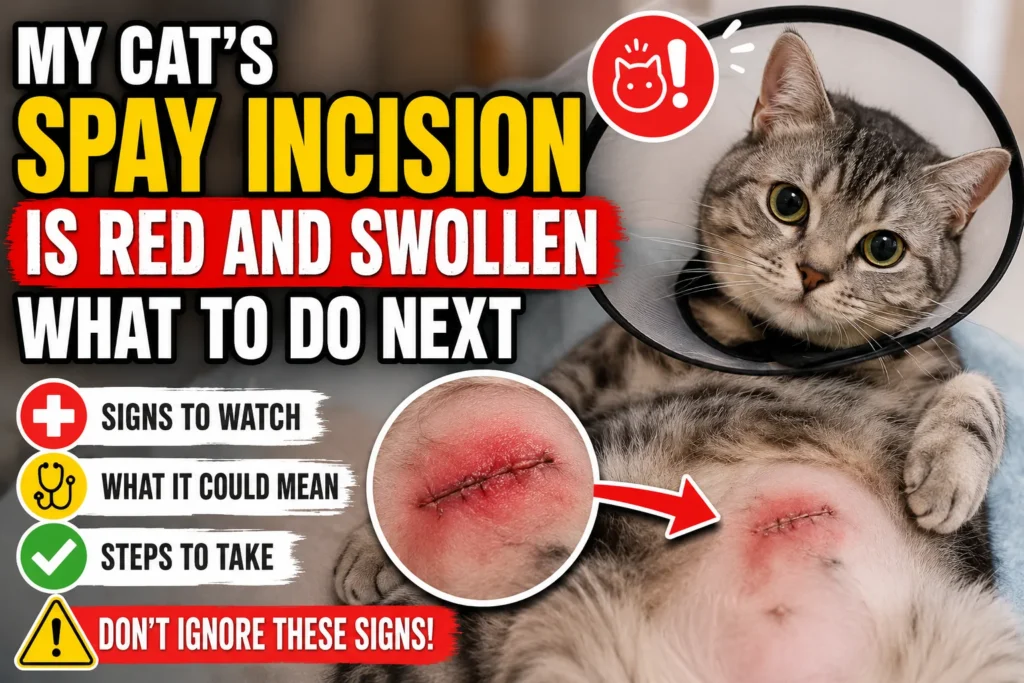
Incision Welcoming home your cat after her spay surgery will be a relief for both of you, but this starts a very important stage of monitoring her recovery and health. Some reddening, swelling, or bruising around her incision wound are also extremely common sights, and can be quite alarming. Some reddening or bruising and swelling of the incision site are normal to see following surgery but it’s also good to distinguish when normal becomes not normal. In order to make this distinction and help her recovery go well we are providing the right criteria of signs or symptoms you should look for and take seriously along with actions you can take toward her recovery, on our handy guide.
Understanding a Normal Spay Incision
Post operative normal incision is inflammation. During the first few days after surgery, the cat’s body is in a state of inflammation to repair the tissue damage, which is a completely normal and healthy response.
What does a typical healthy incision look like?
Slight redness or swelling, puffiness.
It is normal to observe moderate skin irritation, localized redness, and puffiness around the surgical wound. The wound area is often warm, this is also part of the process for healing. Bruising. Bruising can be seen after a few days, especially in light colored animals or those with white skin, it doesn’t hurt and disappears in a week.
Under the scar, a firm bump may form. Usually, this is a reaction to internal sutures or an internal inflammatory process that usually resolves within 2 weeks. “Wound Puckering”.
The stitches should be in contact, however if your animal “pucker” the wound you are ok as long as is a fully enclosed wound.
The Red Flags When to Call the Vet
You’re expected to have some normal, but mild, signs of healing, but watch closely for signs that could mean there’s an infection, that your sutures are bothering your cat, or that the wound is opening; these are conditions that need your veterinarian’s attention. Always contact your vet if you have any question about the wound.
Contact your vet if you experience:
Significant Swelling or Redness: The normal amount of swelling and redness you might expect will start to reduce in the few days after the surgery. You’ll know there’s probably too much if the swelling continues to build over a couple days, if the redness extends more than a few centimeters away from the incision, or continues more than a few days .
Foul Odor: As you might expect, a dirty smell coming from the wound’s location is the classic sign of an infected wound .
Discharge: The only discharge you should be seeing is possibly a minute amount of clear or blood tinged liquid in the first day or two. The presence of yellow or green pus or a thicker discharge indicates that there is a definitely and problem and you should take your pet to the vet.
Opening of the Incision: Also referred to as dehiscence, any gap between wound edges you can see at surgery, or you see later should alert you to call the vet. If internal organs are coming out, this is obviously an emergency.
Signs that suggest your cat may not be feeling well overall: It’s important to notice if your cat seems unusually listless or lacks energy, stops eating, or has a raised temperature because this may suggest infection has set in and is systemic.
Seroma: If the swelling becomes soft and quishy and under the skin, like a ball filled with fluid, it might be a seroma, which is generally more tender and cooler that an abscess, and is a sign that your cat is simply too active. It will go down once activity is decreased, but any swelling that fluctuates seems to go flat at one minute and be as swollen as ever, or pop back to its normal size by just shifting the cats body position, then you should seek veterinary attention right away because it might be an hernia, which requires surgery.
7 Steps to Take If You Notice Redness and Swelling
If your cat’s incision looks red and swollen, your first action should be to assess the situation calmly.
1. Check the Incision Twice Daily
You will need to check the incision morning and evening. Watch out for the “red flags” outlined above. Taking a picture each day will make it easier for you to keep track of progress and identify early subtle changes.
2. Keep the E Collar On!
That might be the number one reason for incision problems. Your cat could be the culprit – she might lick, chew or scratch at the incision, bringing bacteria in and or pulling her stitches out. Your kitty’s Elizabethan collar or recovery suit need to stay on for 7 to 10 days minimum, per your vet’s instruction.
3. Restrict All Activity
Jumps, running and playing can add stress to the sutures and can result in swelling, an accumulation of fluid (seroma) or in the incision coming open . Keep your cat in a confined space in a small room or crate for one or two weeks to restrict activity. Take away cat trees and other high places to prevent jumping.
4. Keep the Area Clean and Dry
Your cat will also need you to avoid letting them take a bath and will need to keep the incision area dry for at least two weeks. It could take the two weeks for the vet to clear them. If the incision area is dirty, use a cloth with warm water to rinse it lightly, and tap the area Dry with the same cloth; do not wipe directly at the incision .
Never use alcohol, hydrogen peroxide, or other remedies on the surgical area unless the vet asks you to.
They will delay recovery .
5. Follow Your Vet’s Instructions
Give pain meds as instructed. If there’s antibiotics also give them. If you keep your cat pain-free, your cat will be more calm and resting. Your cat can not have human pain med drugs as they are poisoned!
6. Consider the Litter Box
For the first few days it is best to opt for shredded newspaper as an alternative to clay litter to keep the incision as clean as possible. Clay litter can stick to a wound and become embedded in the healing incision resulting in infection and irritation.
7. Contact Your Vet for Guidance
Even if the swelling or redness doesn’t seem severe enough to warrant a emergency clinic visit; if you’re still worried, just give your vet’s office a call. They may give you some phone advice, ask for a picture to be emailed, or have you come in for a quick visit for reassurance.
For More : Beyond the Cone of Shame The Best Alternatives for Dogs Who Hate Plastic Collars 2026
Frequently Asked Questions (FAQs)
Is it normal for my cat’s spay incision to be red?
Yes, a small amount of redness and mild swelling is normal for the first few days after surgery. This is a sign that the body is healing. The concern arises if the redness is excessive, spreading, or lasts more than a few days .
How do I know if my cat’s spay incision is healing properly?
A healthy healing incision should be closed with no gaps. It may be slightly pink but should not be hot, painful, or have any discharge. The swelling should gradually decrease over the first week. You should also see your cat returning to her normal energy levels and appetite, with no signs of vomiting or diarrhea .
What does an infected spay incision look like in a cat?
An infected incision typically shows thick, yellow or green pus, a foul odor, and more significant swelling and redness than normal. The skin around the wound may also be hot to the touch, and your cat might be lethargic or lose her appetite .
Why is my cat’s spay incision swollen?
Swelling can be from normal post-operative inflammation. However, excessive swelling can be a sign of a seroma (fluid build-up from too much activity) or an infection. If the swelling comes and goes or flattens when the cat moves, it could be a more serious hernia .
How long should my cat wear a cone after being spayed?
Your cat should wear an Elizabethan collar (or recovery suit) for at least 7 to 14 days to prevent licking or chewing, which is the leading cause of complications . It’s crucial to follow your vet’s specific recommendation.
What happens if my cat won’t stop licking her spay incision?
If licking continues despite a cone, consult your vet. Licking can lead to infection, dehiscence (opening of the wound), and delayed healing . Your vet may offer a different style of cone or a sedative to keep her calm.
When is it safe for my cat to jump after being spayed?
Strict rest is vital for at least 10 to 14 days. This means no running, jumping, or playing. Keep her confined to a small space and block access to high furniture to prevent her from jumping .
Is bruising around my cat’s spay incision normal?
Yes, bruising is quite common and can even appear a couple of days after the surgery. It’s a result of minor trauma during the surgery and will typically fade within a week or two .
Can I clean my cat’s spay incision?
The initial healing of the skin takes about 7 to 10 days, which is why activity is restricted during that time. The complete healing process, including the deep internal tissues and remodeling of the skin, can take several months .



2 Comments