Why Is My Indoor Cat Shedding So Much Hair?
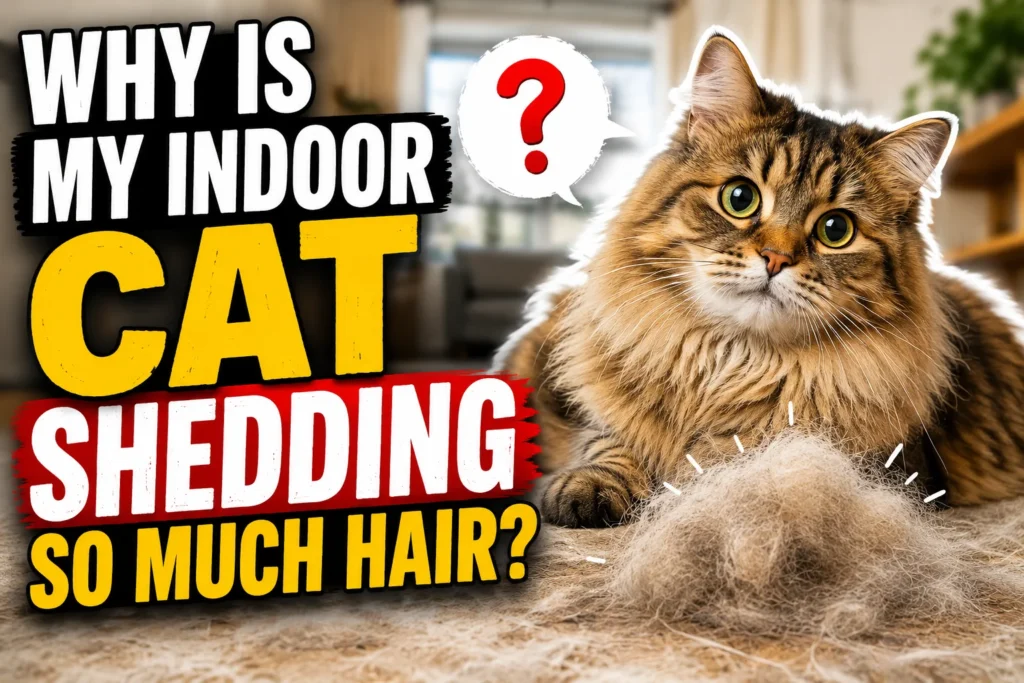
Why Is My Indoor Cat Shedding So Much Hair? and the answer seems to be “more than usual” you are right to be concerned.
While shedding is a natural process, indoor cats often shed unpredictably because they are removed from the natural seasonal light cycles. As a veterinarian and pet wellness expert, I’ll walk you through the seven hidden triggers of excessive shedding and exactly how to fix them.
Do Indoor Cats Shed Differently Than Outdoor Cats?
Yes. Outdoor cats typically shed twice a year (spring and fall) due to changing daylight. Indoor cats live under artificial lighting and consistent temperatures (68-72°F). This constant environment confuses their biological clock, leading to low-grade shedding 365 days a year.
But when shedding becomes “excessive” clumps of hair, bald spots, or fur covering your hands after one pet that is not normal.
Also Check: Can Cats Drink Almond Milk Safely?
7 Medical & Environmental Reasons for My Indoor Cat Shedding So Much Hair
1. Poor Diet & Low-Quality Protein
Fur is 95% protein (keratin). If your cat’s food is filled with corn, wheat, or soy, they lack the amino acids (taurine, methionine) needed to anchor hair follicles. Result: Weak hairs fall out prematurely.
Vet’s note: Look for AAFCO statements guaranteeing “complete and balanced” nutrition with named animal protein (chicken, salmon, turkey) as the first ingredient.
2. Unmanaged Stress & Anxiety
Indoor cats are prone to boredom and anxiety. Stress releases cortisol, which directly pushes hair follicles into the “shedding” (telogen) phase. Common stressors include:
- A new baby or pet
- Moving furniture
- Lack of hiding spots
- Dirty litter boxes
3. Lack of Grooming (Overweight or Arthritic Cats)
Here is a paradox: Less grooming causes more shedding. Healthy cats ingest loose fur via grooming. If your cat is obese or has arthritis, they cannot reach their back or tail. That loose fur accumulates and drops off in clumps.
4. Skin Infections (Ringworm & Bacteria)
Ringworm (despite the name, a fungus) causes circular bald spots with flaky skin. Bacterial infections cause greasy, smelly fur that sheds in patches. These require veterinary diagnostics—they do not resolve with brushing.
5. Hormonal Imbalances (Hyperthyroidism)
This is common in senior indoor cats (10+ years). An overactive thyroid speeds up metabolism, causing:
- Weight loss despite a ravenous appetite
- Greasy, matted fur
- Excessive shedding along the spine
6. Allergies (Environmental or Food)
Indoor cats get allergies too. Dust mites, pollen tracked in on shoes, or chicken/beef proteins cause pruritus (itching). Constant scratching and over-grooming break hair shafts, mimicking shedding.
7. Low Humidity (Winter Shedding)
Indoor heating strips moisture from the air (below 30% humidity). Dry skin becomes flaky (dandruff), and the hair follicles loosen. You will see static electricity + white flakes + loose fur.
When to See a Vet Immediately
Schedule an appointment if shedding comes with:
- Bald patches (not just thinning)
- Red, inflamed, or scabby skin
- Lethargy, vomiting, or diarrhea
- Excessive drinking/urinating
- A foul odor from the skin
These indicate mange, thyroid disease, or kidney failure not normal shedding.
10 Proven Strategies to Reduce Indoor Cat Shedding
- Upgrade to a High-Protein Diet – Switch to wet food or freeze-dried raw with >40% protein.
- Add Omega-3 Fatty Acids – Fish oil supplements (salmon or sardine) lubricate follicles. Give 1 pump per 10 lbs daily.
- Brush Daily During Peak Shedding – Use a slicker brush first, then a de-shedding tool (like Furminator) 1x/week.
- Increase Humidity – Run a cool-mist humidifier in rooms where the cat sleeps (target 45-50% humidity).
- Reduce Stress with Pheromones – Use a Feliway diffuser plugged in near their food bowl.
- Hydration is Key – Dehydrated skin sheds more. Switch to a ceramic water fountain (cats drink 30% more from moving water).
- Treat Underlying Allergies – Try a hypoallergenic diet (novel protein like rabbit or duck) for 8 weeks.
- Weight Management – Help obese cats lose weight so they can groom their own backs.
- Regular Vet Bloodwork – For cats over 7 years old, check T4 (thyroid) and kidney values annually.
- Bathe Strategically – Use a cat-safe de-shedding shampoo (no more than 4x/year, as frequent bathing strips oils).
The Bottom Line
Your indoor cat will never stop shedding nor should they. Shedding removes dead hair and distributes natural oils. However, sudden or patchy shedding is a medical symptom, not a behavioral quirk. By ruling out hyperthyroidism, allergies, and ringworm first, then optimizing diet and humidity, you can reduce loose fur by 60-80% within 6 weeks.
Frequently Asked Questions (FAQs)
Is it normal for indoor cats to shed year-round?
Yes, but moderately. Indoor cats shed lightly every day due to artificial light and heating. If you are vacuuming daily or finding hairballs weekly, that is excessive.
Why is my short-haired indoor cat shedding more than my long-haired one?
Short-haired cats have denser undercoats. They often shed more visibly because the hairs are finer and statically charged. Long-haired cats mat, short-haired cats tumbleweed.
Can stress really make a cat lose fur?
Absolutely. Psychogenic alopecia (over-grooming due to stress) pulls hair out, while telogen effluvium (stress shedding) causes clumps to fall out. Both are real.
Does brushing increase shedding?
No. Brushing catches hair that is already dead. It does not pull out live hair. Daily brushing reduces loose fur by up to 90%.
What is “stud tail” and does it cause shedding?
Stud tail (sebaceous gland hyperplasia) happens near the tail base. It causes greasy, waxy fur that falls out in clumps. Neutering usually resolves it.
How do I know if shedding is from ringworm?
Ringworm shedding looks like a broken cigar (microscopically). At home: look for a green glow under a Woods lamp (only 50% of strains glow). Otherwise, get a fungal culture.
My cat eats well but sheds tons. What am I missing?
Check the humidity and water intake. Chronic low-grade dehydration from eating only dry kibble is the 1 hidden cause of excess shedding in otherwise healthy cats.
Are de-shedding tools safe for all cats?
No. Do not use de-shedding rakes on hairless, thin-coated, or senior cats with fragile skin. Slicker brushes are safest for daily use.
Can a dirty litter box cause shedding?
Indirectly, yes. A dirty box causes stress and urinary issues. Stressed cats groom compulsively or stop grooming entirely both alter shedding patterns.
Will shaving my cat stop the shedding?
No. Shaving removes the guard hairs but not the follicle activity. The hair will grow back, and you may cause post-clipping alopecia (patchy regrowth). Not recommended except for medical mats.