Why Does My Dog Keep Licking His Private Parts?
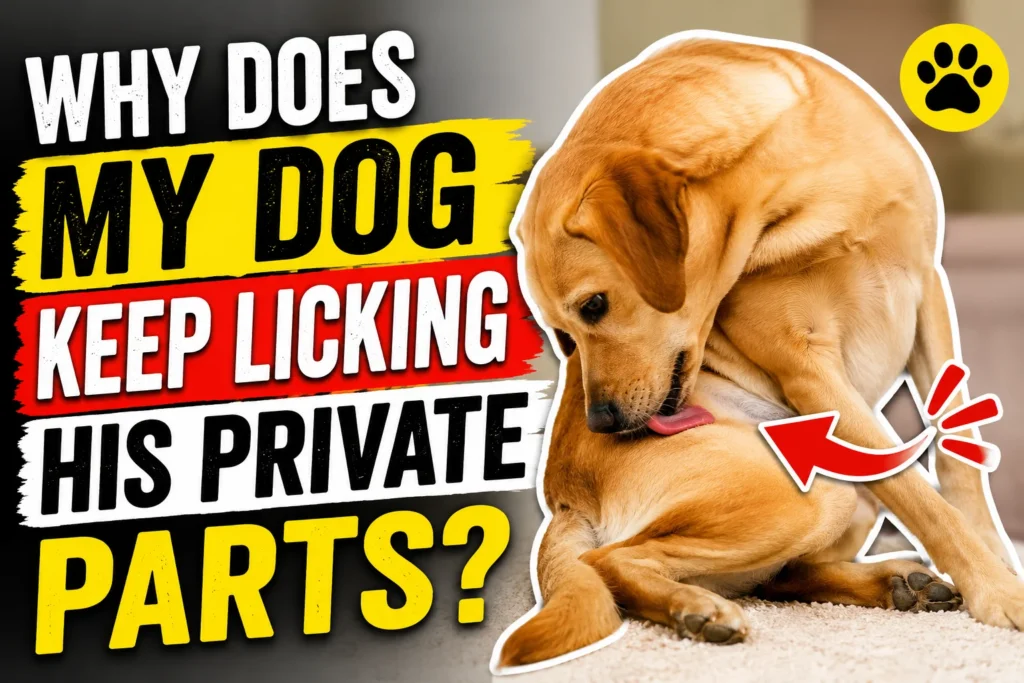
Why Does My Dog Keep Licking His Private Parts? Ah, the classic dog moment everyone is all-too-familiar with sitting at home with friends, and your dog starts intensely washing down “the goods.” Aside from a little awkwardness, your dog’s concentrated self-licking is a sign that something needs attention! There’s a difference between a quick clean up, and what your dog needs for constant attention on their genitals. As a veterinarian, I see this issue frequently, and understanding the “why” behind it is the first step to helping your furry friend.
In this comprehensive guide, we’ll explore the medical and behavioral reasons behind excessive genital licking, when to see a vet, and what you can do to help your dog find relief.
Normal Grooming vs a Problem
First, let’s establish what’s normal. Dogs, like cats, are creatures of habit and cleanliness. You will often see a dog give their genital or anal area a quick swipe with their tongue after urinating or defecating . It’s their version of using toilet paper. This behavior is brief, functional, and nothing to worry about.
When a dog’s lick becomes frequent or prolonged (lasting minutes at a time several times per day); intense (accompanied by groaning, being in pain or the inability to redirect;or tied with other warning signs like redness, swelling, discharge,or an offensive odor), then your pet’s lick crosses from simple maintenance behavior and needs to be addressed.
Top Medical Reasons for Why Does My Dog Keep Licking His Private Parts?
A dog’s persistent licking is almost always a sign of discomfort, which can stem from several distinct medical issues . Here are the most common ones I diagnose in practice.
1. Urinary Tract Infections (UTIs) and Bladder Stones
More Likely Culprit Bladder infections and urinary stones / crystals in dogs cause significant irritation and inflammation to the bladder wall; and it’s no wonder your furry friend feels the urge to pee constantly. It can even be painful. In order to “self-soothe” that pain and irritation, they might lick and chew at the area around their urinary tract. Look for the following symptoms: Frequent urination.
- Your dog is telling you he needs to potty more and more, but only producing small amounts of pee when he does.
- Straining. When he squats down (either standing or with a leg cocked), only small or no pee comes out. Accidents. A previously house-trained dog will begin having accidents indoors.
- Urine with traces of blood.
- If you spot blood in your dog’s urine, a vet appointment is urgent.
2. Allergies (Environmental or Food)
Just like humans, dogs suffer from allergies. The itchiness they cause can manifest in many places, often affecting the skin around the genitals and anus .
- Environmental allergies are often seasonal and triggered by pollen, grass, or dust mites .
- Food allergies are usually year-round and are most commonly triggered by proteins like chicken, beef, or dairy .
When the sensitive skin in the area becomes inflamed, your dog will lick to try and relieve the persistent itch.
3. Skin Infections (Bacterial or Yeast)
The warm, moist environment of the genital area is a perfect breeding ground for bacteria and yeast . An overgrowth of these organisms leads to a skin infection that is intensely itchy and uncomfortable. This is often a secondary problem caused by an underlying issue like allergies .
Signs to watch for:
- Red bumps or pustules on the skin .
- A foul odor coming from the area .
- Skin discoloration that is black, rust-colored, or reddish .
4. Impacted or Infected Anal Glands
Dogs have two small scent sacs on either side of their anus. These glands normally express a small amount of smelly fluid when your dog has a bowel movement . If they don’t empty properly, the fluid thickens, causing impaction, discomfort, and a distinctive, fishy odor . This can lead to scooting (dragging their bottom on the floor) and frantic licking of the anal area.
If left untreated, impacted glands can become infected and even form an abscess, which is a painful, swollen lump that may rupture .
5. Hormonal Issues and Other Causes
For un spayed female dogs, excessive licking can be a sign of a serious uterine infection called pyometra . This is a life-threatening condition requiring emergency veterinary care. Others sources could be vaginitis (inflammation of vagina), or an inflamed penis/prepuce in male dogs.
Also Check: Signs of Wet Tail Disease in Syrian Hamsters
The Behavioral Side: Stress, Boredom, and Compulsion
Sometimes, a clean bill of health from the vet reveals the cause is behavioral. Just as a person might bite their nails when stressed, a dog may lick obsessively as a coping mechanism .
- Stress and Anxiety: Changes in the household, loud noises, or separation anxiety can all trigger excessive licking. It’s a self-soothing behavior that releases calming endorphins .
- Boredom: A dog who is under-stimulated and has pent-up energy may turn to licking as a way to entertain themselves .
In some cases, this starts as a medical issue (like a skin infection) that, even after treatment, becomes a learned, compulsive behavior .
When to See a Veterinarian
Visiting the veterinarian is by far the safest and surest place to start. Your vet should be consulted as soon as possible, and you should seek immediate care from him/her at the slightest hint of these warning signs :
- Swollen, red, or inflamed genitals or anus.
- Any discharge from the penis, vulva, or anus.
- A strong, foul odor.
- Your dog is straining or crying out when urinating.
- Blood in the urine.
- A change in behavior, such as lethargy or loss of appetite.
Most probably, your vet would want you to run some diagnostic tests like urine analysis, skin cytology, or some bloodwork to identify the source of the condition. Treating the root cause whether it’s with antibiotics for a UTI, allergy medication, or diet changes is the only way to stop the licking for good .
How You Can Help at Home?
While you’re waiting for your veterinary appointment, or if your vet has ruled out a major medical issue, there are things you can do to help:
Stop Access to the Site: You could try using an Elizabethan collar (a cone) to keep your dog from further bothering his skin, particularly if he’s actually hurting himself by licking . Wipe the area. Your veterinarian might suggest that you wipe your dog’s skin regularly with a mild, veterinarian-approved wipe in order to keep the surface clean and free of irritating substances.
Avoid all soap and shampoos intended for humans, as these will cause irritation for your pet’s sensitive skin.
Manage Your Environment. In order to tackle seasonal allergies, you may need to wipe your dog’s belly and paws with a damp cloth whenever he’s finished a walk outdoors, because the idea is to get as much of the pollen off him as possible. Add More mental And physical Stimulation. It’s also important to make sure your dog’s routine doesn’t include much “nothing” when his problem has a behavioral cause ensure he has lots of mental enrichment and physical activity.
A dog has more of a tendency to become bored and over-stressed when his mind and body do not have adequate activity to keep them occupied.
Puzzle balls and sniff work are helpful activities, as is plenty of romp time outdoors or playing indoor doggy games.
Conclusion
It’s’ Just A Matter Of Grooming A dog that may have the odd lick of the groin is simply grooming just like how they may lick any other body part for one purpose or another. You’re generally fine with a dog where a lick now and then is all you really see of them licking their groin area; they just really mean their junk could use a quick brush off.
A vet will be able to diagnose the real cause, and then you can fix your beloved furry family member. They just need to feel better.
Frequently Asked Questions (FAQs)
Is it normal for a male dog to lick his private area?
Yes, a few quick licks after urinating is a normal part of grooming for male dogs. However, if he is licking his penis or prepuce excessively and persistently, it can indicate a problem like a urinary tract infection, skin irritation, or an injury .
Why is my dog licking his private parts and scooting?
This combination is a classic sign of an anal gland issue. Impacted glands can be very irritating and cause scooting (rubbing the bottom on the floor) and excessive licking of the anal region .
Can allergies cause my dog to lick his private parts excessively?
Yes. Both environmental and food allergies can cause itching in the genital area. The resulting inflammation drives the dog to lick excessively in an attempt to relieve the itch .
My dog keeps licking his private area and whimpering, why is this happening?
If your dog is licking and crying or whining, it likely suggests they are experiencing a painful condition or severe discomfort.
This may be due to a urinary tract infection, a bladder stone, a serious skin infection, or a rupture anal gland abscess, among other conditions that are often extremely painful. If your dog is licking this body part accompanied with whines or pain-like sounds, take your dog to the veterinarian right away!
What are the signs of a urinary tract infection (UTI) in my dog?
Dogs most commonly have UTIs that cause: Frequent attempts to Urinate Frequently Urinating Very Frequent need to Urinate Difficulty during urination Licking penis bloody urine Urinating in the house when your dog usually holds it to be house trained
My neutered male dog licks his genitals; what is causing this?
Even if your dog has been neutered, they can experience many health concerns that might affect their genital regions. This can include; Allergies UTIs Stones The licking of your dog genitals may be the result of some psychological stress as well.
How can I determine between when grooming and licking are actually an Issue?
The dog is likely to briefly lick the genitals just after it has peed/pooped – it is completely normal. Otherwise when there is a red, raw-looking, tender and irritated genital region with a peculiar odor the licking may be an issue that needs Vet assistance. Usually licking that can be characterized as excessive could also lead to the actual damage of skin tissues.
I know my dog is not medically ill, but is there a behavior that could lead my dog to obsessive licking?
Yes, as when they do not seem ill it is typically the case when they are suffering from what humans call neurotic tendencies-like obsessive grooming behaviors. When anxious dogs that do not seem otherwise stressed or ill; they would obsessive lick the private areas because they would be experiencing extreme stress, anxious feelings, boredom.
Are there any home remedies for stopping the obsessive grooming and licking?
As a parent of this canine pet, you must prevent to any or all home treatments, salves and ointments from being utilized. Home treatment ointment sand lotions will undoubtedly have side effects on your own pets, making the situation much worse than ever. First, try to comfort your dog as well as you can. Second, make an effort to distract them with some enjoyable exercises and games with your own dog. Third, consult veterinary care immediately.
How will the veterinary doctor be in position to Diagnose and determine why my dog is licking his private parts and how could they help?
Vet diagnosis includes a physical evaluation along with details concerning his history, a urinalysis and culture to identify infections or bacteria, a bacterial culture on the dog’s genital regions (if suspected), possible blood tests to test for systemic illness, and possibly a test food trial if allergies are suspected. A veterinarian can provide medication to help with inflammation, pain relief, treatment for infections and behavioral modification for psychological-related compulsive behaviors.