Signs of Wet Tail Disease in Syrian Hamsters
Signs of Wet Tail Disease in Syrian Hamsters. One of the saddest things for me as a veterinary practitioner is when I have to euthanize a favorite Syrian hamster to save it from the terrible condition known as wet tail disease. Most pet owners are sadly not aware of the signs and do not realize they may be witnessing a terminal disease that is capable of killing a young hamster in as little as 24-48 hours from the time the first signs appear. There are few medical treatments that seem to help when a hamster develops wet tail disease.
There is only one thing that can save a hamster-you recognize the signs and bring your hamster to the nearest available emergency vet immediately.
Signs of Wet Tail Disease in Syrian Hamsters
What Exactly is “Wet Tail”?
Now, before I even get started explaining how to deal with the nasty issue of wet tail, you really do need to get out of your head that wet tail is just a case of the sniffles when your hamster is having the runs. In the world of veterinary medicine, what we call “wet tail” actually has nothing at all to do with wet! It actually deals with a serious, potentially deadly bacterial illness that goes by the official name of “proliferative ileitis. This illness is caused by a bug called Lawsonia intracellular and what Lawsonia does to your poor little friend is essentially damage the walls of his little intestine, thereby not allowing him to absorb fluids and nutrients.
Why the Name?
In fact, the reason why “wet-tail” gets its name is its most obvious symptom: high-volume water in stools that saturate the tail and rear quarters’ fur, leaving it perpetually wet and streaky.
A Disease of Stress and Youth
Though bacteria causes the disease, it’s stress that will allow it to progress. The young Syrian hamsters in 3 to 10 weeks are most susceptible to the bacterial disease: the reason that those fresh from the pet store hamsters have it is that moving into their new homes after a stressful process of Weening them from their mothers and shipping, then acclimating into your home compromises the hamsters immune response making it possible to contract Laws intracellular . High ambient temperature stress, diet change stress and crowded housing will also help increase risk of infection in your hamster.
Critical Signs of Wet Tail Disease
Being able to notice these symptoms will give you the best chance to save your Syrian hamster, due to the fact that this illness is rapid and fatal.
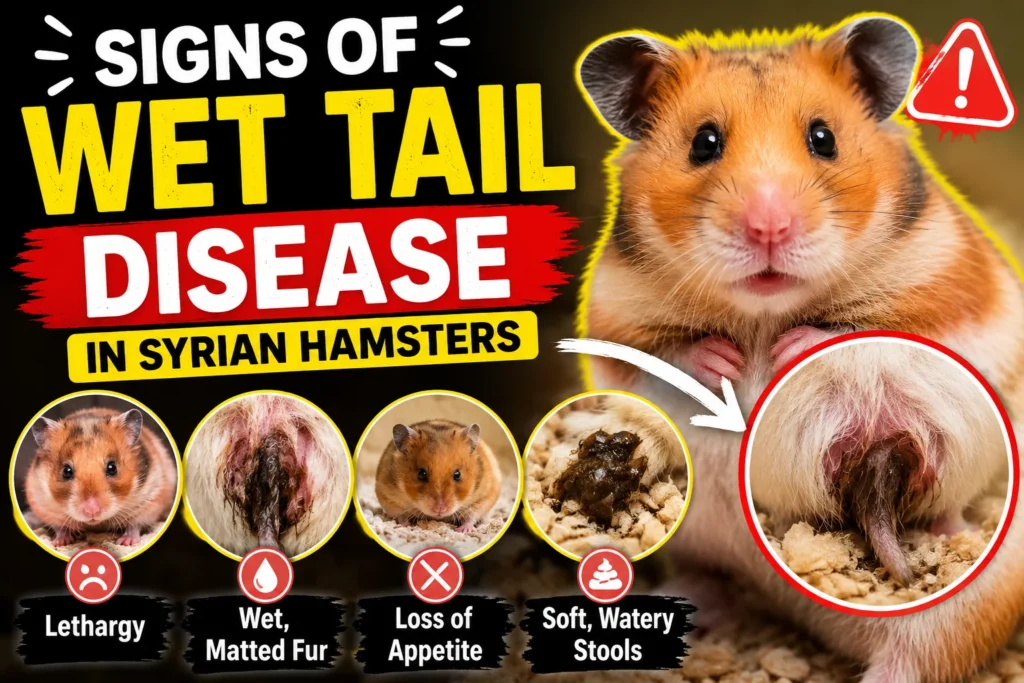
1. Foul-Smelling, Watery Diarrhea (The Hallmark Sign)
This is the sign the defines the disease. Unlike normal feces these stools should be watery and extremely foul smelling (rotten). The fur on the rear end, belly and hind legs will typically be in contact with wet fecal material constantly.
2. Lethargy and Weakness
- Your hamster will get weak. He won’t want to go in the hamster wheel. He’ll be sluggish, and hard to wake up.
- You’ll see the hamster lying in the back corner of the cage unable to be roused.
- If the disease progressed into this stage the results for your hamster is bad.
3. Hunched Posture and Irritability
Hamster is going to appear hunched or like “hunchback,” as the stomach ache could become the most intense. Often, you hamster’s attitude can change from calm to more irratated, aggressive and might scratch/ bite, all indicating that something goes wrong.
4. Loss of Appetite (Anorexia) and Weight Loss
The signs of wet tail in a hamster are very alarming as their appetite quickly diminished. If you go to your cage and notice that your Hamster isn’t touching food and treats that would otherwise be enthusiastically inhaled by them then you have to consider this a red flag. Your Hamster will become rapidly malnourished and will start to lose weight.
5. Rapid Dehydration
Diarrhea can cause extreme fluid loss which quickly results in dehydration, with the common indicators of sunken eyes, the inability for the skin to “spring” back when gently pressed against another body surface (loss of skin turgor or skin pliability) and the overall starved, ill look of the individual. Dehydration remains the major factor that contributes to the death of the animal.
6. Protruding Rectum (Rectal Prolapse)
Over the course of a severe bout of diarrhea, there may be so much straining that part of the rectum comes out of the anus. This is a significant event and you should seek veterinary care promptly.
Also Check: Can A Cat Recover From A Broken Tail On Its Own?
What To Do If You See These Signs
- Don’t Wait! Don’t try home remedies. Wet tail is a serious medical emergency.
- Not getting help within 12 hours could be the difference between life and death.
- Isolate Immediately! The disease is extremely contagious and can be spread between other hamsters. Set up a clean, warm, and quiet “hospital cage.” Call an Exotic Vet Now!
- The quicker you get your pet seen by a vet (specializing in exotic animals, since most vets know very little about hamsters), the higher the chances of recovery.
- A veterinarian may administer fluids directly into the hamsters body, prescribe antibiotic eye-drops (or orally), and recommend the hamster rests in a warm place. Deep Clean Thoroughly! The bacteria can form spores and can survive in the environment.
- Thoroughly clean the pet’s cage, food dish, water bottle, etc. And be cautious so no other animals get sick.
Frequently Asked Questions (FAQs)
What is the most common cause of wet tail in Syrian hamsters?
Lawsonia intracellularis bacteria. However this usually only develops if the hamster is under stress that compromises the immune system, for instance stress relating to moving to new accommodation, being housed together in large groups or a recent change of diet.
Can a Syrian hamster survive wet tail?
Yes but depends on treatment. Hamsters are likely to recover if they receive veterinary intervention promptly and aggressive treatment with antibiotics fluid therapy and supportive care within 24 hours of presenting symptoms of the disease. If left undiagnosed the disease is fatal in most cases.
How quickly does wet tail kill a hamster?
It’s rapid with Hamsters often dying within 24-48 hours.
Is wet tail painful for hamsters?
Yes. The intestinal tract is ulcerated inflamed and infected so it is a condition associated with abdominal pain although this may just manifest itself as a hunched posture and irritability.
Why are young Syrian hamsters more likely to get wet tail?
Young hamsters especially those between three and ten weeks are the ones most susceptible to the disease as they develop a mature immune system and succumb readily to the stress of transport and weaning.
What is the treatment protocol for wet tail?
The treatment regimen in vet clinics for this disease is fairly aggressive and will involve the hamster being placed on fluids that will be administered underneath the skin as it would most likely be unable to tolerate oral fluids, antibiotics that will combat the infectious bacteria and pain management if necessary and nutrition.
Can the disease be transmitted from a sick hamster to one that is not unwell?
Yes, the disease is highly infectious and spread via faeces. All cages and accessories including food dishes water bowls etc will need to be disinfected. The sick hamster will need to be isolated immediately.
Can over the counter human medication treat wet tail?
NO never administer over the counter medications for diarrhea such as Imodium, etc or antibiotics intended for humans to treat this illness. These can be harmful and potentially fatal. Only give medication that a vet has prescribed.
How can I prevent wet tail?
Minimise stress factors that may come from changes in housing, the addition of other hamsters and food, keep the habitat clean, provide a suitable diet of hamster seeds, high protein, no large quantities of vegetables or fresh food. Keep new animals out for one to two weeks with minimal handling until settled.
Is the condition of wet tail the same as that of simple diarrhiea?
Not all cases of diarrhea are wet tail simple diarrhea can often arise if new vegetables or foods have been introduced into their diet. However any severe diarrhea in a young hamster should be treated as wet tail until it has been proven not to be.
Conclusion
Wet tail disease is a serious danger that will kill many Syrian hamsters. However, the most important step to treating and saving your pet from this horrible illness, beginning from foul smelling diarrhea to lethargy to hunch posture it all centers on you noticing Wet Tail in Syrian Hamsters to go to your veterinarian to. Being responsible for a hamster comes down to being the one to protect their best friend as well as to ensure your loved one does not experience stress; it’s all down to what you can prevent.