
Decoding Mental Boredom vs. Physical Tiredness in Working Dog Breeds 2026
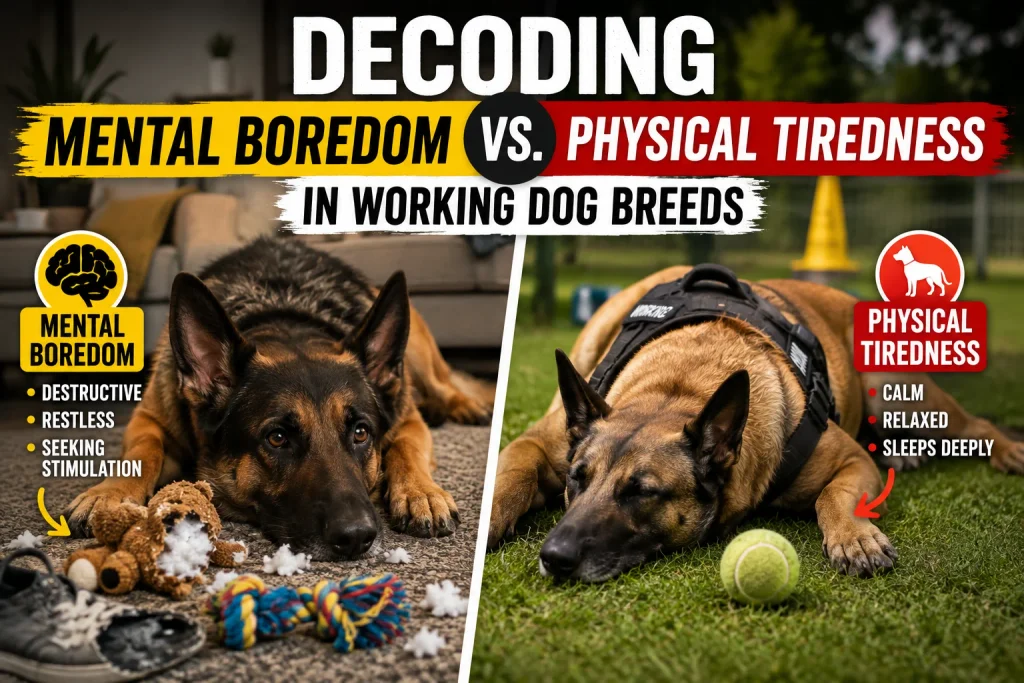
Decoding Mental Boredom vs. Physical Tiredness in Working Dog Breeds. If you are a owner of a high drive working breed (e.g., German Shepherd, Border Collie, Belgian Malinois) you likely have experienced this at the end of a long day: Your dog is either a panting, solid lump lying somewhere on the floor, or they are a dervish of destructive energy? The puzzle is knowing what to attribute to which situation. Misinterpreting can result in overworking, injury, and a truly neurotic dog.
Decoding Mental Boredom vs. Physical Tiredness in Working Dog Breeds
Working dogs are not companion animals-they are athletes, and partners with genetically encoded purpose. Breeds like Retrievers, Pointers, and even Corgis are genetically built for endurance, and thrive on being mentally challenged. Failure to meet this need, or the opposite extreme-exaggerating work requirements to the point of fatigue, can cause irreparable damage. First in understanding working dog motivation is differentiating between “tired” and “bored”.
Scenario A: The Physically Tired Dog
Physical tiredness is a natural, healthy part of very vigorous or lengthy workouts. It simply means your muscles have been stretched to their limits for protection of damage at a structural and connective tissue level.
Key Signs of Physical Fatigue:
- Reluctance & Slowdown: This is easy to spot an unwillingness to rise after sitting, a slowed gait or a refusal to walk quickly or jump. The dog will look ‘heavy’, unhurried and unwilling to move at all.
- Panting heavily. Panting is a necessary part of cooling down but if this carries on without easing off after activity then the dog can’t regulate its own body temperature effectively.
- Stiffness, a reluctance to move or limping. Physical exercise causes exhaustion and exhaustion makes a dog achey!
- Frequent lip licking. Another of the less obvious signs that is often due to stress combined with the general exertion.
The vet’s opinion: The obvious remedy for physically exhausted dogs is for them to rest. As dehydration and electrolyte imbalance due to panting accompanies physical exhaustion, providing access to plenty of water and cool conditions is important for physical fatigue.
Scenario B: The Mentally Bored Dog
If there’s anything more tiring for a highly intelligent dog, it’s not being sufficiently stimulated. When restricted, behavioural experts state that breeds that fit this mold have negative experiences like frustration, bored, and feeling powerless.
Key Signs of Boredom:
- Destructive Behaviour: For a bored dog, “own entertainment”. He will chew up your shoes, furniture, and anything that can satisfy his primal desires of dismantling things or find way outside.
- Restlessness: An tired dog will always sleep or rest, bored dog’s dog will have some difficulty with relaxation. He will often pace, whine and jump on and off something.
- Noises: Barking more often than what has previously. Dogs often bark at ‘nothing’ in particular.
- ‘The Zoomies’: when dog may burst out in the running in mad excitement, with very much physical discharge. These will be caused by a surge of frustration or stimulation.
A working breed often experiences muskel fatigue due to constant work, as written from Dr Amelia S Munsterman . Dr. Kevin H K K and colleagues mention in regards to the bored dog- The real problem lies between the reality(nothing happened) and desire(action), that caused him to get frustrated. This frustrations will show up itself with such soothing behaviour of itself such as chewing excessively or licking excessively etc which it IS NO SIGN OF EXHAUSTION- as is in any normal dog’s state of tiredness- BUT, this particular dog’s boredom.
Scenario C: The Mentally Fatigued Dog
This is the “sneaky” one. Mental fatigue occurs after intense training or problem-solving. A physically fit dog may push through physical tiredness, but mental exhaustion makes them cognitively “stuck”.
Key Signs of Mental Fatigue:
- Repeating Mistakes: A dog that normally performs a behaviour perfectly will suddenly make errors they don’t usually make.
- Slower Processing of Commands: There is a clear lag in response time or a failure to respond to well-known cues.
- “Switching Off”: The dog appears to disengage mid-task, finding random things to sniff or simply staring into space.
The Veterinary Perspective: This state is often misdiagnosed as stubbornness. In reality, it’s a dog “running on empty upstairs,” where the cognitive circuits are overloaded and need time to reset.
A Diagnostic Guide: Boredom vs. Tiredness
To make the distinction clear, here is a quick reference guide based on primary needs and symptoms:
| Feature | Physically Tired Dog | Mentally Bored Dog | Mentally Fatigued Dog |
|---|---|---|---|
| Primary Need | Rest and Recovery | Stimulation and Engagement | Cognitive Reset |
| Behavior | Listless, seeks rest, unresponsive | Restless, destructive, seeks attention | “Mistakes,” slow responses, disengages |
| Physical Signs | Panting, refusal to move, stiff limbs | Normal heart rate, whining, pacing | Often subtle, may appear “spacey” |
| Energy Level | Depleted, low energy | High, pent-up energy | Low, but the dog is “wired” |
| Response to Stimulation | Little to no interest | Eagerly engages, but may ramp up | Struggles to process new tasks |
Treatment and Management Protocols
For Physical Tiredness:
- Acknowledge the Physiology: Provide a quiet, comfortable space. Do not force further movement.
- Hydration and Electrolytes: Ensure access to water. For extreme cases, consult a vet about supplementation.
- Prevention: Implement proper conditioning and warm-ups to delay the onset of fatigue.
For Boredom:
- More Variety: A tired dog is good dog, but a bored one needs some stimulation beyond just work. Try puzzle toys, scent games, or changing up your walking route regularly.
- The End of ‘Wastrel’ Dogs: Modern breeds many were once worked, should work and have a role-obedience training, taking dogs along with work when applicable, or carrying a backpack.
For Mental Fatigue:
- End on a Positive Note: Experts mention that “learning when to stop is not about giving up,” and that we should stop when our dog is succeeding so as not to lead them to brain exhaustion.
- Go Back to Simple Commands: When your dog is getting tired, return to basic, familiar commands to build back his confidence.
Also Check: Why Your Cat Wakes You Up and How to Reclaim Your Sleep 2026
Frequently Asked Questions (FAQs)
Is a tired dog more likely to be destructive or lazy?
A truly physically tired dog will usually be lethargic and seek rest, not destruction. Destructive behavior is far more indicative of boredom and pent-up mental energy.
My Border Collie never seems to get tired. Could it be bored?
Yes. Border Collies are a classic example of a breed prone to boredom because they were bred to work all day. If they lack mental stimulation, their energy can manifest as anxiety or frustration rather than a desire to sleep.
My dog is panting and pacing. Is that boredom or tiredness?
This can be a gray area. Panting is often a sign of physical exertion, but if combined with pacing and an inability to settle, it might be that the dog is mentally over-stimulated or anxious and hasn’t physically “hit the wall” yet.
What is “mental fatigue” in dogs?
It’s cognitive exhaustion. A mentally fatigued dog will start making errors in tasks they normally find easy. They process commands slower or “switch off” during work. This is often mistaken for stubbornness.
Are some breeds more prone to boredom and depression?
Yes. Highly intelligent, working breeds like Border Collies, German Shepherds, Pointers, and Corgis have high stamina and thrive on mental challenges. They are more susceptible to depression and boredom when not properly stimulated.
How can I tell if the destruction is from boredom or anxiety?
Timing is key. A dog with separation anxiety will usually destroy things immediately after you leave, often targeting exit points like doors. A bored dog’s destruction tends to be more random (shoes, pillows) and happens gradually, sometimes with intermittent vocalization.
What is “lip licking” a sign of?
Excessive lip licking is often a calming signal for dogs. In the context of fatigue, it can indicate physical tiredness. If it appears with heavy panting and reluctance to move, it’s probably physical exhaustion.
What are the physical signs of exhaustion I shouldn’t ignore?
Key signs include stiffness, a slower gait, hesitation to jump, and complete refusal to get up. If these occur frequently after work, the dog needs a rest day to prevent injury.
Is it better to exercise a bored dog or stimulate the mind?
Mental stimulation is often more effective at producing a calm state than physical exercise alone. Puzzle toys, scent work, and training sessions can tire a dog out and satisfy its needs better than a simple run.
When should I see a vet about these signs?
If you notice symptoms like disinterest in walks, changes in appetite, excessive licking, or hiding away lasting longer than two weeks, rule out underlying illness with a vet before assuming it’s purely behavioural.
Conclusion
The sign of a true handler is knowing whether to allow his/her dog to use its body to sleep and then the dog wanting attention because it isn’t using its brain enough to feel secure. If they adhere strictly to all behaviours listed below, will prevent you from tiring out your dog’s body and not exciting its brain. Knowing your dog needs or wants a nap is the difference from it needing a puzzle-this knowledge will enhance a lifetime shared with your buddy.