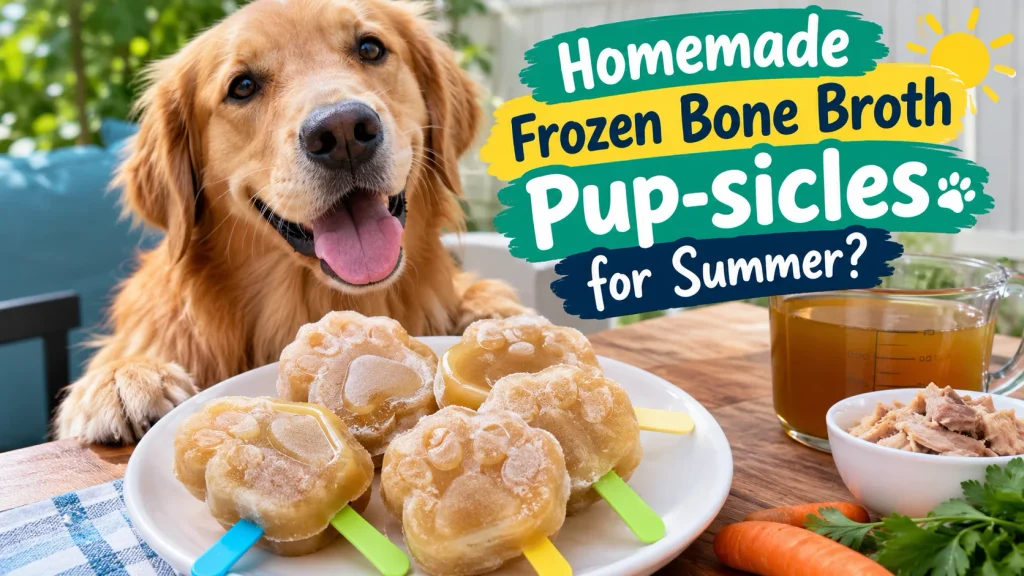
How to Make Homemade Frozen Bone Broth Pup-sicles for Summer 2026?
I am a veterinarian and a dog lover, and I have treated far too many hot, dehydrated, and bored dogs on boring days like these. I am also a content creator, and I know that pet parents want tried-and-true, safe, easy, and affordable solutions that we can actually recommend.
Frozen bone broth pup-sicles are one of my top suggestions for these dog days of summer. Packed with hydration, gut-healthy nutrition, and mental entertainment, they are suitable for any dog, young or old.
Why Bone Broth Is a Summer Superfood for Dogs
Bone broth is known as a superfood for good reason. When prepared correctly, it contains collagen, gelatin, amino acids (like glycine and glutamine), and minerals (calcium, phosphorus, and magnesium). And that means for dogs:
Joint support:
Bone broth’s natural glucosamine and chondroitin can promote healthy joints and cartilage, which is especially important for senior dogs and big breeds susceptible to joint problems.
Digestive health:
Gelatin is gentle on dogs’ stomachs, helping to soothe sensitive digestive systems. If your dog’s got a delicate stomach, bone broth can help hydrate and soften the ride, but without the harsh effects of some other food.
Hydration:
Many dogs aren’t good about drinking lots of water, especially in the heat of summer. Bone broth can motivate your pooch to hydrate up – ensuring they don’t get sick from dehydration.
Appetite enhancers:
If you have a particularly picky dog, or one that’s recovering from a medical problem or surgery, bone broth’s aroma and appeal can help them get their chow down. One thing veterinarians want to point out, though: while bone broth is nourishing and tasty, it shouldn’t replace a proper diet – no matter how much your pup might love it. Treats of any kind shouldn’t account for more than 10% of your dog’s total caloric intake.
The Critical Safety Rule: Never Use Human Bone Broth
Bone Broth Safety Does Nothing, except maybe make this recipe unappetizing we first have to talk safety. The trouble with store-bought bone broths designed for humans is that many contain ingredients that are toxic to dogs. Specifically, onion and garlic-common flavor bases in human stock-can cause damage to a dog’s red blood cells and anemia can even occur at small doses.
Too much sodium is also dangerous and can cause dehydration and sodium imbalances.
The safest options are:
- Make your own bone broth with only bones and water Add a dog-safe vegetable if needed
- Find a commercial bone broth made specifically for pets Read the label!
Look for a product that only has bones and water-or chicken and water-if you have the option.
Homemade Frozen Bone Broth Pup-sicles: The Recipe
This recipe is veterinarian-approved for safety and designed to be foolproof for first-time makers.
Ingredients
- 2 cups dog-safe bone broth
- ½ cup plain Greek yogurt
- ½ cup dog-safe fruits
- Optional: ½ cup coconut water
Equipment
- Silicone molds or ice cube trays
- Mixing bowl
- Measuring cups
Instructions
Prep your molds. Silicone molds can go straight into the freezer on the baking sheet, but use an ice cube tray if you want smaller treats or to save space in your freezer.
Pour evenly into the molds. Whether you have a large or a small dog, 2-3 pieces of fruit in each mold is perfect for this simple recipe. lace a few pieces of fruit evenly in the bottom of each mold.
Fill the molds. Mix up a batch of bone broth or coconut water and Greek yogurt (if using) in a mixing bowl. Mix well and whisk until combined.
Pour over the fruit and leave about 1/4 inch gap at the top of each mold, as the liquids will expand when frozen.
Freeze. Pour the mixture into each silicone mold or ice tray, filling the molds to the top and leaving about a ¼ inch of room for the expansion when frozen. If using an ice cube tray, fill to the top as the cubes will be smaller. Freeze for at least 3-4 hours or until frozen solid. Serve. To pop out, run warm water over the bottom of the mold for 10-15 seconds.
Happy licking!
Storage
Place pup-sicles in an airtight container and store in the freezer for up to 2 months. Date when making to know how fresh it is.
Recipe Variations for Different Needs
Not all dogs are able to consume all ingredients. See vet recommended adjustments below.
Dairy-Free Version
Certain dogs may have a lactose sensitivity. You can replace the Greek yogurt with coconut yogurt or leave it out altogether and bump up the bone broth to 2 cups. This will give you a lighter, more ice-like treat that’s just as tasty.
Senior Dog Joint Support
If your elderly dog has mobility issues, look for a bone broth that mentions incorporation of glucosamine and chondroitin as an additive, or talk to your vet about mixing a joint supplement in when you are preparing it for freezing.
Simple Two-Ingredient Version
If you want the easiest possible treat, don’t worry about fruit and yogurt. Simply pour plain, dog-friendly bone broth into silicone molds and freeze. This is basically a “broth cube” that can be given to your dog on its own or sprinkled over food.
Training Treat Size
Mini or small candy molds You can also make small frozen rewards that are portable and easy to deliver, especially in the hot weather. Just make mini bigs for quick food reinforcement.
How to Serve Pup-sicles Safely
Know the Do’s and Don’ts of Serving Frozen Treats. Never serve a frozen treat to your dog without supervision. You may think it’s a frozen treat that will be just fine for your pup, but other dogs may have a different experience.
Always supervise, as your dog may start chewing and gulp their “pup-sicle” too fast.
Treat size: Remember that a pup-sicle is a treat, not a meal! Smaller dogs should probably just have ½ a pup-sicle, and larger dogs would be happy with one or two. Treats should always be less than 10% of your pup’s daily calories!
Avoid a slip and slide: Frozen treats tend to slide around as they are licked. Place on a towel, bowl or outside patio to prevent slipping or sliding.
Make sure to watch for sensitive reactions: Any new food can cause sensitive reactions. When you first serve your pup-sicle, give only a small amount and look for signs of upset stomach over the next 24 hours.
Also Check: How to Spot Internal Parasites in Dogs Even if Poop Looks Clear 2026?
Frequently Asked Questions
Can I use store-bought bone broth for these pup-sicles?
Only if it’s specifically formulated for dogs. Human bone broth often contains onion, garlic, and excessive sodium, which are dangerous for dogs. If you’re uncertain, make your own or buy a pet-specific product.
How much bone broth is safe for my dog per day?
General guidelines suggest roughly 1 ounce per day for dogs under 20 pounds, 2 ounces for dogs 20–40 pounds, and up to 4–6 ounces for larger dogs. However, when serving as a frozen treat, one pup-sicle per day is a reasonable limit for most dogs.
Can puppies have frozen bone broth pup-sicles?
Yes, puppies over the age of 8 weeks can enjoy small pup-sicles, but portions should be very small. Introduce any new food gradually and monitor for digestive upset. Always consult your veterinarian before introducing new treats to very young puppies.
What if my dog has pancreatitis or a sensitive stomach?
Bone broth can be rich and fatty, which may exacerbate pancreatitis or sensitive stomachs. Consult your veterinarian before offering these treats. A low-fat, diluted version may be appropriate for some dogs.
Can I add peanut butter to the recipe?
Only if the peanut butter is xylitol-free and contains no added sugar or salt. Xylitol is extremely toxic to dogs. Plain, unsweetened peanut butter in small amounts is generally safe, but check the label meticulously.
How long do homemade pup-sicles last in the freezer?
Stored in an airtight container, they remain safe for up to two months. Label your container with the preparation date and discard any treats that develop freezer burn or an off smell.
My dog won’t eat the pup-sicle. What should I do?
Some dogs prefer their treats at room temperature or slightly softened. Let the pup-sicle sit for a few minutes before serving, or try a simpler version with just broth and no fruit or yogurt.
Can I use chicken broth instead of beef?
Yes, chicken bone broth is equally beneficial. The key is ensuring it’s dog-safe no onion, garlic, or excessive salt. Chicken broth may be a better option for dogs with beef allergies.
Are these treats good for dogs with kidney disease?
Dogs with kidney disease often need restricted protein and phosphorus. Bone broth may not be appropriate for these dogs. Always consult your veterinarian before offering any new treat to a dog with kidney issues.
Can I make these without molds?
Absolutely. Ice cube trays work perfectly. You can also freeze the mixture in small paper cups and peel the cup away once frozen, or use a silicone baking mat to create a thin sheet that can be broken into pieces.
Conclusion
Summary Frozen bone broth pup-sicles are a simple, inexpensive, and very real way to help your dog beat the heat this summer. They help with hydration, joint support, and provide the enrichment that is the cornerstone of any happy, healthy dog.
The biggest lessons learned here: Only use dog safe bone broth, keep portions in moderation, and always have an eye on your pup while they are enjoying their treat.
If you have any questions about how bone broth will work for your pup’s health situation, a quick phone call with your veterinarian is the best course of action.
Your dog doesn’t need fancy treats to stay cool and healthy this summer, just a few ingredients, a freezer, and some love.