Is Grain Free Food Good for Older Cats? A Vet’s Guide to Senior Feline Nutrition
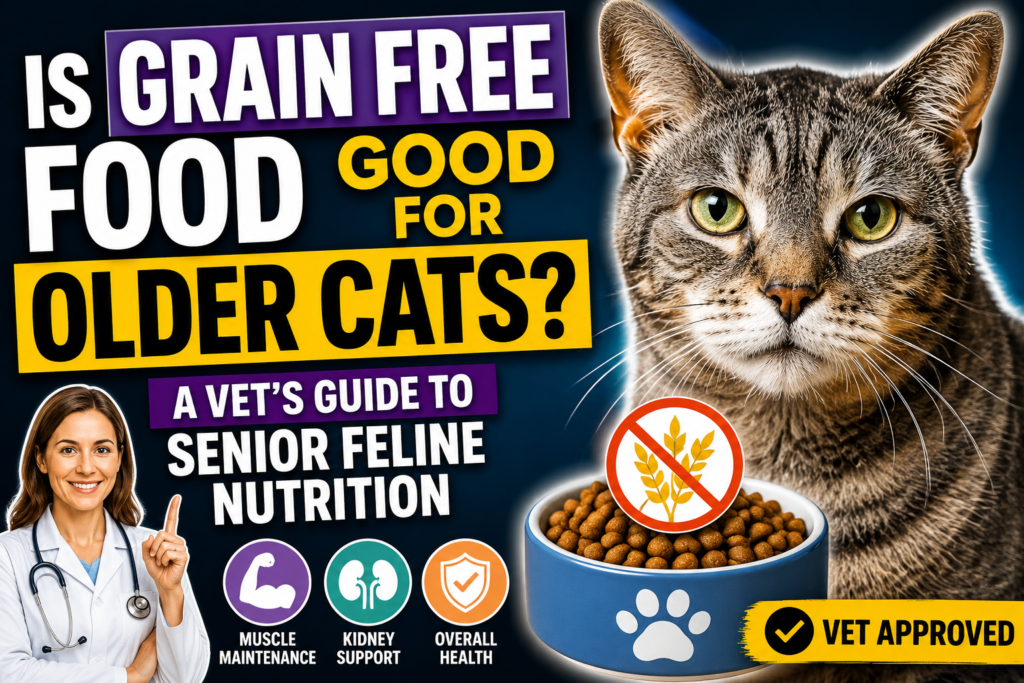
Is Grain Free Food Good for Older Cats? The short answer from a veterinary perspective is: It depends on the cat. While grain free diets are not inherently dangerous for seniors, they are often unnecessary and, in some cases, can be detrimental if not chosen carefully. Let’s break down the science, the risks, and the benefits to help you make an informed decision.
Understanding the “Grain-Free” Trend
Grain-free cat food simply replaces traditional grains (like wheat, corn, rice, and barley) with alternative carbohydrates such as peas, lentils, sweet potatoes, or tapioca. It is crucial to understand that cats are obligate carnivores. In the wild, they consume zero grains. However, domestic cats have adapted over millennia to digest moderate amounts of cooked grains.
The primary reason grain-free diets exploded in popularity was due to human concerns about gluten and carbohydrates, not necessarily feline biology. For most cats, grains are not toxic; they are a source of digestible energy and essential nutrients.
Is Grain Free Food Good for Older Cats?: Key Considerations
Before choosing a grain-free diet for an older cat, you must consider three specific age-related changes:
- Kidney Function: Over 30% of senior cats suffer from chronic kidney disease (CKD). These cats need controlled phosphorus levels and high-quality, moderate protein—not excessive protein found in some grain-free formulas.
- Digestive Efficiency: Aging guts have a harder time breaking down complex molecules. Highly digestible diets are key.
- Dental Health: Missing teeth or gum disease makes chewing hard kibble (grain-free or not) painful.
The Pros of Grain-Free Food for Senior Cats
In specific clinical scenarios, grain-free is beneficial:
- True Grain Allergies (Rare): While cats are more likely allergic to beef, fish, or chicken, a true grain allergy exists. Symptoms include chronic itching, ear infections, or vomiting. A grain-free diet resolves this.
- Inflammatory Bowel Disease (IBD): Some grains (like corn or wheat gluten) can trigger IBD flare-ups in sensitive seniors. A grain-free diet with a novel carbohydrate (e.g., green peas) may reduce intestinal inflammation.
- Obesity & Diabetes Management: Many grain-free foods are lower in simple carbohydrates. Since diabetic cats require steady blood sugar, a low-carb, grain-free wet food can be excellent for regulation.
Also Check: Can Cats Eat Broccoli? A Vet’s Guide to Safety, Risks & Benefits
The Cons & Potential Dangers (Veterinary Warning)
Here is where most pet owners get confused. Grain-free is not automatically healthier for older cats.
- The Heart Connection (DCM): The FDA has investigated a potential link between grain-free diets (specifically those high in peas, lentils, and potatoes) and canine dilated cardiomyopathy (DCM). While less proven in cats, the mechanism (taurine absorption interference) is theoretically possible. Senior cats already have higher heart risks do not take unnecessary chances.
- Excessive Protein & Kidney Stress: This is the 1 mistake owners make. Many grain free foods boast “high protein.” For a senior cat with undiagnosed kidney disease, high protein increases the workload on failing kidneys, accelerating uremia (toxin buildup). Always test kidney values before going high-protein grain-free.
- Obesity: Grains are replaced with starches like potatoes or tapioca. Some grain-free kibbles are actually higher in calories and fat than grain inclusive foods, leading to senior obesity a direct cause of arthritis and diabetes.
Grain-Free vs. Senior-Specific Formulas: The Critical Difference
A true “Senior” formula is controlled for phosphorus (renal health), includes joint supplements (glucosamine), and is highly digestible. Most grain-free foods are marketed for “All Life Stages,” which means they are kitten-level protein and fat. Do not feed an “All Life Stages” grain-free food to a sedentary senior cat with kidney issues.
The Verdict: Is Grain-Free Good for Your Senior Cat?
Yes, if:
- Your cat has a confirmed grain allergy or IBD.
- Your cat is diabetic and needs low-carb wet food.
- You choose a formulated senior grain-free diet (not all-life-stages).
- Your vet has cleared their kidney and thyroid function.
No, if:
- Your senior cat has Stage 2, 3, or 4 kidney disease (choose a renal diet instead).
- Your cat is underweight or has a sensitive stomach (grains like rice are very gentle).
- You are buying cheap, pea-heavy grain-free kibble with no taurine guarantee.
The Best Path Forward
Don’t focus on “grain-free.” Focus on moisture, phosphorus levels, and protein quality. The single best thing you can do for an older cat is switch to canned/wet food (grain-free or not), because senior cats have a blunted thirst drive and are prone to dehydration and crystals.
Final Recommendation
Before switching your senior cat to any grain-free food, request a Geriatric Wellness Panel (bloodwork, urinalysis, thyroid test). If your cat’s kidneys are healthy, a high-quality grain-free wet food with named meats (e.g., “chicken liver” not “poultry by-product”) is safe. If kidney values are elevated, stick with a prescription renal diet which often contains small amounts of rice because it is low in phosphorus.
In short: Grain-free is a lifestyle choice, not a medical necessity for most older cats. Your senior cat’s health depends more on what is in the food (moisture, digestible protein, low phosphorus) than what is left out (grains).
Frequently Asked Questions (FAQs)
Do older cats need grain-free food to prevent allergies?
No. Most senior cat allergies are to animal proteins (beef, chicken, fish). Grains account for less than 5% of feline allergies. Unless diagnosed by a vet, avoid grain-free solely for allergy prevention.
Can grain-free food cause heart failure in old cats?
The link is proven in dogs, not yet proven in cats. However, because senior cats are prone to heart disease, avoid grain-free diets high in peas, lentils, and potatoes without added taurine. Check the label for “taurine supplementation.”
Is grain-free kibble bad for senior cats’ teeth?
Not specifically. However, senior cats often have dental pain. Hard grain-free kibble is not “better” for teeth than grain-inclusive kibble. Canned food is superior for hydration, regardless of grain content.
My 14-year-old cat has kidney disease. Is grain-free safe?
Usually no. Most grain-free diets have moderate to high protein and uncontrolled phosphorus. Your cat needs a veterinary kidney diet (e.g., Hill’s k/d, Royal Canin Renal) which is carefully phosphorus-restricted, even if it contains rice.
What is the best grain-free food for a diabetic senior cat?
The best is a low-carbohydrate, high-moisture canned grain-free food. Look for less than 10% carbs on a dry matter basis (e.g., Tiki Cat, Weruva, or Dr. Elsey’s cleanprotein). Avoid dry grain-free kibble for diabetics.
How do I transition my senior cat to grain-free food safely?
Do it over 7-10 days: Days 1-2 (25% new, 75% old), Days 3-5 (50/50), Days 6-8 (75% new), Day 9+ (100% new). Monitor for vomiting, diarrhea, or reduced appetite. Stop immediately if lethargy occurs.
Are there any grain-free senior foods that support joints?
Yes. Look for grain-free senior formulas that explicitly add glucosamine hydrochloride, chondroitin sulfate, and green-lipped mussel extract. Brands like Wellness CORE Grain-Free Senior or Nutro Grain-Free Senior are good examples.
Does grain-free food help with vomiting in older cats?
Sometimes. If vomiting is due to a grain sensitivity or IBD, yes. But vomiting in seniors is often due to hyperthyroidism, kidney disease, or hairballs. Get a vet diagnosis before switching.
Is expensive grain-free food worth it for a healthy 12-year-old cat?
Only if it meets senior-specific needs (low phosphorus, high digestibility). Many expensive grain-free “all-life-stages” foods are too high in protein and fat for a sedentary senior. A moderately priced grain-inclusive senior food is often superior.
Can I mix grain-free and regular food for my old cat?
Yes, this is often the safest compromise. Mixing reduces the risks of nutritional excesses. For example, 50% grain-free wet food + 50% veterinary senior dry food gives you the moisture of grain-free and the renal protection of senior formula.