How to Stimulate a Sick Cats Appetite to Eat?
How to Stimulate a Sick Cats Appetite to Eat? Having worked as a vet for many years with cats being among my main patients, I am sure how significant this subject matter can be. The refusal to eat in cats is not only a sign of problems but might be a real danger to their lives. Cats’ organisms are not prepared to live without food for long periods and therefore, the lack of appetite indicates serious problems. This guidebook is intended to tell you about causes of anorexia in cats, as well as about methods that will help you to make your pet start eating immediately.
How to Stimulate a Sick Cats Appetite to Eat?
The Critical Nature of Feline Anorexia
The first thing that needs to be done in this situation is to realize what makes this a big warning sign. While a dog might survive without food intake for several days, a cat that stops consuming any food within 24 to 36 hours might develop fatty liver disease or hepatic lipidosis . What happens is that a cat’s organism starts using its fat storage for energy, but the liver is unable to process fat properly.
Understanding the Root Cause: Why Your Cat Won’t Eat
The first thing you should consider is why it is such a big warning sign. The difference between cats and dogs in this regard is that if cats do not eat for just 24-36 hours, they become prone to getting hepatic lipidosis, or fatty liver disease . This is a condition caused by the mobilization of fat reserves from the body of the cat in order to provide energy, but the cat’s liver cannot cope with the processing of fat, which results in its buildup in the liver.
Next, what you have to do before you can convince your cat to eat is determine the reason why they won’t eat. Loss of appetite is a clinical sign rather than an illness:
- Medical Reasons: This one is by far the most common cause for loss of appetite. There are a variety of different reasons ranging from oral and gastrointestinal illnesses, to kidney problems, pancreatitis, infections, and even cancer.
- Nausea: A sick cat may feel nauseous and associate the smell of food with that feeling. Pain or discomfort can also suppress appetite .
- Stress and Psychological Factors: Cats are creatures of habit and are highly sensitive to change. A new pet, a new baby, moving house, or even changing the location of their food bowl can cause enough stress to deter them from eating .
- Food Problems: The use of a new food brand, a food item that is no longer fresh, or even just a new bowl (because some cats don’t like deep bowls because of “whisker fatigue”) can be the issue. It is possible that your cat is starving but still cannot eat (it drops its food, chews on only one side); it is a problem called “pseudo-anorexia.”
Also Check: How To Treat A Dog Cracked Paw Pads In Winter?
The Golden Rule: See Your Vet First
The very first step that you should follow is to make an appointment with your vet. This step can’t be delayed any further. If your cat hasn’t eaten for more than 24 hours, then it is a veterinary emergency case. Your vet would thoroughly examine your cat in order to identify the problem. Until the problem is identified, it’s meaningless to cure your ill cat through home remedies.
Expert-Backed Strategies to Entice Your Cat to Eat
If your feline friend is examined by your veterinarian, and the vet rules out any ailments or administers appropriate treatment, the advice below will help you ensure your cat eats. Don’t forget to seek your vet’s opinion before making any dietary changes to your pet’s menu.
1. The Power of Aroma and Palatability
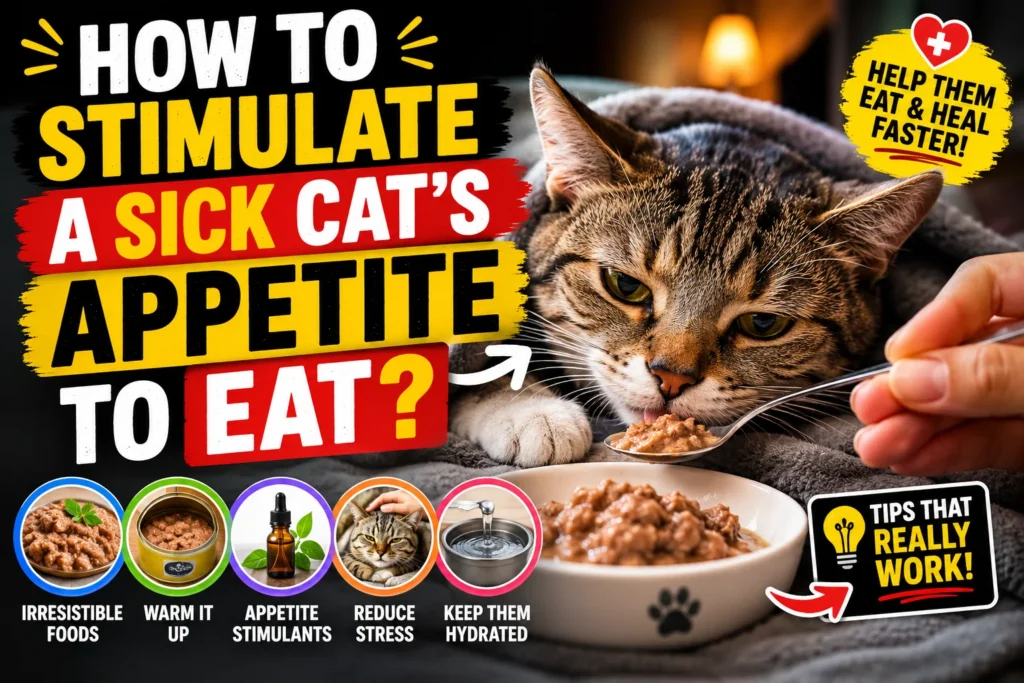
Warm it Up: If you warm your pet’s food to body temperature (around 100°F or 38°C), this will increase its odor considerably, which will make it highly appealing for your cat suffering from anosmia. Be cautious while using a microwave because you should mix it well to prevent any hot spots.
- Strongly Odoriferous Foods: Some pungent foods like tuna, sardine, or chicken might prove very attractive for your feline.
- Flavorings: Small amounts of low sodium chicken broth, tuna water, or some drops of fish oil might enhance the flavor and make it more tempting. A small amount of tasty probiotic such as Purina Pro Plan FortiFlora can be added on top of the food. Most cats enjoy its taste.
2. Texture and Temperature
- Switch to Wet Food: If your cat eats dry kibble, offering a high-quality, savory canned food is often more appealing. It’s easier to chew and has a stronger smell . For cats with dental issues, wet food is a necessity .
- Try Different Textures: Cats have preferences. Try a pâté-style versus a flaked or chunky food in gravy to see which one they prefer .
- Avoid Multiple Choices at Once: While it may seem like a good idea to offer a buffet, presenting too many options simultaneously can overwhelm a sick cat. Offer one or two options at a time .
3. Environment and Presentation
- Create a Calm, Quiet Space: Make sure the feeding area is peaceful and away from loud noises, other pets, or high-traffic areas .
- Feed Smaller, More Frequent Meals: Instead of leaving out a large portion, offer small, fresh portions frequently. This prevents food from drying out and becoming unappealing .
- Use an Appropriate Bowl: Switch to a wide, shallow plate or bowl to prevent “whisker fatigue,” which occurs when a cat’s sensitive whiskers touch the sides of a deep bowl .
- Separate Food from Litter: Ensure food and water bowls are kept well away from the litter box .
4. Hand Feeding and Social Interaction
- Try Hand-Feeding: The social activity involved in hand feeding your kitty may entice her to eat. Place a small piece of food in the palm of your hand or on the end of your finger or on a spoon. Encourage her verbally as she eats.
- Never Force Feed: NEVER force-feed your cat via syringe, unless directed to do so by your veterinarian, since this can lead to aspiration pneumonia (inhalation of food into her lungs), and may ruin any positive association she has with eating.
Medical Interventions: The Role of Appetite Stimulants
In case none of the methods described above helps, your veterinarian may suggest trying an appetite stimulant. This method should be used carefully under medical guidance as an appetite stimulant is a very strong drug. The list of drugs you can use is the following:
- Mirataz (Mirtazapine). Mirataz is the most frequently prescribed appetite stimulant for cats. The drug works by sending signals to block the nausea in cats and stimulate appetite. The medicine is applied in form of a transdermal ointment to the cat’s inner ear. Some side effects of the medicine are temporary vocalization, agitation, and reddening in the place where the medicine was applied.
- Elura (Capromorelin). Elura is a liquid FDA-approved medication for weight loss among cats with chronic kidney disease. This medicine works by stimulating the production of the hormone ghrelin, and therefore appetite. The effect begins to manifest in an hour.
- Cerenia (Maropitant): While technically an anti-nausea medication, Cerenia is highly effective for cats whose appetite loss is driven by nausea. By stopping the feeling of nausea, the cat may be willing to eat again .
- Cyproheptadine: An antihistamine that, as a side effect, stimulates the appetite. It is often used as a longer-term appetite stimulant and may take a couple of days to work .
Advanced Support: When Your Cat Needs a Feeding Tube
In cases of severe illness or starvation in the animal, along with persistent refusal to eat by the pet, use of a feeding tube may be the best choice. This idea may seem scary to many pet parents but the feeding tube often turns out to be a lifesaving measure. This ensures that food, fluids, and medication is delivered to the stomach or the esophagus. It bypasses the mouth entirely, preventing the cat from developing food aversions while they recover . This is a temporary measure used as a “bridge” until the cat feels well enough to eat on its own .
Frequently Asked Questions (FAQs)
How long can an ill cat survive without food?
A cat shouldn’t be without food for more than 24 hours. The time period becomes much smaller for kittens and older cats; it equals about 12 hours. Such a long absence of food may cause death from hepatic lipidosis.
Which one is the best appetite stimulant for cats?
There is no answer to this question because the choice of stimulant depends upon the health problem of your cat. However, Mirataz (mirtazapine) is the most popular drug used at first, while Elura (capromorelin) is preferable for cats having renal problems.
How fast will appetite stimulants affect cats?
Usually, Mirataz works within a couple of hours to a day. The appetite-stimulating effects of Elura can be seen within one hour. The effect of Cyproheptadine takes about 2.5 days.
Can I give my cat human appetite stimulants?
Of course not. Human drugs must never be administered to cats since many of them are poisonous and their doses are very different from veterinary ones. Mirtazapine and Cyproheptadine are human appetite stimulants, but they are used off-label (in extra-label application).
Is it alright to feed my cat with a syringe?
No way. It is extremely stressful to the animal, causes food aversion and has a risk of aspiration pneumonia if food gets into the lungs.
Is it correct that warming up my cat’s food would help?
Yes. Warm food stimulates the release of volatiles which make the food more fragrant for a cat with poor sense of smell.
What natural solutions can I use to increase my cat’s appetite?
I can use some tasty probiotic powder in food, give some low-sodium chicken broth or some tuna juice to the cat. However, it is a temporary solution if the cat is sick.
Why does stress cause cats to refuse to eat?
Cats are very sensitive animals and any changes in their environment, for example, the arrival of another pet or a change in schedule, can make them stressed. Hormones are released during stress which can have an impact on their appetite.
What is Hepatic Lipidosis and what makes it fatal?
Hepatic Lipidosis is the condition whereby fat metabolism is occurring faster than the speed at which the liver can metabolize the fat and therefore leads to accumulation of fat within the liver thus leading to its malfunctioning. This condition is highly prevalent amongst cats that suffer from anorexia.
Can there be any dental problems that can make my cat refuse to eat?
Absolutely, there can be a case whereby the cat suffers from “Pseudo-Anorexia” due to the presence of oral problems like broken teeth, mouth ulcers and gum diseases.
Conclusion
In summary, a lack of appetite on your cat’s part is a very serious symptom, and one that requires prompt attention. You can try gentle techniques to get your kitty to eat more at home, but this is not an absolute solution. The key here is diagnosis by a vet along with proper treatment, which could involve medication or even a feeding tube if the situation is dire.