What Temperature is Considered a High Fever for a Puppy?
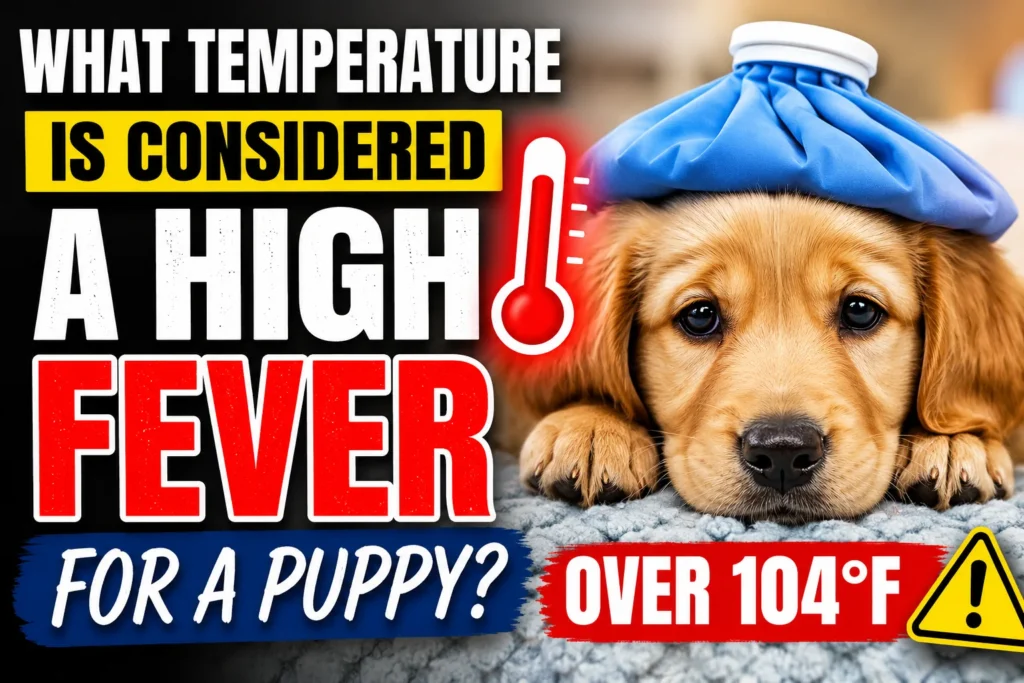
What Temperature is Considered a High Fever for a Puppy? What Constitutes a Fever in Dogs Your new furry friend is bound to be adorable and exciting. It’s natural to want to pamper him or her as they grow and play but keep in mind their health. As it does for humans, even moderate fever does not generally affect well adjusted dogs, so that in itself is not normally cause for concern. High fever for puppies , on the other hand , is often of a health concern, since puppies’ immune systems aren’t mature enough to be a concern for such.
What Temperature is a High Fever for a Puppy? Technically speaking, a fever in a puppy is any rectal temperature above 103F (39.4C) and indicates that it’s time to take him to the vet, but that doesn’t tell you the whole story. Here, you’ll learn more about puppy fever from a veterinary perspective.
Understanding the Normal Puppy Temperature
Understanding Your Puppy’s ‘Normal’ Temperature is Essential Before we define high fever for a pup, it’s important to understand the varying normal temperature for a puppy: A newborn puppy (first week of life): At the time of their birth, puppies temperature is 94.5 – 97.5 F (35 – 36 degrees C) as compared to adult’s that are 100.5 – 102.5 F. They are unable to generate their own heat at this stage, so they need their mother to provide this and need the surrounding environment to be hot enough as well. Second & Third week of life: By now they are mobile and start developing more thermoregulatory abilities.
This increases their temperature: 98.6 – 100 F (37.0 – 38.2 C).
By the fourth week: At this point, your puppy’s temperature will approach the normal of adult canines: 100 – 102 F (37.8 – 38.9 degrees C).
What Temperature is Considered a High Fever for a Puppy?
The Critical Threshold What is a Fever?
A fever is a signal your body is combating an infection. Your puppy’s temperature does rise and fall from time to time throughout the day, but it should not register higher than this: A Fever is: 103F (39.4C) and above.
Medical Emergency: A temperature of 106F (41.1C) or more means a trip to the emergency vet – this type of fever is fatal if not quickly reduced through proper vet intervention as the damage it causes to your puppy’s vital organs is rapid and permanent.
How to Accurately Take Your Puppy’s Temperature
The only guaranteed way to tell if your puppy has a fever is to temperature them with a thermometer. It is dangerous and not a reliable method to guess whether they do so based on whether their nose is hot or their ears feel warm!
- How To Use A Thermometer to Temperature Your Puppy :The method of temperature taking that works most accurately for your puppy is taking it rectally. Here is the safest way how-to:
- You will need a digital thermometer (as the ones made from glass shatter far more easily than you would think!)
- Apply a water based lubricant such as KY Jelly, Petroleum jelly, or another type of lubricant. It would also help to place petroleum jelly on your fingers too. 3. Gently pull your puppies tale, hold it out of the way and very slowly insert the tip of the thermometer, approximately an inch into your pups rectum with a slow and gentle twisting motion.
- Continue to gently push and turn slowly and steadily until the thermometer is about one inch into his rectum. Keep pushing it gently until his tail is completely lowered. 5.
- Make sure that you continue to hold your puppy steady until the thermometer can no longer go anywhere.
- Remove the thermometer from him and reading it.
- When you get back inside cleaning your thermometer would be wise with rubbing alcohol.
- Newborn Puppies If you feel that the puppy is still extremely young to temp his bum, it is sometimes okay to get a paediatric one so you do not have to insert the thermometer too deeply (enough to barely cover the bulb).
Recognizing the Signs Symptoms of a Fever
- In addition to fever, your pup might also display the following symptoms that will tip you off that it is time to check his temperature:
- Letting you check your puppy’s temperature: Unusual lethargy. In most dogs this symptom indicates that you must bring your puppy to a veterinarian immediately. A generally listless pup will be hard to wake up from sleep and they may struggle to rise when called upon to get up and walk, it will sleep more hours in the day then he is accustomed to; he will have difficulty rousing from deep sleeps when he will hear calls to get up.
- Lethargic and unappealing, with less time to sleep.
- Let your pup know it’s time to check her temperature. Other common signs of the problem that you must bring your puppy to the veterinarian: Let me give you the rest of the signs:
- Loss of apetitethat is whether not being offered. Does your pup not want to eat nor to drink ? If so bring immediately to veterinarian; The whites of your eyes are reddened!
- Let me explain to see if, to notice other symptoms: The ears should be warm, and also slightly reddened: the back part and top of your pet’s ears will feel remarkably warm in your hand.
- Your puppy will be shivering in the room whether warm or cold! He will feel unusually warm, his nose will not feel as wet nor is this sign always so present but let your know. Your pup will vomiting or diarrhea including blood or an other abnormal contents it’s a serious symptoms.
Common Causes of Puppy Fevers
Knowledge is a key to fighting any potential condition your puppy faces. Below is some insight into why your puppy may have a fever that will assist both you and your vet in resolving your puppy’s problem. There are several common causes of puppy fevers.
- Infections This is by far the most prevalent and frequent cause of puppy fevers.
- A puppy’s elevated temperature is caused by many different viruses and bacteria. CPV, an extremely serious canine viral illness that affects young dogs lacking vaccinations, typically causes fever to rise over 39.5C (103.1F). Vaccinations It’s not uncommon to find a puppy develops a mild fever lasting one or two days after a vaccine. Toxicity Puppy is curious.
- What you say is not always what they listen.
- Puppy can consume toxins like medicine intended for human, flowers and plants toxic to dogs, and cleaning substances which can lead to fevers. Genetic Related Certain breeds such as Chinese Shar-Pei can acquire specific illnesses like Shar-Pei Recurrent Fever syndrome (also known as Familial Shar-Pei Fever or FSF). It’s known to elevate your puppy’s body to as high as 107 ° F (41.7 ° C) and this requires treatment plan long-term to help your puppy prevent organ damages.
Also Check: Can You Use Human Shampoo on a Dog in an Emergency?
When to Call the Vet
Don’t wait If your puppy’s temp reads 103 F (39.4 C) and up, contact your vet immediately and wait for instructions. No house medications for people, even over the counter meds such as ibuprofen and acetaminophen should ever be administered to your pet these are poisonous to canines. Take your dog to the nearest emergency vet in case they run a temperature of 106 F (41.1 C) or even higher.
Frequently Asked Questions (FAQs)
What is normal temp for a 4 week old puppy?
By 4 weeks your puppy will have temperature in the normal dog range of 100F (37.8 C) and 102F (38.9 C).
What temp for a puppy IS high?
A 103F (39.4 C) temperature can be considered the breaking point for puppy fever so should always trigger a vet visit.
How do I know if a puppy is fever by their nose?
It may not actually be true. A warm nose on your dog does not always mean that they have a fever. You will need to take his/hers temperature with a thermometer.
My puppy’s temperature is 105 F, what should I do?
When a puppy’s temperature is 105 F (40.6 C), it is dangerously high and you must take your puppy to a veterinarian as soon as possible.
Do puppies get a fever from shots?
Yes. It is very normal for your puppy to spike a mild temperature over the next day or two as their body reacts to the vaccinations.
How do I check the temperature of my new puppy?
Use an infant digital thermometer, lubricate the thermometer, and stick the thermometer in to only cover tip, then check your reading. It would be very sensitive. Newborn temperature (first week) normal ranges from 94.5F -97.5F(35-36 C) .
Why would puppy have a fever?
Some diseases, (viral and bacterial) of common concern in our young ones are Parvovirus. Other possibilities of causing this increase in puppy’s temperature includes adverse reaction to inoculations; ingestions of poisons, chemicals or some ingestibles. There is even certain genetic predisposition causing our canids to develop fevers.
Can my puppy have 107F of a fever?
Sure, a 107F of temperature would mean the puppy is near his or her death, and that this could occur in many breeds; however, such temperature has to do with breeds like shar-pei. They are prone to be able to make themselves run up to such degree.
How a sick puppy temperature should be treated?
The treatment is a function of the source of the illness and its origin. Your vet will need to physically visit puppy and get into lab tests. Always avoid to give them medication meant for human babies; many have caused them even to death.