Can Chinchillas Eat Fresh Vegetables Safely?
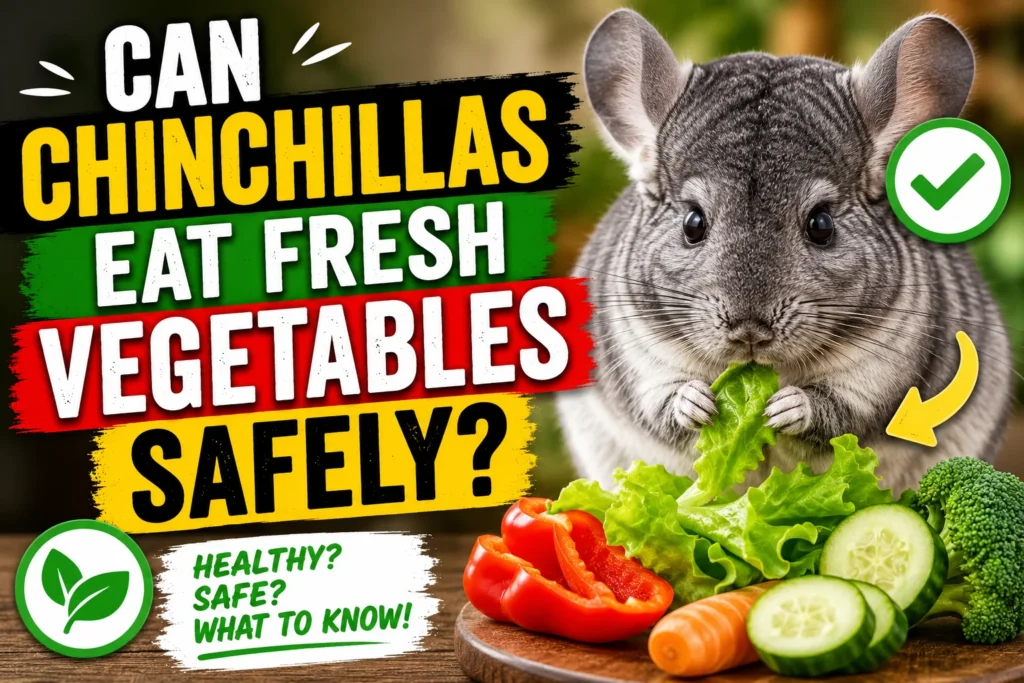
Can Chinchillas Eat Fresh Vegetables Safely? As an animal lover and proud pet owner of these fuzzy friends you might be wondering “Is my chinchilla ready for some variety in his diet?” Well, Can my chinchilla eat fresh vegetables? The answer is yes, but they need to be given as an infrequent treat and prepared carefully since chinchillas have very sensitive systems and can get into a serious mess if you are not careful.
The Foundation of a Healthy Chinchilla Diet
Before we start listing veggies and other goodies, it’s important to cover what a healthy diet for your chinchilla is in their natural environment, chinchillas live off a diet that consists mainly of high-fiber plants. This is because of their extremely unique digestive system that’s made to handle this type of high fiber, low sugar, low-fat diet. Their diet should always mainly consist of:
- Unlimited High Fiber Hay: 24 hours a day. No ifs or buts. This can be orchard grass, oat hay or timothy hay. This stuff not only gets your chinchilla’s digestion working properly, but also helps wear down their teeth, which never stop growing!
- Commercial chinchilla pellets: Only a little amount a day (1-2 tablespoons). These pellets provide a range of vitamins and nutrients that hay can’t provide!
- Fresh clean water: always provide plenty and make sure it is kept fresh by changing it everyday. Sipper bottles work best as they’ll keep it cleaner.
How to Safely Introduce Fresh Vegetables
Fresh vegetable matter as a treat to supplement their diet. Only 1–10% of their daily intake should be composed of fresh produce as a source of additional hydration and vitamins. The rules for serving fresh produce are as follows:
Feed Only One Vegetable at a Time and Check For Illness: Introducing more than one new food item to your chinchilla’s diet increases the chance of food poisoning and digestive upset. Introduce one new vegetable and feed it to your chinchilla as a very small part of their daily food consumption, for example, a single large lettuce leaf or a few bites from the stem. Check in with your chinchilla for 24 to 48 hours to see if they develop diarrhea or lose their stools for an extended period.
Wash all produce: when introducing fresh veggies into the dog’s diet be sure they are all thoroughly washed to prevent potential pesticides or other contaminants being ingested by the dog. Don’t leave uneaten veggies around! Fresh veggies can be really prone to spoiling, remove uneaten ones within a few hours so the bacteria does not start building up.
Avoid making a drastic change: when altering the dog’s diet slowly spread out the changes over several days rather than suddenly introduce a large portion.
Safe Vegetables for Chinchillas: The “Green Light” List
There are a handful of vegetables that most veterinary resources agree are safe to feed in moderation. This generally includes a number of dark, leafy vegetables low in calcium and sugar. According to the MSD Veterinary Manual, some good daily vegetable choices include:
- Romaine or Green Leaf Lettuce: this is a good staple green.
- Bell Peppers: a good addition, but offered in small amounts.
- Celery : although relatively low in calcium, this must be cut very small so the fibrous parts do not result in choking hazards.
- Carrot Tops (green leaf part) : whilst the orange carrot root is very high in sugar and only offered occasionally the green leaves are perfectly safe when offered in moderation. Some alternative recommendations for vegetables safe for degus list the following also: Herbs (cilantro, pars ley, basil, dill and mint) and Other leafy greens such as kale, collard greens, and dandelion greens due to their calcium content.
The High-Calcium and High-Sugar Danger Zone: Vegetables to Avoid or Limit
Along with what you should be feeding your chinchilla you also have to have knowledge about which veggies to stay clear of. There are some veggies you could not have to have your chinchilla consuming because they contain also high a quantity of sugar or calcium content.
High-Calcium Vegetables: The Bladder Stone Risk
One of the most significant dietary risks for chinchillas is the development of bladder stones (urolithiasis). A diet too high in calcium can lead to the formation of these painful and potentially life-threatening stones . Specifically, vets recommend not regularly feeding high-calcium vegetables such as dandelion greens, parsley, and kale. Although tasty and nutritious greens, their high calcium content can be dangerous to feed as treats.
High-Sugar Vegetables & Fruits: The Gut Upset Risk
Chinchillas are highly susceptible to diabetes and digestive upset from sugar. Their systems are not designed to process high amounts of simple sugars. Vegetables like carrots are particularly high in sugar and should only be offered as a very rare treat . This rule also applies to fruits, which should make up less than 10% of the diet and be limited to occasional options like a small slice of apple or pear .
Also Check: Why Is My Pet Bird Plucking Its Own Feathers?
Forbidden Vegetables: Foods to Never Feed
Some items are universally considered dangerous and should never be offered to chinchillas. This includes all forms of:
- Dried Fruits and Vegetables: The dehydration process concentrates the sugars, making them extremely dangerous and a common cause of severe digestive issues .
- Grains, Seeds, and Nuts: These are high in fat and carbohydrates, leading to obesity and digestive blockages .
- Human Treats: Foods like chocolate, caffeine, dairy, meat, and anything else outside their herbivorous spectrum are toxic or indigestible .
Conclusion
So, can chinchillas eat fresh vegetables safely? Yes, when done correctly.
The key is moderation and careful selection. Prioritizing high-fiber hay (especially timothy) as 80-90% of their diet is the most important thing you can do for your chinchilla’s health . Vegetables like romaine lettuce, bell peppers, and celery can be excellent, healthy additions in small daily amounts . However, high-calcium greens like kale and high-sugar roots like carrots should be extremely limited treats .
Always consult with a veterinarian experienced with exotic pets before introducing significant dietary changes to ensure you’re providing the best possible care for your unique chinchilla.
Frequently Asked Questions (FAQs)
Can Chinchillas Have Kale?
Although your chinchilla CAN technically eat kale, this can only happen very infrequently and in very small portions due to the high amount of calcium it contains, and which can lead to the formation of very painful stones in your chin’s bladder. Think of it as an occasional treat rather than food.
Can chinchillas eat carrots?
The orange carrot root is high in sugar and should only be offered as a tiny, rare treat . However, the leafy green carrot tops are much safer and can be offered more regularly as a fresh vegetable .
How much fresh vegetable can a chinchilla eat per day?
Veterinary recommendations suggest offering a small handful of safe, low-calcium greens daily . This should be a supplementary part of their diet, not exceeding 1-10% of their total food intake, with hay making up the vast majority .
Can chinchillas eat bell peppers?
Yes, bell peppers are safe for the most part from the Merck Veterinary Manual. They are also a good low-calcium food to offer their portion of fresh greens as they should only be given in small amounts.
What greens are best for chinchillas?
Dark green lettuce, such as romaine and green leaf lettuce, is safe to offer and make up a portion of a safe daily serving of vegetables. They contain a good deal of water and fiber but a low amount of calcium and sugar.
Can chinchillas eat parsley?
I would not recommend feeding parsley to chinchillas on a daily basis. Parsley has high calcium content and it is recommended by the Merck Veterinary Manual that parsley is avoided because it contains high levels of calcium and can lead to bladder stones in chinchillas.
What are the signs of digestive upset in chinchillas?
Stools that are loose or sticky, diarrhea, loss of appetite and lack of energy are all signs that your chinchilla did not tolerate a new vegetable. If you notice this signs then discontinue the food immediately and contact a vet.
Can chinchillas eat cabbage or broccoli?
Cabbage and broccoli are not typically advised for chinchillas even though some people suggest these foods are safe for them to consume. The concern with these two vegetables is that they are prone to causing gasses, and bloat which can be very serious in chinchillas.
Why is hay more important than vegetables for chinchillas?
Here is the number 1 most important food group for chinchillas because they need the fiber that is in hay in order to properly digest food, but most importantly in order to wear down their continuously growing teeth. If a chinchilla doesn’t get enough hay it can be detrimental and lead to a painful and fatal tooth disease.
Can chinchillas eat cucumbers?
Many vets advise that chinchillas do not eat cucumbers. They are loaded with water and lack in fiber, and therefore they can cause their droppings to become mushy. They are best off getting their hydration from their water bottle.