Symptoms of Kidney Failure In Older Cats
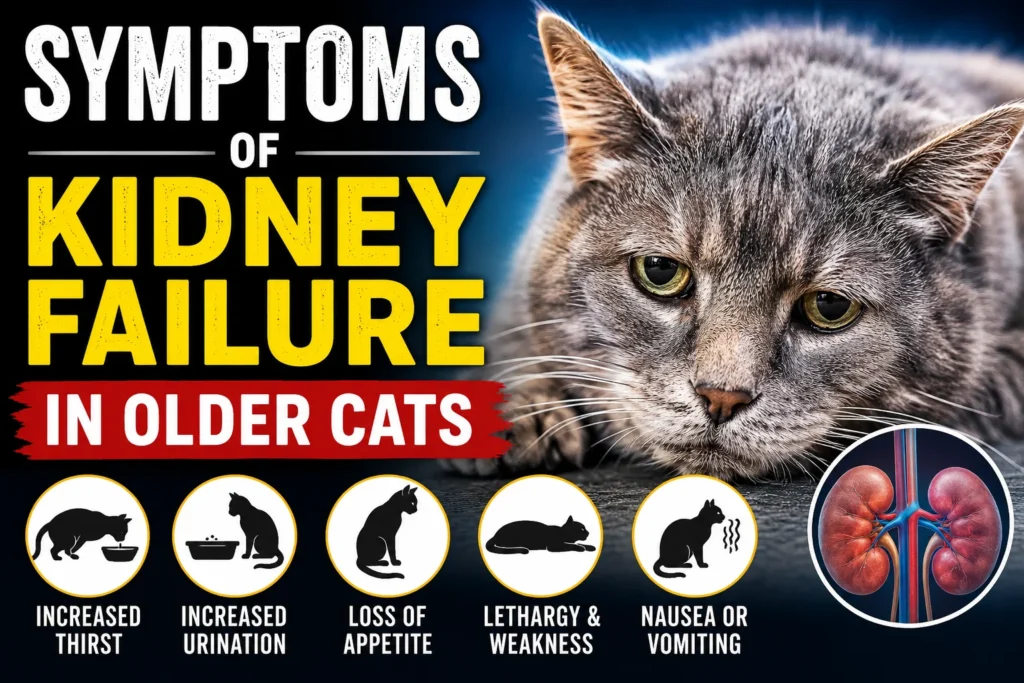
Symptoms of Kidney Failure In Older Cats.As a veterinarian, one of the most common and heartbreaking diagnoses I deliver is chronic kidney disease in senior felines. If your cat is over 7 years old their kidneys are working harder than they used to. By age 12, over 30% of cats will have some degree of kidney insufficiency.
The silent nature of this disease is its biggest danger..Kittens have an incredible ability to hide their discomfort. When you become aware that your kitty is feeling unwell, she may have lost up to three-quarters of her working kidney(s).
Identifying the signs of kidney failure in senior kitties as early as possible will allow you many years of good-quality, relatively pain-free life with your pet.
Kidney Failure in Cats
As a cat owner, the first thing that you must be clear about is the basic structure and function of your pet’s kidney to help you detect the symptoms of kidney failure. The kidneys help in removing waste products from the body and help maintain fluid balance in the body.
As the kidneys age, the filters in the microscope begin to become diseased and cannot regenerate anymore. The remaining nephrons work overtime. Eventually, they wear out. Toxins build up in the bloodstream leading to a cascade of systemic issues from stomach ulcers to severe dehydration.
10 Critical Symptoms Of Symptoms of Kidney Failure In Older Cats
Do not wait for your cat to “act sick.” These symptoms often start subtly and worsen over months.
1. Increased Thirst and Urination
This is the earliest and most specific indicator. You will notice the water bowl emptying rapidly. In the litter box, you will see massive, hard clumps of urine.The damaged kidneys cannot concentrate urine, so your cat flushes out vital fluids and must drink excessively to compensate.
2. Unkempt Fur Coat
Healthy cats are meticulous groomers. As kidney failure progresses, toxins build up in the bloodstream causing mouth ulcers and general malaise. Grooming becomes exhausting. You will notice a matted, greasy or “spiky” coat, especially along the back.
3. Weight Loss & Muscle Wasting
Despite a normal or even increased appetite in early stages, your cat will lose weight. Kidneys filter protein. When they fail, protein leaks out of the body. The cat’s body begins breaking down its own muscle mass for fuel. You will feel a bony spine and prominent shoulder blades when petting your cat.
4. Morning Sickness
Some owners believe their cat has a hairball when actually they may be experiencing uremic gastritis. Due to the accumulation of waste products, the lining of the stomach becomes irritated, resulting in the cat producing small amounts of clear fluid, white foam or yellow bile, typically in the mornings or shortly after eating.
5. Breath That Smells Like Ammonia or Urine
A late and unmistakable symptom of kidney failure is if your cat’s mouth has a chemical, metallic or urine-like odor when you lower your face to kiss his or her head this indicates that the cat is at risk because there are high amounts of toxins present in the body. This happens when excess urea is present in the saliva and decomposes into ammonia.
6. Sudden Pickiness with Food
A cat that used to inhale their dinner now sniffs it and walks away. Cats with kidney disease will often act as if they are starving and will frequently paw for food but will frequently turn away from it once it is offered. The toxins in their blood can cause them to feel nauseous and these toxins can also create ulcers in their mouths which will make it painful for them to eat.
7. Abnormal Liquid Intake
As a result of their intense thirst coupled with nausea, your cat may develop a case of pica and drink liquids other than water. This is exhibited by cats licking window condensation, drinking out of the toilet bowl or shower water.
8. Lethargy and Hiding
Senior cats naturally sleep more but kidney failure fatigue is different. You will find your cat hiding under the bed or in a closet away from family members. They may seem “depressed” or reluctant to jump onto their favorite couch. This is metabolic acidosis draining their energy.
9. Oral Ulcers and Pale Gums
Lift your cat’s lip. Healthy gums are pink and moist. In advanced kidney failure, gums appear pale or have red, raw ulcers along the gum line where the teeth meet the lip. You might also see brownish tartar buildup rapidly accelerating.
10. Constipation or Diarrhea
The kidneys control hydration. If they are not functioning properly, the body takes hydration from the colon in order to maintain blood pressure, causing hard and dried-out feces. On the other hand, uremic toxins may create inflammation that causes the formation of diarrhea.
Also Check: Why Is My Puppy Breathing Fast While Sleeping?
When Your Cat Need an Emergency Vet
If your senior cat has been demonstrating any of these signs longer than 24 hours then you have to make schedule the cat for a senior well care blood profile and urinalysis as soon as possible.
Seek emergency care if your cat:
- Has not eaten for 48 hours.
- Is collapsing or walking with a “head press”.
- Has stopped urinating entirely.
Treatment Options
Diagnosing kidney failure is scary, but it is manageable. Depending on the International Renal Interest Society stage, we use:
- Subcutaneous Fluids: You learn to give “fluids” under the skin at home 2-3x a week.
- Phosphate Binders: Added to food to lower toxic phosphorus levels.
- Renal Diet: Prescription low-protein, low-phosphorus food
- Blood Pressure Medication: Many kidney cats have high BP that damages eyes and brain.
Frequently Asked Questions (FAQs)
How long are cats with renal failure likely to live?
When renal failure is diagnosed early and managed appropriately, most cats will live for 2 to 4 years following diagnosis, although there are documented cases of cats living for even longer.If untreated, cats that are in the advanced stages of kidney failure will typically only survive weeks or months.
Will cats with kidney failure be in pain?
Indirectly yes. Cats suffering from kidney failure will experience pain from the toxins building up in their bodies causing nausea, stomach ulcers and headaches. However, with proper care, this can be made bearable. This article focuses on chronic age related failure
What should I feed a cat with kidney failure?
Veterinary prescription renal diets low in phosphorus and high-quality protein. Avoid high-phosphorus “grocery store” foods like tuna or deli meat.
What should I feed a cat with kidney failure?
Veterinary prescription renal diets low in phosphorus and high-quality protein. Avoid high-phosphorus “grocery store” foods like tuna or deli meat.
Why is my cat drinking lots of water but losing weight?
This is the classic kidney failure paradox. The kidneys cannot hold water, so they drink non-stop but they also cannot hold protein, so they waste away. This always requires a vet visit
Is it time to euthanize my cat with kidney failure?
Quality of life scale are useful. Euthanasia is humane when the cat has unmanageable pain, stops eating for days, loses the ability to walk or has seizures unresponsive to medication.
How does a vet diagnose kidney failure?
Through blood work, a urinalysis and blood pressure checks. Ultrasound may be used to look for small, scarred kidneys.
Are certain breeds more prone to kidney failure?
While age is the biggest factor, Persians, Abyssinians, Siamese and Maine Coons have a genetic predisposition to specific kidney diseases.
Can CBD oil treat kidney failure in cats?
No. While CBD may help with appetite or anxiety, it does not filter toxins. There is a risk of liver interaction with other medications. Never use CBD instead of veterinary-prescribed fluids and diet.
Are there supplements that help?
Yes. Avensis, Azodyl and Omega-3 fatty acids are helpful but only as adjuncts to standard vet care, not replacements.
Final Vet’s Advice
The signs of kidney failure in older cats usually begin with minor changes in their drinking habits and grooming. An annual blood test for cats above 7 years of age costs less than one emergency trip to a vet.