The Dachshund Owner’s Guide to Preventing Back Pain and IVDD 2026
If you live with a Dachshund, miniature or standard, you know that their distinctive and irresistible looks come with an equally distinctive responsibility. With their long backs and short legs, their structure can be a recipe for disaster, making them profoundly prone to back disease. Around one quarter of all Dachshunds will face problems with their back at some point in their lives.
The good news: Although there may be a genetic factor involved, you as the owner possess enormous influence over the health of your dog’s spine.
What is IVDD and Why Are Dachshunds So Prone to It?
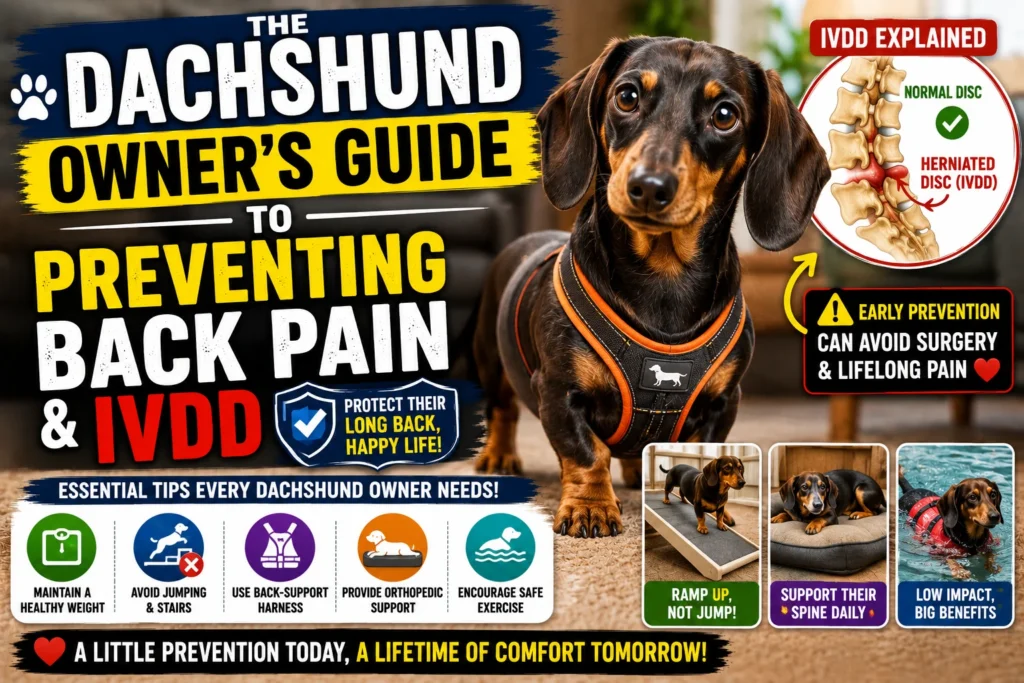
Intervertebral Disc Disease (IVDD) is a degenerative condition affecting the spinal discs that cushion and absorb impact between vertebrae. As they age, discs become more brittle, and they can expand or rupture, compressing the spinal cord. The condition in Dachshunds is primarily hereditary.
The breed has a genetic variant known as FGF4L2 (or CDDY, short for chondrodystrophy), which is responsible for their short legs but also causes premature hardening of their spinal discs . This condition is called chondrodystrophy. As Dr. Shane Morrison of Christchurch Veterinary Referrals explains, “the genetic defect that causes this intervertebral disc degeneration is a fixed trait in dachshunds because it is inherently tied in with other aspects of the breed” . By the time a Dachshund is over a year old, MRIs often show disc degeneration, though it doesn’t always lead to a painful rupture . This is where lifestyle management becomes crucial.
Prevention Strategy 1: Manage Weight to Manage Strain
This is the single most effective prevention strategy. Every extra gram of body fat places unnecessary strain on your Dachshund’s spine. Studies have confirmed that overweight dogs have significantly increased odds of developing IVDD .
There should be a visible waist from top-down and you should be able to feel the rib structure but not see it. If you are unsure as to how many calories your dog should be eating, you can ask the vet. The vet should tell you how many calories to feed your dog per day along with a suitable high-quality, small breed food.
Prevention Strategy 2: “No Jumping” is a Way of Life
A Dachshund’s back is not designed for the impact of jumping. Whether onto a sofa, bed, or out of a car, the act of jumping creates a powerful jolt and compressive force on their spine. Cumulatively, these activities put “undue pressure on the spine” .
Your new rule: Your Dachshund should have four paws on the floor at all times.
- Install Ramps: Provide ramps or pet stairs for access to all raised surfaces. Train your dog to use them from a young age.
- Limit Stairs: Repeated stair use also increases stress on the back . Where possible, carry your Dachshund up and down stairs.
- Transport Them Safely: Support both the body and the hindquarters when you lift it. Put one hand under the chest and the other under the tail. Never let the hindquarters hang unsupported or lift them by the front legs.
Also Check: The Ultimate Guide to Adding Goat Milk Kefir to Your Dog’s Kibble Bowl 2026
Prevention Strategy 3: Smart Exercise for a Strong Core
While high-impact activities are out, exercise remains vital. A strong core is a strong back. The muscles in your Dachshund’s abdomen and back act as a natural support system for their vulnerable spine.
Safe Exercise Options:
- Leashed Walks: Keep them on a harness rather than a collar to avoid neck strain and to distribute pressure across the chest . Short, frequent walks on flat surfaces are ideal.
- Swimming. “A great low or no impact exercise option that builds muscle while keeping pressure off your pets joints!” Canine Core (“Pilates”) Pilates or simple core strengthening moves can easily be done at home.
- An example could be having your dog’s front paws elevate on a low object such as a foam pad, and rewarding them if they lick a piece of dog training lick from a wall or fence.
- This promotes core engagement and will allow dogs to stretch out their back safely.”
Prevention Strategy 4: Know the Warning Signs
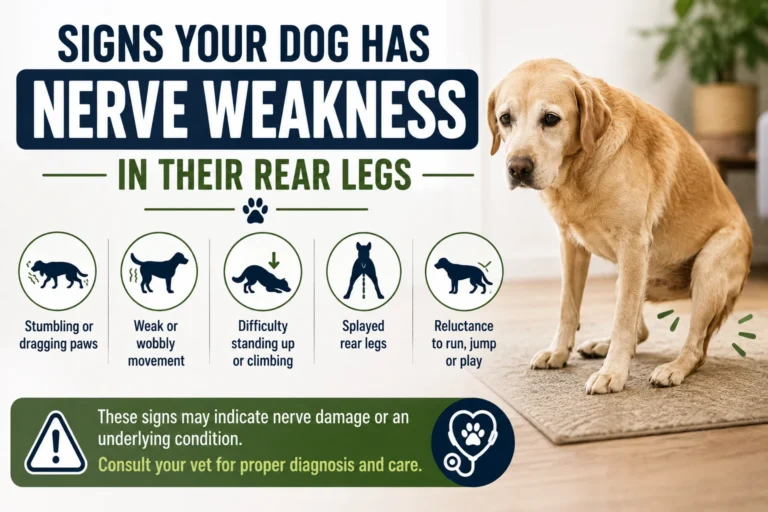
Your prognosis will be better the more quickly you see signs and take action. If you detect any of the following signals from your dog, seek immediate veterinary care. Pain-whining, yelping or shivering as when you touch him or pick him up Posture-a hunch or a tuck of the tail Failure to locomote or unwilling to play, leap, or utilize the stairs Mobility challenges, dragging of the rear limbs or wobbly, or ataxic or disorganized walking Incontinence-loss of voluntary bladder and/or fecal control – these require emergency medical treatment.
Prevention Strategy 5: The Role of Genetics and Breeding
Owners may be unable to influence their dog’s genetics, but the future health of a breed lies within the hands of its breeders. A discovery by Dr. Stacey Sullivan at Auburn University has indicated that a dog’s copy number for the FGF4L2 gene can reliably predict their risk.
Dachshunds with two copies of the “bad” gene (FGF4L2/FGF4L2) have the highest risk of symptomatic IVDD. In contrast, those with zero or one copy (N/N or N/FGF4L2) have a significantly lower risk .
Some Nordic countries have been collecting data on this, and Dr. Sullivan’s lab is now looking to develop phenotype tests to further screen dogs for breeding suitability . For prospective owners, this means you can ask a breeder about their dogs’ FGF4L2 status. “Reducing CDDY frequency clearly has the potential to lower IVDD incidence” . Responsible breeders are increasingly using this genetic information to select mates and produce healthier offspring .
Frequently Asked Questions (FAQs)
Can I really prevent IVDD in my Dachshund, or is it all genetics?
While genetics certainly makes Dachshunds predisposed to disc degeneration, a disc rupture isn’t something that is genetically mandated. When combined with careful management of their weight, avoiding jumps and ensuring adequate exercise, we have the ability to have a major impact to keep that spine healthy.
Are ramps better than stairs for Dachshunds?
There isn’t any question that ramps are preferable to stairs for dachshunds. While stairs decrease the stress that a dog undergoes in relation to jumping, they still put the dog into a bent position that compresses their spine with every step. Using a gently angled ramp makes it possible to simply walk down while keeping the spine considerably straighter.
What is the best exercise to strengthen a Dachshund’s back?
Leashed walking over flat, evenly groomed terrain will build the musculature of the spine’s supports without the impact that would be otherwise applied by jumping or running freely in a big space. Swimming offers an zero-impact strengthening opportunity. A good \”Pilates\” of sort, that encourages flexibility, can be developed by having the Dachshund pose in front legs over a block, stretching their spines, out and back.
How can I tell if my Dachshund is overweight?
You should be able to easily feel the ribs over your dog’s sides with a very thin covering of fat. When you look from above your dog will have a noticeable waist behind the ribs. If their sides are flat or bulging, then they are over weight and will need dieting.
My Dachshund jumps of the sofa and seems ok, why is it a problem?
Even though there may be no visible damage, continually jumping off the sofa causes progressive trauma to the spine. Every time a Dachshund lands after jumping of the sofa, the vertebrae are forced together compressing the discs between them, degenerating/rupturing them over time. It is a silent process that could lead to an immediate crisis.
At what age should I start preventing IVDD?
From day one. IVDD is a degenerative disease, and the changes in the discs start early in life. Puppies should be taught to use ramps and should not be allowed to jump as part of their normal routine . It’s much easier to train a puppy than to retrain an adult dog.
Can diet help with IVDD prevention?
The primary way diet helps is through weight management. Keeping your Dachshund at a lean, healthy weight is the number one thing you can do to reduce spinal stress. Some vets also recommend high-quality diets with omega-3 fatty acids for their anti-inflammatory properties, but weight control is key.
How does a harness stop your dog from suffering with their back?
A harness spreads the load over the chest and shoulders rather than putting the strain on your dogs very fragile spinal cord in their neck. A harness also stops the “tracheal tug” which a collar can create which makes your dog brace and strain your dog’s back.
What is the CDDY gene, and should I ask my breeder about it?
Yes. CDDY (or FGF4L2) is the gene responsible for short legs and disc degeneration. Dachshunds with fewer copies of this gene have a significantly lower risk of IVDD . A responsible breeder should be aware of this and may be able to provide genetic testing results for the parents of their puppies.
If my Dachshund has an IVDD episode, can they recover without surgery?
Yes, many dogs recover with strict conservative management, which involves anti-inflammatory medication and several weeks of strict crate rest to allow the injured disc to heal . Surgery is typically reserved for more severe cases, particularly where the dog loses the ability to walk or control their bladder.
Conclusion
Protecting your Dachshund from pain and the dreaded IVDD starts with constructing a lifestyle to accommodate their anatomy. The key elements-managing weight, substituting the ramp for the ramp jump, consistent, non-traumatic core conditioning and awareness of symptoms-will make a huge difference in reducing your Dachshund’s risk of excruciating spinal injury and help give your best wiener dog friend a full and healthy life!