How To Clear A Blocked Nose In A Newborn Kitten?
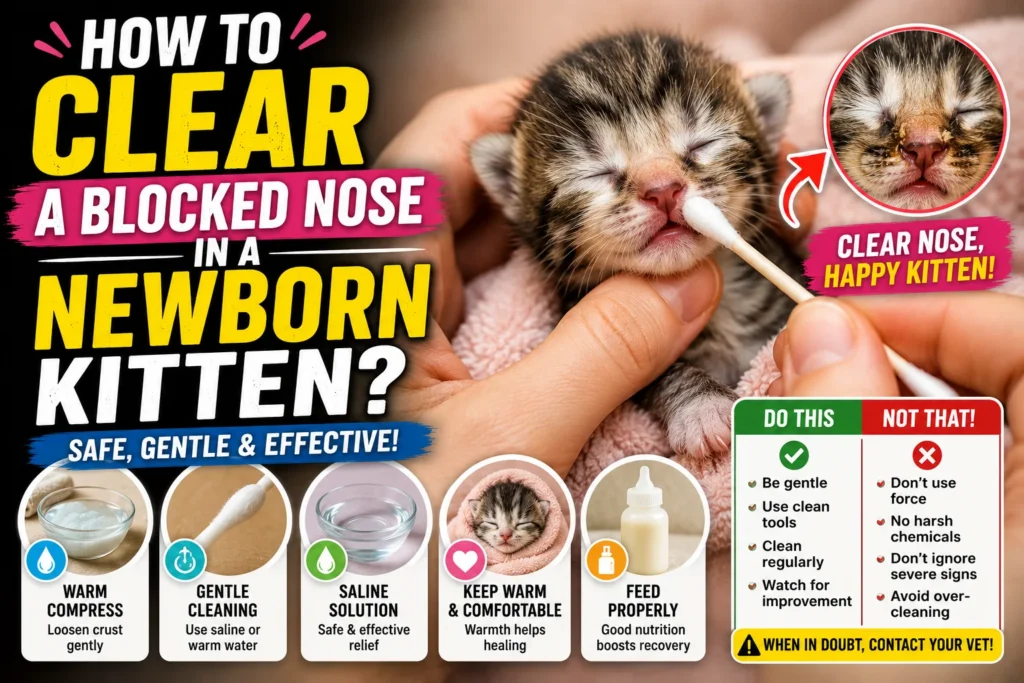
How To Clear A Blocked Nose In A Newborn Kitten? One of the most heartbreaking sounds an experienced foster parent, and particularly a new owner, can endure is listening to a new baby kitten struggling for air with an blocked-up nose. Kittens are obligate nasal breathers, so this isn’t just painful without a clear passageway to smell mom’s milk, they can become dehydrated, lose vital body heat, and decline quickly.
Below, as veterinarians explain, are the safest ways that you can help clear a newborn kittens congested nose safely and appropriately at home and when you need to see a vet immediately.
How To Clear A Blocked Nose In A Newborn Kitten?
Understanding the Danger: Why a Blocked Nose is an Emergency
A Blocked Nose In Kittens (Solutions): How Important is A Blocked Nose For A Kitten? There’s a reason we always emphasize that “if it looks like it’s going to kill your kitten and make it unable to eat” (even in its baby’s first weeks), then “it is.” Kittens that are younger than 4 weeks have undeveloped immune systems and catch illnesses very easily.
Their nasal passages also develop late, and are still very small; the tiniest drip of milk, mucus or fluid will seal it shut, preventing them from being able to locate and latch on to mother-on-demand.
All this means is, the cat has to eat every 2-4 hours, or it is literally dying of hunger within a few short hours!
Step-by-Step Guide: Safely Clearing the Blockage
You can start these therapies if your kitten has a stuffy nose, but is able to breathe easily ( not gasping ). You must always do all these in a warm room free of drafts.
1. The Humidifier and Steam Tent (The First Line of Defense)
One of the kindest, easiest things you can do to help clear thickened mucus and soothe sore throats for your kitten is:
The Steam Shower (for the Kitten): Fill your bathroom with warm steam by running a hot shower for a few minutes. Bring kitten in (not under water!) to this steamy bathroom (hold them secure).and wait, 5-15 minutes.
Important: Wrap them up in a warm towel while in the steam room otherwise kitten may get chilled. Do not get the kitten wet! It is OK to do this two to three times per day.
The Steam Tent (for the Kitten): Place kitten’s carrier right next to an cool mist humi difer or humidifier. Put a lightweight towel or sheet over both items to create a steam-filled “tent” around the carrier. This is a fantastic ‘do it for kitten,’ very passively.
2. Gentle Cleaning of the Nasal Passages
If the steam didn’t loosen everything enough to get the airway open, then you’ll have to assist with physical removal. Remove the Crusties Dab a cotton ball lightly with warm water ( not hot ! ) and use it very carefully to loosen any crusted, dried gook that is blocking the kitten’s airways.
Use the saline drops: This is a godsend and the MOST effective home treatment of the very stuffy kitten!
Buy a sterile saline drops specifically for kids: NOT human meds! “Little Noses” type saline spray works wonderfully.
3. Tilt the kitten’s head slightly back.
Place a single, small drop into one of his nostrils. Permit it to sit there for 15 – 30 seconds to melt solidified secretions.
Roll the infant toward you so that any runoff can travel down the forehead for removal by a towel or tissue.
4. Repeat the process on the other nostril.
The Baby Bulb Syringe: If your kitten’s nose is severely clogged after the saline drops, you may gently be able to suction some of the loosened discharge out with a small baby bulb syringe. Squeeze the bulb portion first, then insert the syringe tip gently just into the nostril opening and release the bulb slowly; the pressure difference will cause the liquid and loose material to be drawn out into the syringe.
Also Check: Can Guinea Pigs Eat Green Bell Pepper Seeds?
When to See a Vet Immediately
Although taking steps can help a sick kitty out at home, these do not replace the vet! A stuffy nose usually points towards a more serious form of Upper Respiratory Infection (URI) by a virus (such as herpesvirus or calici) or bacteria ( Bordetella, Chlamydia). You MUST seek veterinary attention for any kitten with any of these indications:
- Yellow/green or thick and murky discharge that means a bacterial infection! Antibiotics may be needed.
- Cat’s appears open mouth or working to take a breath or have grey or pale blue gums.
- Has not nursed from mom/momma/bottle for more than four or six hours.
- Weak or unresponsive, nor crying and active.
Understanding the Cause: What is a Kitten Cold?
Symptoms that would be considered “cold” in an adult cat often translate to a URI in kittens. URIs are extremely contagious and quite prevalent in shelters. If the kittens’ immune systems are lowered by viral illnesses that would make kittens susceptible to the secondary bacterial infections that cause thick, colored discharge (hence, why the vet will prescribe amoxicillin clavulanate or doxycycline).
Preventing Aspiration During Feeding
A ‘blocked nose’ can actually be milk coming from the nose during feeding, or aspirating to say – having milk go down the wrong pipe. Never force feed the kitten; the kitten’s back should be to you at all times with the belly facing away from you while the kitten nurses and is head downwards. Never feed an kitten on it’s back as would with a human. Don’t over fill your syringe. If your kitten starts to foam at the nose, stop feed and clean it up and leave and try again later on.
Pro-Tip: Creating a “Nebulizer” Chamber
In veterinary hospitals, seriously URI-positivekittiesare sent to a room with nebulizer chambers where the medication goes in via steam form in a mist nebulizer. Though I must stress: Do not administer ANY medication on your own WITHOUT first checking with your vet–it is totally safe in concept, though. Take a carrier and place it open with a small humidifier blowing into it for a few minutes while you encourage your kitten to take this time to suck out a meal or two (sucklings often start feeling more like they need food then).
Frequently Asked Questions (FAQs)
I know they give this to my kids if they have the flu, but would it be safe to put the human decongestant nose drops in my kitten’s nose to clear it out?
Never. Never use decongestant drops, any human made products will kill your kitten. You want infant saline eye/nasal drops (that are medicated and say “infant” on them so they contain no other medications like decongestants), they work wonderful.
My kitten sounds congested, but discharge is clear. Do I still need a vet for my kitten with a stuffy nose?
The clear discharge can be a sign of an ongoing illness. It’s generally better to have the vet examine the baby to see what might be going on to make sure it doesn’t progress to the next stage.
My kitten can breathe from its mouth, so why the need to clear the stuffy nose?
Unfortunately, newborn kittens can not breathe through their mouths properly and their ability to do this is limited. Kittens can be born with this as well which creates an emergency, it’s called at birth airway obstraction.
I have a kitten whose nose is stuffed up, what should I do?
Take them inside of an opened steam closet or a humidifier closet for about ten minutes, and then take them out and feed them. The smell of their mother’s milk when warming their food often works.
Should your baby kittens sneeze or sniffle if they do nothing wrong?
Sometimes kittens may get a sniffle if they inhaled the amniotic fluid after delivery; in this case, just leave them to go. If; however, your new kitten continues to sneeze or sniffle ( after the initial 24 hrs).
How often can I give them the drops in their nose to loosen this blockage, and the eye infection to clear their nose?
Every few times each day, or as necessary to help them open their noses and begin to eat! Make sure and feed every 2 to 3 hours so your kitty will learn to feel better each time! In the worst cases, an eyedropper may help them.
I’m putting saline in his nose but am not getting him to lick some of this so I put it in with my fingertip but got it all over him and it is still there, how to do this?
To do this without making such an inelegant mess, use one sterile cotton ball that has already been dampened. Slowly wipe and press from the inside corner of the eye and to outside then back toward the nostril and away.
Will my kitten’s cold clear up after some time?
Viral colds usually clear on their own, and if we supplement supportively with sterile water and provide great feeding, they may. In such a fragile and undeveloped system though, your kitten cannot wait out a viral cold, and a viral cold very easily leads to secondary bacterial infection.
Could I perhaps just buy my kitten some human antibiotics just in case to make sure its cold doesn’t get any worse?
Antibiotics prescribed for humans is very seldom the correct one for your kitten and most often will actually do harm and actually make it better because these are prescription medications! You will need to visit with the Vet first.
My kitten has both a stuffy nose and it also has some of discharge in its eye. What does this indicate?
This type of stuffed nose and eye discharge in an older kitten points to the same thing: an Upper Respiratory Infection, and this condition in kitties is usually caused by the common viral infection such as Herpes virus, Calicivirus and Chlamydiosis.