Signs Your Dog Has Fleas and How to Treat It
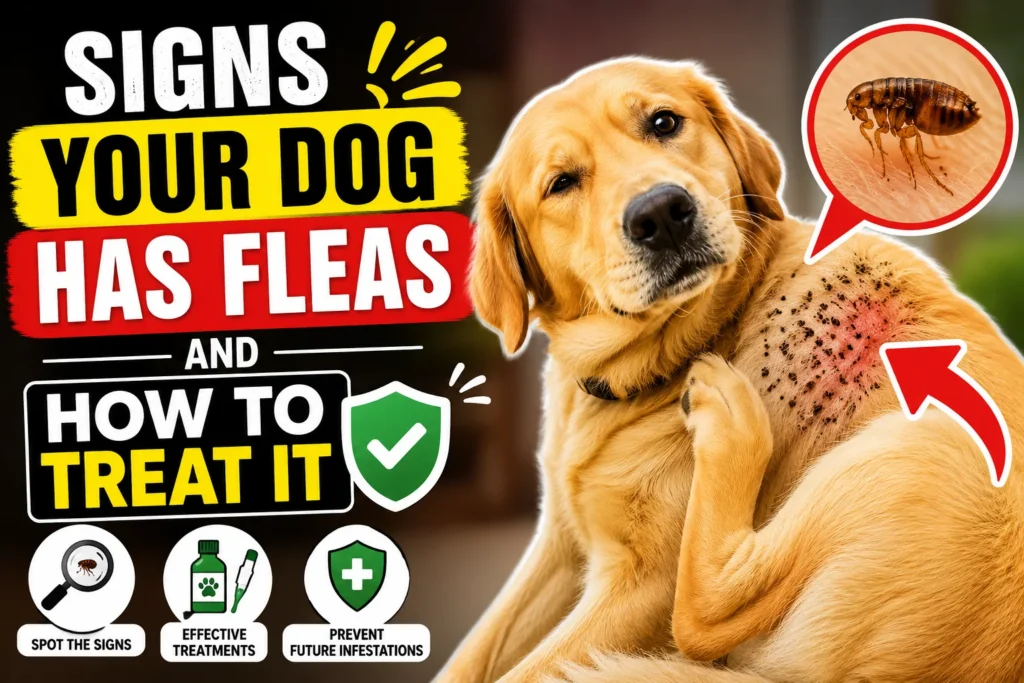
Signs Your Dog Has Fleas and How to Treat It, Fleas are more than just a nuisance. They are tiny, jumping parasites that can cause severe allergies, anemia, and even transmit tapeworms. You can win this battle but only if you know exactly what to look for and how to treat it effectively.
In this guide, we will walk through the silent signs of fleas (the ones you might miss) and a vet-approved, step-by-step treatment protocol that works.
7 Signs Your Dog Has Fleas and How to Treat It
Most owners wait until the scratching starts. But fleas are masters of disguise. Here are the clinical signs you need to spot early.
1. “Flea Dirt” – The 1 Confirmation
This is the gold standard diagnostic sign. Flea dirt is not soil; it is the feces of adult fleas, composed of digested blood.
- How to check: Part your dog’s hair over the lower back (near the tail base). Look for tiny black specks that look like ground black pepper.
- The wet tissue test: Place those black specks on a wet white paper towel. If they dissolve into reddish-brown rings (blood), it’s flea dirt. You have an infestation.
2. Excessive Licking and Biting (Not Just Scratching)
Dogs don’t always scratch. Many will lick their groin, inner thighs, or the base of the tail obsessively. If your dog is “nibbling” at their own skin like corn on the cob, that is a flea reaction.
3. Hot Spots (Acute Moist Dermatitis)
Flea saliva is an allergen. In sensitive dogs, one flea bite can trigger a violent reaction. You will see a red, wet, hairless, oozing patch of skin usually on the rump or tail head. These appear literally overnight.
4. Hair Loss and “Rat Tail”
Chronic flea infestation leads to a classic pattern: hair loss along the lower back, around the tail base, and the back of the rear legs. Look for a thinning hair coat that makes the tail look like a rat’s tail.
5. Pale Gums (Anemia)
This is an emergency sign, especially in puppies or small breeds. Fleas consume blood. If the infestation is heavy, your dog may become anemic. Lift their lip: healthy gums are bubblegum pink. Pale, white, or grey gums mean a vet visit now.
6. Visible Fleas (The “Pepper Jump”)
Adult fleas are fast. Look on the belly, groin, and armpits where the hair is thinner. You might see small, dark brown insects the size of a sesame seed scurrying or jumping away.
7. Tapeworm Segments in Stool
If your dog swallows an infected flea while grooming, they get tapeworms. Check your dog’s poop or around their anus for small, white, moving rice-like segments. This confirms fleas were present even if you never saw one.
Also Check: Diabetic Dog Treats
How to Treat Dog Fleas
Warning: Do not just give a bath and hope they go away. You cannot wash away a flea infestation. You need a systemic approach.
Step 1: Immediate Relief – The Medicated Bath
- What to use: A vet-recommended flea shampoo containing pyrethrins (safe for dogs, toxic to cats) or chlorhexidine for secondary infections.
- The technique: Lather from the neck down (to stop fleas from running to the face). Leave the lather on for 5–10 minutes (check label directions) to kill fleas mechanically.
- Crucial tip: Do not use human shampoos or dish soap as a primary flea treatment. They strip natural oils and do not prevent reinfestation.
Step 2: The Kill-All-Adults – Prescription-Strength Spot-On or Oral Tablets
Baths kill only live fleas on the dog now. You need a product that continues killing for a month.
- Best options (ask your vet):
- Oral tablets: Afoxolaner (NexGard) or Fluralaner (Bravecto) Kills fleas within 2–4 hours.
- Topical liquids: Selamectin (Revolution) or Fipronil (Frontline Plus).
- Why cheap brands fail: Over-the-counter generic sprays and collars (like those with dichlorvos) are often toxic and ineffective. Invest in veterinary-grade products.
Step 3: Environmental War – Breaking the Life Cycle
For every flea on your dog, there are 100 eggs and larvae in your home. You must treat the environment.
- Vacuum like a maniac: Vacuum carpets, sofas, cracks in flooring, and under furniture daily for two weeks. Immediately throw the vacuum bag outside.
- Wash all bedding: Wash your dog’s bed, your bedding, and throw blankets in hot water (above 140°F/60°C) and dry on high heat.
- Use an Insect Growth Regulator (IGR): Sprays containing methoprene or pyriproxyfen (e.g., Precor, Siphotrol) stop eggs from hatching. These are safe for homes when used as directed.
Step 4: Prevent Recurrence – Year-Round Prevention
Fleas do not die in winter (they thrive in your heated home). Keep your dog on year-round flea prevention. Once the infestation is gone, switch to a monthly preventive chewable tablet or topical.
When to See the Vet Immediately
Do not attempt home treatment alone if you see any of these:
- Pale gums or weakness (signs of severe anemia).
- Seizures or tremors (possible toxicity from over-the-counter flea products or severe infestation).
- Large, raw, infected hot spots (need antibiotics and steroids).
Final Vet’s Note
You are not a bad owner if your dog gets fleas. Fleas are environmental predators; they jump on from the yard, the park, or even your pant leg. You are a good owner if you act swiftly, treat correctly, and stick to prevention.
Remember: Treat the dog, treat the home, then prevent. Do that, and your dog will be itch-free in three weeks.
Frequently Asked Questions (FAQs)
Can humans get fleas from dogs?
Yes and no. Dog fleas (Ctenocephalides canis) prefer dogs, but they will bite humans (usually ankles and legs). However, fleas cannot live and reproduce on human blood. They will jump off quickly.
Why does my dog have fleas but no scratching?
Some dogs are non-reactive (tolerant) to flea saliva. They may carry hundreds of fleas without itching. Look for flea dirt or hair loss instead of scratching.
Does apple cider vinegar kill fleas on dogs?
No. While diluted ACV might repel fleas slightly due to smell, it does not kill adult fleas, eggs, or larvae. Do not rely on it for treatment.
How long does it take to get rid of fleas on a dog?
It takes a minimum of 3 to 4 months to fully break the flea life cycle. You may stop seeing adult fleas in 2 weeks, but eggs in the carpet will hatch for months.
Can I use a flea collar and a spot-on treatment together?
No. Never double up on chemical preventatives. Using a collar (like Seresto) plus a topical can cause toxicity (vomiting, tremors, seizures). Pick one vet-approved method.
Why does my dog still have fleas after treatment?
Most likely, you missed the environment. New fleas are hatching from your carpet or yard and jumping onto your treated dog. Vacuum aggressively and use an IGR spray.
Is dish soap safe for killing fleas?
Dawn dish soap kills adult fleas by breaking surface tension, but it does not prevent reinfestation. Use it only for emergency baths (e.g., a flea-covered puppy) and follow with vet-approved prevention.
What is the fastest way to kill fleas on a dog?
Prescription oral flea tablets (NexGard, Bravecto, Capstar) start killing fleas within 30 minutes to 4 hours. Capstar kills adult fleas in 6 hours but lasts only 24 hours.
Can fleas live in human hair?
Rarely. Human hair is not dense enough to hide fleas effectively. You might get a stray bite, but fleas will not infest your scalp like lice.
How do I treat fleas on a pregnant or nursing dog?
Never use over-the-counter products on pregnant dogs. Ask your vet for lufenuron (an IGR that is safe for reproduction) or specific topical selamectin. Bathing with mild baby shampoo is safest for mechanical removal.