
How to Brush a Cats Teeth Without Getting Bitten?
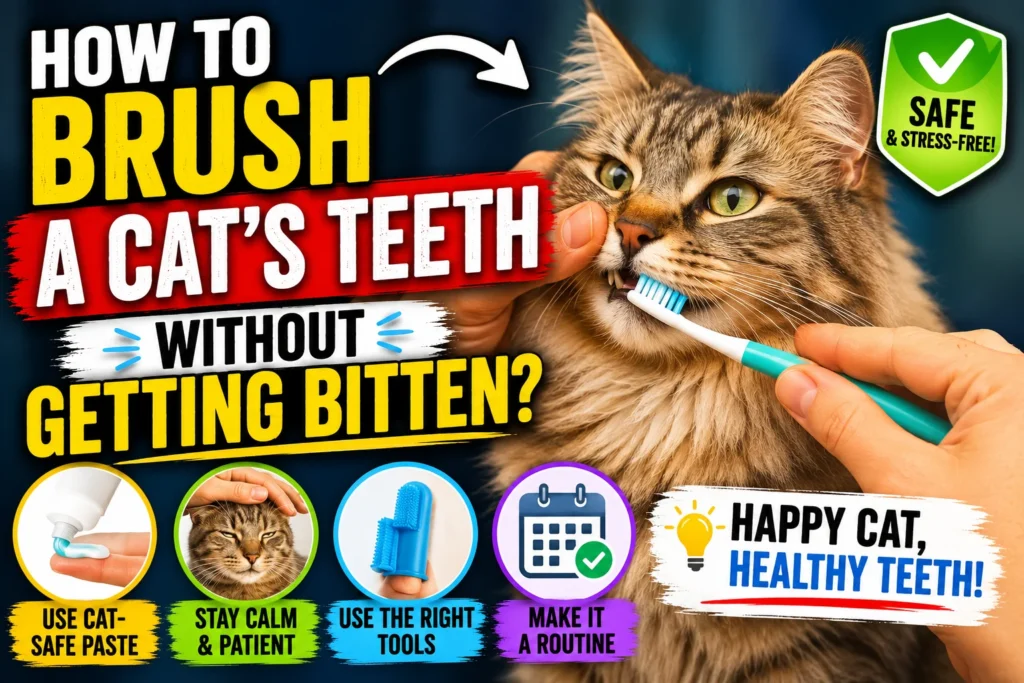
How to Brush a Cats Teeth Without Getting Bitten? Let’s be honest trying to brush a cat’s teeth often feels like negotiating with a tiny, furry tornado armed with daggers. One wrong move, and your hand becomes the chew toy. But here’s the truth veterinarians want you to know periodontal disease affects over 70% of cats by age three, and daily brushing is the gold standard for prevention.
So, how do you clean those fangs without losing a finger? The answer isn’t force or speed. It’s trust, timing, and tactical restraint (not the physical kind). Below, I’ll show you a veterinarian-approved, bite-free brushing protocol that works even for aggressive or anxious cats.
Why Brush a Cat’s Teeth Without Getting Bitten?
Before we fix the biting, respect the cat’s logic. A cat bites the toothbrush or your hand for four primary reasons:
- Fear of restraint Being pinned down triggers a fight-or-flight response.
- Gum pain Existing gingivitis makes brushing hurt, so they bite to stop the pain.
- Novel object aversion A buzzing, bristled stick in their mouth is unnatural.
- Sensory overload Toothpaste taste, bristle texture, and your grip stress them.
Vet’s note: Never punish a bite. It destroys trust. Instead, modify your technique.
7 Steps To How to Brush a Cats Teeth Without Getting Bitten?
Step 1: Choose the Right Tools To Brush a Cat’s Teeth Without Getting Bitten
Forget human toothbrushes. You need:
- A finger brush (silicone) Shaped like a thimble, it gives you tactile control and reduces gagging.
- Or a soft, angled cat toothbrush Smaller head, longer handle for back teeth.
- Enzymatic cat toothpaste Never human toothpaste (fluoride is toxic to cats). Poultry or malt flavors work best.
- Churu or tuna juice For positive reinforcement.
Pro tip: Avoid dual-ended brushes for beginners. The second head pokes the cheek and triggers a bite reflex.
Step 2: Desensitize Without the Brush (Week 1 – No Brushing)
Do not touch the brush yet. For 5–7 days:
- Let your cat lick toothpaste off your finger.
- Gently rub your (clean) finger along the outside of their cheek and upper lip.
- Stop before they show irritation. Aim for 10–15 seconds, twice daily.
- Reward with a high-value treat immediately.
This builds the association: Finger near mouth = tasty reward, not danger.
Step 3: Introduce the Finger Brush as a “Treat Toy” (Week 2)
- Put a dab of toothpaste on the silicone finger brush.
- Let your cat lick it voluntarily. Do not insert it.
- Once they lick without fear, briefly touch one canine tooth (the long fang) for 1 second. Stop. Treat.
Repeat 5–6 times over several days. If they turn their head or swat, you moved too fast. Go back to Step 2.
Step 4: Master the “Restraint-Free” Hold (Critical for Bite Prevention)
Do not scruff, pin, or wrap your cat in a towel (that escalates fear for many cats). Instead, use the “lap lean” :
- Sit on the floor. Let your cat stand or sit beside you.
- Place one hand lightly on the top of their head, thumb and fingers resting on the cheekbones.
- Use your other hand (with the brush) to gently lift the lip corner.
Why this works: Your cat remains free to leave. Lack of restraint removes the bite trigger.
Vet’s warning: If your cat’s pupils dilate, ears flatten, or tail flicks stop. Try again later when calmer.
Step 5: Brush Only the Outside Surfaces (The 10-Second Rule)
Here’s a secret most guides miss: You do not need to brush the inside of a cat’s teeth. Their rough tongue cleans the inner surfaces naturally. Focus solely on the outer (buccal) surfaces of the canines, premolars, and molars.
- Lift the lip corner on one side.
- Brush in small circles for 5 seconds.
- Release. Treat.
- Repeat on the other side.
Never brush for more than 10–15 seconds total in the first month. Quality over duration.
Step 6: Recognize and Respect the “Yellow Light” Warnings
Cats give clear pre-bite signals. Learn to stop before they escalate:
| Signal | Meaning | Your action |
|---|---|---|
| Slow tail lashing | Annoyance rising | Stop and treat |
| Ears rotating sideways | Listening for threat | Pause, don’t advance |
| Lip licking (without food) | Stress | End session |
| Skin rippling over back | Hyperarousal | Stop immediately |
Green light signs: Purring, slow blinking, leaning into your hand, licking toothpaste.
Step 7: Create a Predictable Routine (Same Time, Same Spot)
Cats are creatures of habit. Perform brushing:
- At the same time daily (e.g., after their evening meal).
- In the same quiet location (no dogs, no loud TV).
- Always followed by a special treat or play session.
Within 2–3 weeks, many cats will begin presenting their head for brushing because they anticipate the reward.
Also Check: How Often Should You Actually Bathe a Puppy?
What If You Still Get Bitten? (Emergency Protocols)
If your cat bites through skin:
- Do not pull away That tears tissue. Gently push into the bite to release the jaw.
- Wash the wound immediately with soap and water for 5 minutes.
- Apply antiseptic and monitor for redness or swelling.
- See a doctor if puncture is deep or becomes infected (cat bites carry Pasteurella bacteria).
Then, re-evaluate: Is your cat in dental pain? A veterinary oral exam under sedation may be needed. Tooth resorption or fractured teeth make brushing impossible without pain control.
Alternative “No-Brush” Options (When Brushing Isn’t Possible)
Some cats will never tolerate brushing and that’s okay. Use these vet-approved alternatives instead:
- Dental wipes (chlorhexidine-based) Wipe outer teeth surfaces daily.
- Oral rinses (poultry-flavored) Spray or apply with a sponge.
- VOHC-approved dental treats (e.g., Greenies) Reduce plaque by 15–20%.
- Raw chicken necks or gizzards (supervised only) Natural abrasion.
But remember: wiping or rinsing is better than nothing, but mechanical brushing is 3–4x more effective at preventing periodontal disease.
Final Vet’s Takeaway
You can brush your cat’s teeth without getting bitten but only if you throw out the old “hold them down and brush fast” myth. Instead, think like a cat: autonomy, predictability, and high-value rewards.
Start with just desensitization for one week. Use a silicone finger brush. Never restrain. And always stop at the first sign of irritation. Within a month, most cats tolerate brushing. Some even enjoy it.
And if you’re still losing blood after 8 weeks of consistent training? Book a dental checkup. Hidden pain is often the real bite culprit.
Frequently Asked Questions (FAQs)
How often should I brush my cat’s teeth?
Daily is ideal. Every other day is acceptable. Once weekly is barely better than none.
What age should I start brushing my cat’s teeth?
As early as 8–12 weeks old. Adult cats can learn, but it takes longer (6–8 weeks of desensitization).
Can I use baking soda or coconut oil?
No. Baking soda is alkaline and disrupts oral pH. Coconut oil doesn’t remove plaque and can cause diarrhea if swallowed.
My cat bites the toothbrush aggressively. What do I do?
Switch to a finger brush or a soft cloth wrapped around your finger. The hard plastic handle often triggers the bite reflex.
Is it too late if my cat already has red gums?
Brush very gently. Inflamed gums bleed easily. See your vet for a dental cleaning first, then start brushing after healing (7–10 days post-cleaning).
Can I brush my cat’s teeth while they sleep?
No. You’ll startle them, leading to a defensive bite. Always brush when they’re calm but awake.
What’s the best toothpaste flavor for picky cats?
Malt (like Virbac C.E.T.) or poultry. Avoid mint or wintergreen cats dislike strong menthol.
How do I brush a cat’s back molars without getting bitten?
Use a long-handled cat toothbrush. Lift the lip corner at the cheek, insert the brush at a 45-degree angle from outside the mouth. Never reach your finger inside.
My cat bites my hand, not the brush. Why?
You’re likely restraining their head too firmly. Try the “lap lean” method without cupping their jaw.
Are water additives enough instead of brushing?
They help reduce bad breath and bacteria but do not physically remove plaque. Use as an adjunct, not a replacement.