Why Does My Dog Get Red Itchy Bumps on His Belly After Walking on Grass 2026?
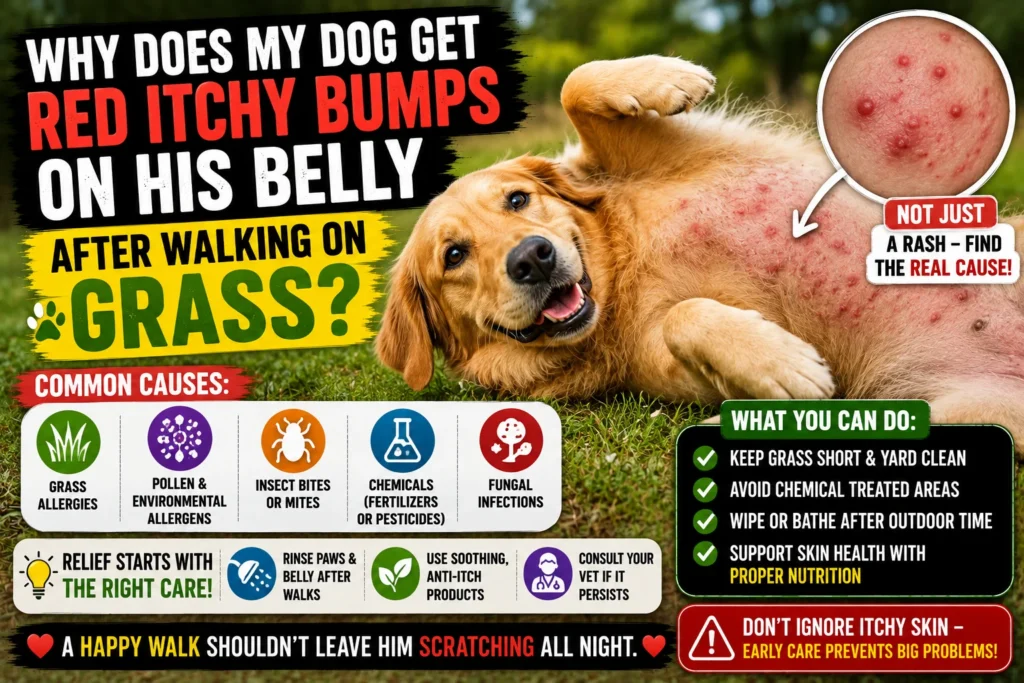
His As a veterinarian, one of the most frequently asked questions I am given, particularly when it gets warmer, involves the following sentiment: “Why does my dog get red itchy bumps on his belly after walking on grass?”
Please know that you are far from alone in experiencing this frustration. It is difficult to see your joyful, romping canine suddenly evolve into a listless, scratching animal. The excellent news is that this is an incredibly common problem with quite specific causes and clear solutions. In almost all cases, this type of dermatitis is induced by exposure to grass.
The Root of the Reaction Allergic Contact Dermatitis
These red bumps usually raised and highly irritating that appear on your pooch after they have been running around in the yard are typically an allergic reaction. Unlike humans who get stuffed up with their allergy issues, our canines react to these triggers on their skin and suffer what our experts call allergic contact dermatitis.
Here is what happens: your dog’s immune system mistakes a harmless substance in the grass for a threat. This triggers the release of histamines and other inflammatory chemicals in the skin . The result is visible inflammation nthe red bumps and intense itchiness you see .
Two Main Types of Reactions
- Contact Dermatitis: This is a direct reaction to physically touching the grass. The allergens are on the leaves themselves. The belly and groin are prime targets because they have thinner skin and less hair, making them more vulnerable to contact with the grass when your dog lies down or walks through it .
- Atopic Dermatitis: This is an inhalant allergy to environmental proteins like grass pollen . The pollen lands on the skin, is inhaled, or gets trapped in the fur, triggering an immune response throughout the body . This is why you might see signs on the paws and face as well as the belly .
A fascinating veterinary study described a condition called “protein contact dermatitis,” where dogs developed red, itchy bumps and rashes confined to the areas that touched grass, like the ventral chest, inner thighs, and distal limbs.
Also Check: Why Fermented Vegetables Are a Game Changer for Your Dog’s Gut Health 2026?
Why the Belly is a Hotspot
- Thin Skin: The skin on a dog’s belly is thinner and more sensitive than the skin on the back.
- Close Contact: When dogs roll, lie down, or even just walk through tall grass, their bellies and groin make prolonged, direct contact with the plant material and pollen .
- Lack of Hair: The lack of a thick fur coat on the belly allows the irritants to reach the skin surface more easily .
Immediate Steps to Soothe Your Dog
If your dog is suffering from itchy red bumps, you can take these steps to provide immediate, safe relief at home :
1. Break the Contact
First, get them removed. Wipe or rinse your dog’s feet and belly down after every walk with a cloth or wipe intended for pet use and damp it before wiping him down again. That gesture can go a huge distance in altering the reaction.
2. Cool Bath
Give your dog a nice cool-not cold-bath using an oatmeal shampoo, one recommended by your vet. Oatmeal is an anti-inflammatory that can soothe red, angry skin. Leave the shampoo in the coat for 5 to 10 minutes so the beneficial ingredients have a chance to be absorbed.
3. Cool Compress
If there are localized, hot and itchy areas, place a cool, wet compress on the belly for 5-10 minutes. This provides brief numbing relief and can decrease swelling.
4. Prevent Scratching
You may also need to give him an Elizabethan collar (cone) or put him in a soft dog recovery suit to stop him from licking/chewing the wounds that can potentially develop a secondary infection.
Veterinary Treatment and Management
If home care isn’t enough, or if the reaction is severe, a veterinary visit is essential. Your vet can provide more potent relief:
- Medications: Treatments like Apoquel® (oclacitinib) or Cytopoint® (lokivetmab) are highly effective at stopping the itch fast by targeting specific pathways in the immune system . Corticosteroids may also be used for short-term, severe flare-ups.
- Medicated Shampoos: Your vet may prescribe a chlorhexidine-based shampoo if your dog has a secondary bacterial or yeast infection from all the scratching . These shampoos treat the infection and soothe the skin.
- Immunotherapy: For dogs with severe, chronic atopic dermatitis, allergy testing can lead to a customized immunotherapy vaccine to desensitize the dog to specific allergens over time .
Long Term Prevention
- Lawn Maintenance: Keep your lawn mowed short. The tips of grass, especially when wet, can be more irritating .
- Avoid Wet Grass: Consider drying your dog thoroughly after walks in wet grass. Studies note that wet grass can be a significant irritant .
- Create an “Allergen-Free” Zone: If possible, create a small area of your yard with gravel or concrete for potty breaks to minimize grass contact during peak allergy seasons .
Frequently Asked Questions (FAQs)
What are the red bumps on my dog’s belly after being outside?
The red bumps are likely urticaria (hives) or papules caused by an allergic reaction to grass or pollen. This is a common sign of contact dermatitis.
Can dogs be allergic to grass?
Yes, grass is one of the most common environmental allergens for dogs. It can be a contact allergy to the plant itself or an atopic allergy to the pollen it releases.
What does a grass allergy rash look like on a dog?
It typically presents as red, raised bumps (hives), erythema (generalized redness), and macules or papules on the belly, groin, paws, and armpits .
What can I put on my dog’s red itchy belly?
Start with a cool compress or an oatmeal bath . You can also use a vet-approved anti-itch spray containing soothing ingredients like aloe vera or hydrocortisone. Never use human products without vet approval, as they can be toxic .
Why is my dog’s belly red after being on grass?
The redness is an inflammatory response. When a sensitized dog’s skin contacts grass allergens, the immune system releases histamine, causing blood vessels to dilate and the skin to become inflamed, red, and itchy .
Can I give my dog Benadryl for grass allergies?
Benadryl (diphenhydramine) can be given, but it’s often not very effective for severe skin allergies in dogs, as it only blocks one pathway of itching . Always consult your vet for the correct dosage before administering any human medication.
Do dog grass allergies go away?
No, allergies are a chronic condition. They cannot be cured, but they can be effectively managed with medication, lifestyle changes, and immunotherapy to reduce symptoms.
Is a dog’s grass rash contagious to humans or other pets?
No, the rash itself is an allergic reaction to an environmental trigger. It is not caused by a virus or bacteria (unless a secondary infection develops), so it is not contagious to people or other animals.
What if the bumps turn into scabs or start oozing?
This is a sign of a secondary skin infection (pyoderma) caused by bacteria from incessant scratching. This requires veterinary attention and likely prescription antibiotics or medicated shampoos.
Are certain dog breeds more prone to grass allergies?
Yes. Atopic dermatitis is heritable, and breeds like Boxers, Bulldogs, Golden Retrievers, Labradors, Poodles, and German Shepherds are genetically predisposed to these skin issues.
Conclusion
Seeing your dog suffer from a red, itchy belly after a walk can be frustrating, but understanding it’s a common immune reaction to grass is the first step to solving the problem. By practicing good hygiene, using soothing home remedies, and consulting your vet for a proper treatment plan, you can manage the symptoms effectively and ensure your dog enjoys a happy, comfortable life.