
The Complete Guide to Naturally Managing Persian Cat Tear Stains 2026
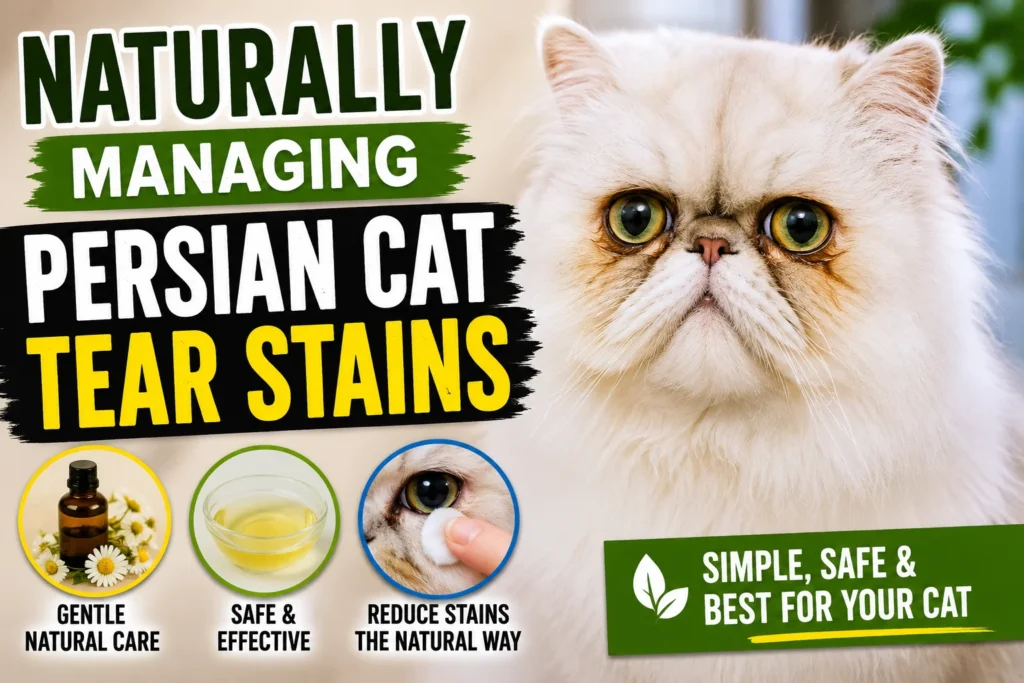
Most Persian cat owners know all too well about the reddish brown tinges just below those lovely expressive eyes. Though in most cases this is merely an aesthetic issue, for these flat faced kitties these tears tell the story of a daily routine.
Why Persians Are Prone to Tear Stains
Why Do Persians Have Tear Stains?
It all goes back to your Persian’s anatomy, or what they were born with. This is a “brachycephalic” dog, a fancy term that basically describes a shorter skull structure or face (think smooshy face).
In Persians, this face shape impacts the flow of fluid to the eyes.
Normal tear fluid normally trickles out through small openings at the corners of your pet’s eyes and passes into their nasal passages. In many Persians, these openings are narrower or malformed, causing the tears to flow over their lower eyelid and onto the fur beneath. That dried tear fluid comes into contact with air, and just like an apple turning brown, it begins to oxidise and gets that annoying rust color stains. It’s a common and accepted problem for this breed, something actually called “epiphora”.
Health First: When to See a Vet
Before starting any home care routine, it’s crucial to differentiate between cosmetic staining and a medical issue. While excessive tearing is expected in Persians, certain signs warrant a trip to the veterinarian.
Consult a vet immediately if you notice:
- A change in discharge color from clear/rusty to yellow or green.
- Redness or swelling around the eye or eyelids.
- Squinting or pawing at the eye, indicating pain or irritation .
- Thick, gluey discharge, especially if it seems excessive even for a Persian .
These symptoms could indicate an infection, conjunctivitis (perhaps as a result of a bacterial infection such as chlamydia), or although less common would be more likely in a brachycephalic breed Keratitis or corneal sequestrum. Regular checks with the vet at least once a year should ensure that potential issues are detected in time.
Also Check: The Dachshund Owner’s Guide to Preventing Back Pain and IVDD 2026
The Natural Care Routine for Tear Stains
Once medical conditions are ruled out, a consistent daily care routine is the most effective defense against tear stains.
1. The Daily Eye Cleaning Ritual
Establish a gentle cleaning routine once or twice a day .
- What You’ll Need:
- A soft, clean cloth or cotton pad.
- Warm (not hot), clean water. Using distilled or filtered water is often recommended, as tap water contains minerals that can exacerbate staining .
- How to Do It:
- Dip the cloth or pad in the warm water and wring out the excess.
- Gently wipe the area under the eye, moving away from the eyeball to avoid pushing debris into the eye .
- Pat the fur dry with a separate soft cloth. Keeping the area dry is as important as cleaning it, as moisture promotes bacterial growth that worsens stains.
This simple practice removes daily debris and prevents the buildup of tear residue.
2. Trimming and Grooming
Trimming fur around the eyes will help eliminate tearing. The tears have to soak into the hair, thus keeping the hair shorter to decrease the area to which the moisture may attach.
- If you are unwilling to perform this task on your own, call a groomer!
- Consistent and careful brushing will limit the incidence of matts which trap moisture against the skin.
3. Natural Topical Solutions
For stains that have already established themselves, you can try topical cleansers which are safe as long as they are made for your pets.
- Witch Hazel Colloidal Silver: Also an ingredient in commercial stain removers, colloidal silver has anti-viral, anti-bacterial, and anti-inflammatory agents which help diminish stain causing bacteria in the immediate eye area. Colloidal silver is very safe if applied via a cotton pad.
- Boric Acid Solution Although, when highly diluted, can act as a mild antibacterial eye cleaner.
- Boric acid IS an active ingredient found in some commercial pet stain cleaners. However, be very sure that the solution remains extremely diluted.
Important Warning: Do NOT Under Any Circumstances Use Harsh Chemicals! Never clean around your kitty’s eyes with hydrogen peroxide or bleach or any other sort of harsh chemical whitener. Skin in that area is quite sensitive.
Nutritional Support for a Brighter Face
While not a cure to a defect in the tear ducts, a good diet can do wonders for your cat’s total health and can play a role in tear staining severity.
- Good Quality Food: Provide a well-rounded, nutrient-rich meal that promotes a good immune system and decreased inflammatory load for your cat. Certain breed-specific formulas have food designed specifically to improve eye health.
- Antioxidants and Omega-3 fatty acids: These nutrients, found in quality foods, lessen inflammation throughout the body (including in your eyes), and assist in the health of eye tissues.
- Water: Ensure your cat always has access to fresh, clean, filtered water. Good hydration is important for good mucous membrane health which can in turn play a role in the tears the body is producing.
- Natural Supplements: There are some natural dietary supplements designed to decrease staining from the inside out. These products are typically made with yucca extract (a known anti-inflammatory) and turmeric/curcumin (a potent antioxidant) that act to counteract the pigments.
A Note on Commercial Products
The market offers numerous products to help manage tear stains. When choosing one, look for natural formulas that avoid harsh chemicals.
- Natural Wipes and Removers: Products formulated with ingredients like aloe vera, chamomile, and witch hazel can be very effective for gentle, daily maintenance .
- Supplements: As mentioned, oral supplements addressing inflammation from the inside can be a helpful addition to your routine.
Always follow the product’s instructions carefully and discontinue use if you notice any irritation .
Frequently Asked Questions (FAQs)
Why are there brown stains on my Persian cat’s tears?
The stains happen because of oxidation. Tears containing porphyrins, iron-containing molecules, that come into contact with the air on the bottom of your cat’s eyes can oxidize, turn red/brown, then stains the fur .
Is it normal for a Persian cat’s eyes to be watery all the time?
To an extent, yes. Due to having a flatter face structure, Persians have narrow tear ducts that do not drain into their nasal passages and flow down the side of their faces. But if there’s another accompanied issue like the eyes are also red or their tears are green then, visit the doctor.
Is it safe to use contact lens solution to wash my cat’s eyes?
No, humans have different lenses. This product used for lenses has chemicals that are not suitable for cats’ eyes and can hurt and stain more.
Can my diet improve my tear stains?
Yes. A diet that contains antioxidants andomega 3 fatty acids can be the best because they help reduce any kind of inflammation and boost overall health. Hydration is equally very helpful too.
Do Persian cats’eyes get infections frequently?
Yes, Persians also belong to a category that are prone to eye issues like infections and keratitis because they have very flat faced bodies which causes bulging and wide and round eyes. Therefore, getting professional help from vets is advised to help check.
6. How frequently does the cat’s face need to be cleaned?
To prevent fur stains and give them a cozy feel, clean their faces and particularly the sides of their eyes twice daily.
Which natural ingredients can I use to make away tear stains?
Natural ingredients with anti-bacterial and astringent qualities like Witch hazel can be of help to have to clear your cat’s stain with much care. Chamomile can also be effective when it is mixed with other ingredients and used regularly in formulas.
Is it OK to use chemicals like bleach and hydrogen peroxide?
Absolutely not. These are harmful products that can burn and pain their eyes leading to a greater hazard than before. Only natural products designed specifically to help your Persian remove their tear stains should be bought and utilized.
Will a more Pekingese Persian has more issues?
Those with the ultra-flat face structure would face even worse issues as due to such face, it makes it impossible for the tear duct to do its job so, many with that face structure of this species go through greater issues.
Do ear mites causes the tear stain?
Some owners say so but a visit to the vet and finding an accurate cause for that would solve it better since those kinds of infections are often mistaken.
Conclusion
Caring for tear stains on a Persian is not a “task that gets done once and forgotten,” but rather an ongoing routine to maintain your cat’s comfort and hygiene. Knowing why your Persian has this common problem (and addressing the anatomically dictated reasons by incorporating natural, consistent maintenance) allows you to present a clean and happy face on your fuzzy Persian. Patience is a virtue, and it certainly helps to establish with Persian care!





One Comment